

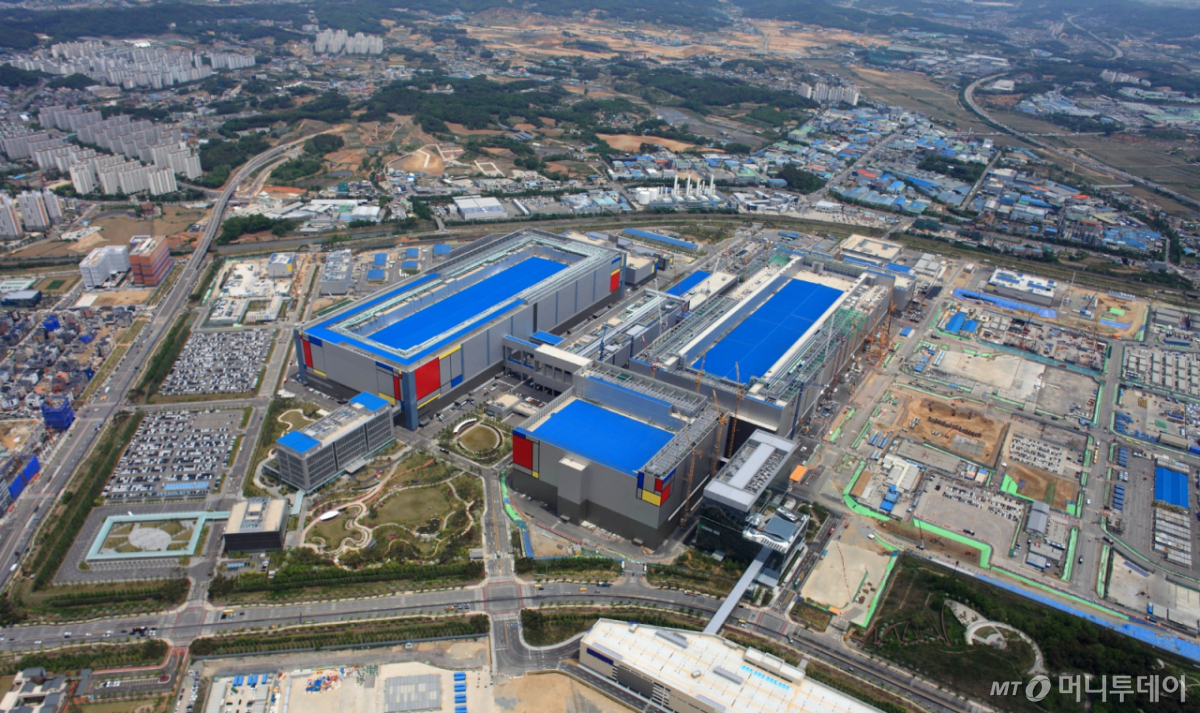
As artificial intelligence (AI) transforms the world, unexpected changes are emerging in the semiconductor industry. DRAM prices have surged sharply, causing profits for memory semiconductor companies to reach hundreds of trillions of won. However, high prices are not unconditionally beneficial. They provide a solid financial lifeline for latecomers to enter the market and expand production capacity.
Memory semiconductors are representative capital-intensive industries and cyclical industries. When companies invest large amounts of capital during boom periods to expand factories, oversupply soon occurs, and if prices plummet sharply, a recession follows. This "Silicon Cycle" is influenced by sharp fluctuations in the supply-and-demand price curve.
The method for leading companies to survive during recessions is the "Golden Price Strategy." It involves lowering memory prices below cost or down to the break-even point to eliminate latecomers from the market. This was a strategy used by memory giants such as Samsung Electronics, which previously pressured competitors with powerful cost competitiveness.
However, the situation is now different. Memory prices are too high. In the industry, there are even mentions of "Diamond Prices." All memory companies are enjoying the benefits of these high prices. The problem is that this Diamond Price provides latecomers with "fuel (cash)" to expand production capacity.
A representative example is China's Hefei Changxin Memory Technologies (CXMT). Since its establishment in 2016, CXMT has survived its DRAM business with government support despite significant losses, but it recently turned profitable due to rising memory prices and caught its breath. With market share in the global DRAM market reaching up to 8%, CXMT is accelerating additional factory expansions. Its foundation lies in the soaring DRAM prices.
Due to China's industrial policies and capital support, even if DRAM prices are lowered, CXMT may not immediately abandon expansion plans. Nevertheless, slowing down the cash generation speed of latecomers—the most powerful weapon in the semiconductor chicken game (final showdown)—is a realistic market defense measure that leading companies can choose.
In the past, the memory market has undergone several chicken games multiple times. U.S. Intel and others were pushed out by Japanese NEC and other companies' offensives and withdrew from DRAM. Subsequently, Japanese companies faced pursuit from South Korea's Samsung Electronics and SK Hynix (then Hyundai Electronics and LG Semiconductor). The number of DRAM companies, which reached over 20 in 1995, was reorganized into a "Big Three" structure consisting of Samsung Electronics, SK Hynix, and Micron after several chicken games.
Taking advantage of the super cycle, China's CXMT has grown to become the world's fourth-largest DRAM company, while Taiwan's Nanya, which had been lying low, has joined in expanding its advanced lines. If these companies accumulate cash and expand production capacity through the super cycle, there is a high probability that they will repeat the past recession cycles of oversupply.
SK Chairman Choi Tae-won recently pointed out that memory prices are too high. This appears to reflect concerns about the cost burden on equipment manufacturers and the AI industry, but it also seems to involve worries about market competition with latecomer memory competitors who have secured "ammunition (cash)." How long is it right to maintain such excessively high DRAM prices?
Is it a matter of strategy: earn 1,000 trillion won at once, or earn 100 trillion won annually for ten years? Sacrificing part of short-term profits is not necessarily a loss. In the memory industry, true competitiveness lies not in current profit margins but in costs and production capacity that allow survival in the next cycle. If today's "Diamond Price" becomes a financial lifeline for latecomers, leading companies must reconsider their pricing strategies once again. Sometimes, reducing tomorrow's competitors can yield greater profits than today's high earnings, just as countless leading companies have done in the past.

 in OPINION

