

The Wall Street Journal (WSJ) reported that a summit between U.S. President Donald Trump and North Korean Chairman Kim Jong-un could take place in November. Analysts suggest this stems from a growing desire for another diplomatic achievement by President Trump, given the difficulty of ending the war with Iran. While signs point toward direct talks between the United States and North Korea becoming concrete, coordination on key issues between the two primary stakeholders, South Korea and the United States, remains entangled. There is an urgent need for a comprehensive review of the unprecedented situation in which U.S.-South Korea joint exercises were scaled down mid-process, as well as the sluggish progress of trade negotiations.
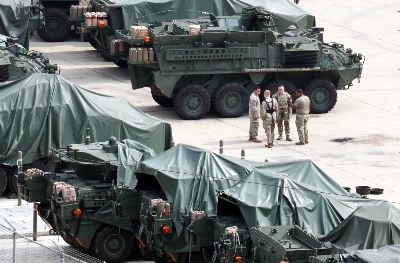
President Trump expressed dissatisfaction with the Lee Jae-myung administration, citing delays in South Korean investment in the United States and inadequate contributions to the Iran war effort. He further stated that he has built a very good relationship with Chairman Kim Jong-un and instructed the Minister of National Defense to significantly reduce the scale of U.S.-South Korea joint military exercises (UFS). In reality, the training period, originally scheduled to begin on the 17th and run through the 27th, was cut in half to end on the 21st. During this process, no formal discussions took place between South Korea and the United States, leading to a situation where Foreign Minister Cho Hyun summoned U.S. Ambassador to Korea Michelle Steel for clarification.
A red light has been signaled over U.S.-South Korea military cooperation and alliance diplomacy. While part of the issue lies in President Trump's unconventional approach to raising concerns, responsibility also rests with our government to effectively manage differences between the two nations. In this context, North Korea and Russia are drawing militarily closer, while a visit by Chinese President Xi Jinping to the United States and a U.S.-China summit are scheduled for September. South Korean diplomacy now faces a critical test.
Within diplomatic and security circles, there is no unified voice amid diagnoses of conflict between so-called alliance supporters and advocates of autonomy. During this period, controversies erupted over the suspension of U.S. intelligence sharing with North Korea and debates regarding the return of wartime operational control. A tense atmosphere was detected in U.S.-South Korea security cooperation following a crisis involving the potential downing of a U.S. unmanned aerial vehicle. It remains questionable whether sufficient dialogue occurred between South Korean and U.S. military authorities regarding plans to repurpose Gwangju Air Base, used by U.S. forces outside our military, as a site for the Honam semiconductor complex. With no clear signs that the Coupang crisis will be resolved and delays in finalizing the first major investment project in the United States, there was also an incident involving the dismissal of the Chief of Trade Negotiations. For the Lee Jae-myung administration, which has positioned itself as a pace-setter for U.S.-North Korea dialogue, resolving even minor misunderstandings with the United States must be the top priority. Strengthening communication and trade cooperation between South Korea and the United States, and ensuring stability in the alliance relationship, are essential to prevent "Korea-passing."

 in OPINION
