

![[Seoul=NEWSIS] Reporter Lee Young-hwan = On the afternoon of the 29th, the closing price was displayed on an electronic board at the Hana Bank dealing room in Jung-gu, Seoul, as the KOSPI closed down 360.42 points (5.98%) from the previous trading day at 5,663.24. The KOSDAQ index closed down 43.17 points (6.12%) from the previous trading day at 662.68 points, and the won-dollar exchange rate closed down 15.8 won at 1,446.7 won. 2026.07.29. 20hwan@newsis.com /Photo=Reporter Lee Young-hwan](https://thumb.mt.co.kr/cdn-cgi/image/f=avif/21/2026/07/2026072916280332854_1.jpg)
On the 30th, the domestic stock market is expected to focus on major overseas events pouring in before the opening, including the U.S. base rate decision and earnings reports from Meta and Microsoft. With supply-demand instability growing to the point where circuit breakers (temporary trading halts) were triggered simultaneously for two consecutive days across both the KOSPI and KOSDAQ markets for the first time in history, whether these external events will quell market anxiety remains key.
On the 29th, the KOSPI index closed at 5,663.24, down 360.42 points (5.98%) from the previous day. During trading, it was pushed as low as 5,262.77, a drop of 12.63% from the previous day. While individuals and foreign investors sold net amounts totaling 1.9767 trillion won and 1.2157 trillion won respectively, institutional investors bought net amounts totaling 3.1489 trillion won.
The KOSDAQ index also closed at 662.68, down 43.17 points (6.12%). The intraday low was 630.99, a drop of 10.61% from the previous day. Individuals sold net amounts totaling 457 billion won, while foreign investors and institutional investors bought net amounts totaling 308.3 billion won and 146.4 billion won respectively.
Circuit breakers were triggered simultaneously for two consecutive days across both major markets. In the KOSPI market, the circuit breaker at Level 1 was activated at 12:32:32 p.m. when the index fell 8.17% to 5,531.56. In the KOSDAQ market, trading was temporarily halted earlier at 12:19:12 p.m. when the index dropped 8.05% to 649.00.
This is the first time circuit breakers have been triggered simultaneously for two consecutive days in both the KOSPI and KOSDAQ markets. This is also the first time the KOSPI market has seen circuit breakers triggered for two consecutive days. The KOSDAQ market previously experienced two consecutive days of circuit breaker activations during the 2008 global financial crisis and when the U.S. sovereign credit rating was downgraded in 2011.
Earlier, sell-side sidecars (futures market circuit breakers) were also activated in both the KOSPI and KOSDAQ markets at 10:55 a.m. and 10:56 a.m., respectively.
A sharp decline in semiconductor stocks exerted downward pressure on the overall market. SK Hynix recorded its highest-ever quarterly results in terms of both revenue and operating profit, with consolidated revenue of 79.3187 trillion won and operating profit of 60.5426 trillion won for the second quarter of this year, yet it closed down 9.61% at 1.4001 million won. Concerns over the semiconductor market, such as the pursuit by Chinese memory semiconductor companies and the profitability of AI (artificial intelligence) investments, overshadowed the strong earnings results.
Samsung Electronics also closed trading down 5.23% at 208,500 won. SK Square (-8.11%) and Samsung Electro-Mechanics (-7.63%) also plummeted.
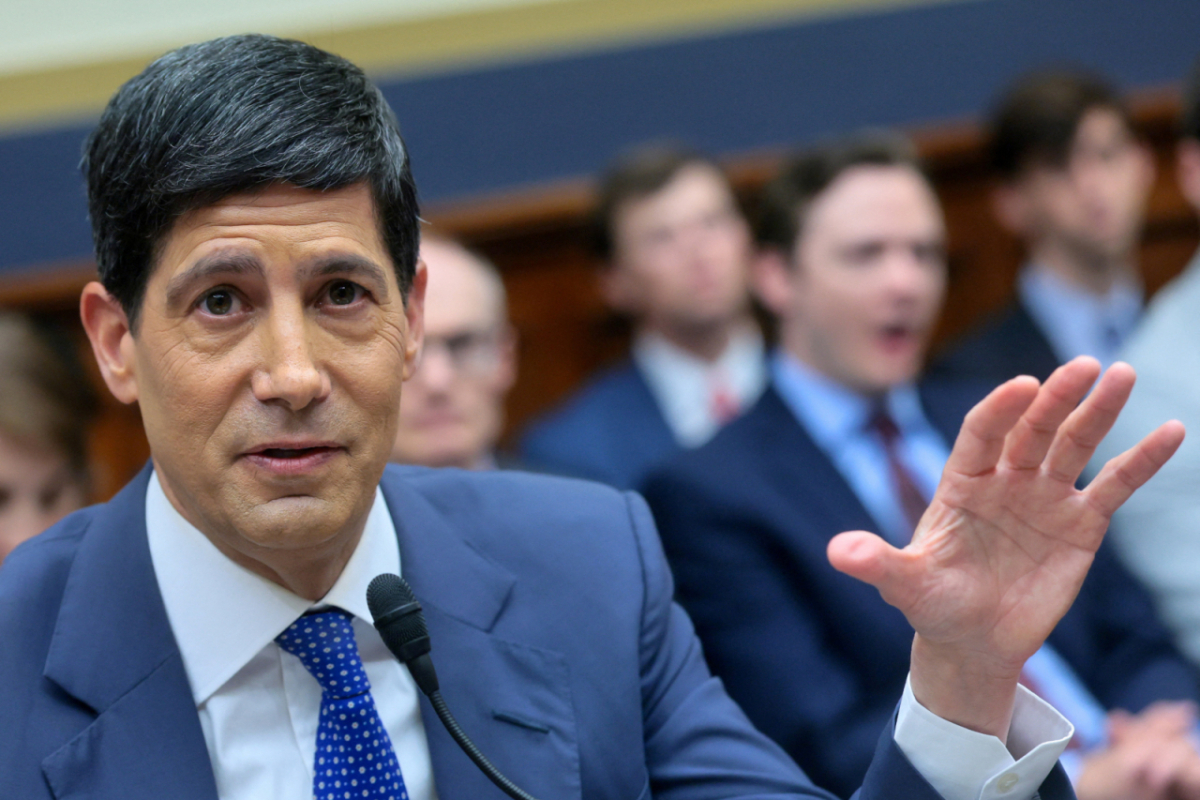
The FOMC (Federal Open Market Committee)'s base rate decision to be announced at 3 a.m. on the 30th Korean time is also a major variable. The market reaction surrounding future monetary policy directions, along with the U.S. base rate decision results, is expected to affect the won-dollar exchange rate and foreign investor supply-demand flows.
The market views a freeze in the base rate as the baseline scenario. However, there are also views that interest rates could be raised due to inflation concerns stemming from the Middle East.
Amid continuing uncertainty in U.S.-Iran negotiations, the state of affairs in the Middle East and the direction of international oil prices are also cited as variables. With reports indicating that Iran launched a surprise attack using ballistic missiles targeting U.S. military bases in the Middle East on the 28th (local time), instability in the Middle East has resurfaced. The 29th (local time) was also the day for quarterly earnings reports from major U.S. tech companies, Meta and Microsoft.
Im Jeong-eun, a researcher at KB Securities, stated, "The market is waiting for events such as U.S. big tech earnings and the FOMC." She added, "With continued uncertainty in U.S.-Iran negotiations, panic selling (mass sell-offs), and extreme supply-demand instability, it is important to watch whether the results of these events will provide a clue to stabilizing investor sentiment."
Kang Jin-hyuk, a researcher at Shinhan Investment Corp., said, "Disappointment-driven selling occurred after SK Hynix's conference call due to the lack of shareholder return content," and added, "Amid continuing Middle East instability, a wait-and-see attitude has emerged ahead of the FOMC interest rate decision."

 in STOCK

