

At the International Space Summit held in Paris, France, on September 9, a $10 thousand won (1.341 trillion won) AI satellite constellation project was unveiled. The project was led by European countries, including France, and the UAE. Before the war in Ukraine, Europe relied on receiving and utilizing imagery captured by U.S. satellites. However, after the war began, a growing perception emerged that relying on the United States for national defense is risky, leading to increased demand for monitoring their own territories with real-time satellite imagery, a trend also seen in the Middle East.
The fierce competition on the ground for AI data centers is also a backdrop to this project. The concept of building data centers in space, rather than on the ground, is currently underway. This project involves 50 satellites equipped with different sensors, such as radar and optical systems, moving as one system to conduct maritime surveillance, detect forest fires, and monitor ports and critical infrastructure. Until now, photos taken by satellites were transmitted to the ground for analysis by humans and computers.
On the other hand, in the Satcom Project, the consortium opted to embed Mistral's AI model from a French artificial intelligence company into satellites, enabling real-time analysis of captured data in orbit and sending out alerts within seconds. Initially, the project is scheduled to carry out missions such as monitoring ships penetrating maritime borders, detecting wildfires, and identifying anomalies in critical infrastructure like ports and energy facilities. The consortium also plans to sell information to global commercial customers.
A consortium led by Malan Space, a space investment firm under the Abu Dhabi royal family's holding company IHC, and satellite platform company Loft Orbital is set to invest $10 thousand won in France. The two companies will expand their existing AI satellite constellation, Altair, from 10 satellites to 50. The satellite infrastructure will be held by a dedicated corporation established in France, while the satellite bodies themselves will be manufactured at OrbitWorks, a joint factory operated by the two companies in Abu Dhabi. Production of the initial 10 satellites has already begun, with the first launch scheduled for October. This initiative brings together UAE capital and manufacturing capabilities with France's and Europe's space supply chains.
This project involves various companies, with the U.S.-based BlackSky noted for its exclusive supply of ultra-high-resolution optical satellites.
BlackSky is a company that places ultra-small observation satellites in low Earth orbit to monitor strategic ground locations in real time. It repeatedly captures images of major global sites such as military ports, oil refineries, airports, and borders on an hourly basis, with AI analyzing the data to automatically detect movements of vehicles, aircraft, and ships. Its primary customers include intelligence agencies such as the U.S. National Reconnaissance Office (NRO) and ministries of national defense in various countries.
Instead of selling satellite images one by one, the company supplies information via a subscription model through its software platform, Spectra. When a customer designates a specific area, satellites are automatically assigned missions to capture imagery, and analysis results are transmitted within as little as 30 minutes to an hour after data collection. The company sells this information to enterprises that pay a subscription fee, similar to Netflix. As of the end of June this year, more than 80% of the order backlog totaling $378.1 million (507 billion won) consists of multi-year subscription contracts.
BlackSky is a subsidiary of Seattle-based Spaceflight Industries, established in 2014. Spaceflight was a company that operated as an intermediary for launching small satellites on rockets and also manufactured satellites.
Jason Andrews, the founder, is a native of Seattle who was born and raised there and graduated from the University of Washington as an aerospace engineer. After working at Kistler Aerospace, a pioneer in reusable rockets, he co-founded Andrews Space with his wife, Marian Jo, in 1999. While operating this company, which performed launch vehicle research contracts for NASA and the Defense Advanced Research Projects Agency (DARPA), Andrews created another interesting business structure.
At that time, a flood of companies were emerging to build ultra-small satellites, yet there was a severe shortage of rockets capable of launching them into space. Andrews founded Spaceflight in 2009, but the company was known as a rocket firm that did not manufacture a single rocket. Spaceflight operated as a launch-sharing platform, purchasing excess capacity on large rockets launched by other companies at wholesale rates and reselling it to ultra-small satellite operators at retail prices. This model is akin to a travel agency that sells individual airline seats.
A bold marketing strategy that publicly released pricing tables for reconnaissance satellites based on their weight and volume proved successful, growing the business into a $75 million (10.06 billion won) annual revenue operation within eight years. The first client secured in October 2011 was Cosmogia (now Planet Labs). Andrew, who operated Spaceflight, noticed that while many satellites launched by his customers were for Earth observation, the resulting satellite imagery was being sold at high prices, slowly, and with inconvenience.
At the time, the satellite imagery market was dominated by a few large satellites built with government budgets, meaning that even after paying thousands of dollars for a single image, customers had to wait several days to receive it. In 2013, Andrew launched BlackSky, aiming to completely transform both the pricing and frequency of satellite imagery by deploying dozens of small satellites.
Vulcan, the venture capital firm of Microsoft co-founder Paul Allen, invested $21.5 million (28.8 billion won) in Series B funding in February 2015. In 2018, European defense company Thales Alenia Space and Japanese trading firm Mitsui & Co. contributed 1.5 billion won (201.2 billion won) in Series C funding to support the launch of 20 satellites for Yangsan. Brian O'Tool, a specialist in geographic information and computer science, joined the venture at this time. He is a pioneer who helped develop the early intelligent mapping market and previously served as Vice President of Product Development at defense software company Overwatch.
OutTool established OpenWare, a software company that enables real-time search and analysis of satellite imagery via the cloud. In 2016, Andrew acquired OpenWare, after which OutTool began serving as BlackSky's CTO. Spaceflight sold its launch brokerage subsidiary to a Mitsui & Co. group affiliate in June 2020, effectively retaining only BlackSky, and subsequently changed its name to BlackSky Holdings. This entity merged with a SPAC in 2021 and listed on the New York Stock Exchange. At that time, its corporate valuation was approximately $1.5 billion (2 trillion 115 billion won). Palantir participated as an equity investor, drawing significant attention.
BlackSky's blueprint presented to investors during its 2021 SPAC merger was $223 million in revenue for 2023 (299 billion won). Actual 2023 revenue was only $94.49 million (126.7 billion won), just 42% of the pledge. In its first year as a public company, 2021, net losses reached $245.64 million (329.4 billion won). With rising interest rates compounding the pressure, market patience ran out. The stock price collapsed by more than 90%, falling from the $10 range in the early listing period (equivalent to $80 post-merger) to around $1 in 2024 (equivalent to around $8 post-merger). In September 2024, the company executed an 8-for-1 reverse stock split.
This period saw many companies in other space and aerospace industries go bankrupt, but BlackSky was able to survive thanks to its meaningful revenue. In May 2022, the National Reconnaissance Office (NRO) selected BlackSky as a 10-year supplier alongside Maxar and Planet Labs through its Commercial Satellite Imagery Acquisition Program (EOCL). BlackSky's share amounted to up to $1.02 billion (1.3678 trillion won). On the day of the announcement, its stock price surged by 97%.
NRO is the National Reconnaissance Office of the United States, an institutional investor dedicated exclusively to the design, launch, and operation of reconnaissance satellites. While the CIA gathers information through human sources, NRO is responsible for gathering information by observing from space. Thanks to a 10-year demand guarantee from this national intelligence institution, BlackSky was able to secure time to invest in next-generation satellites despite operating at a loss.
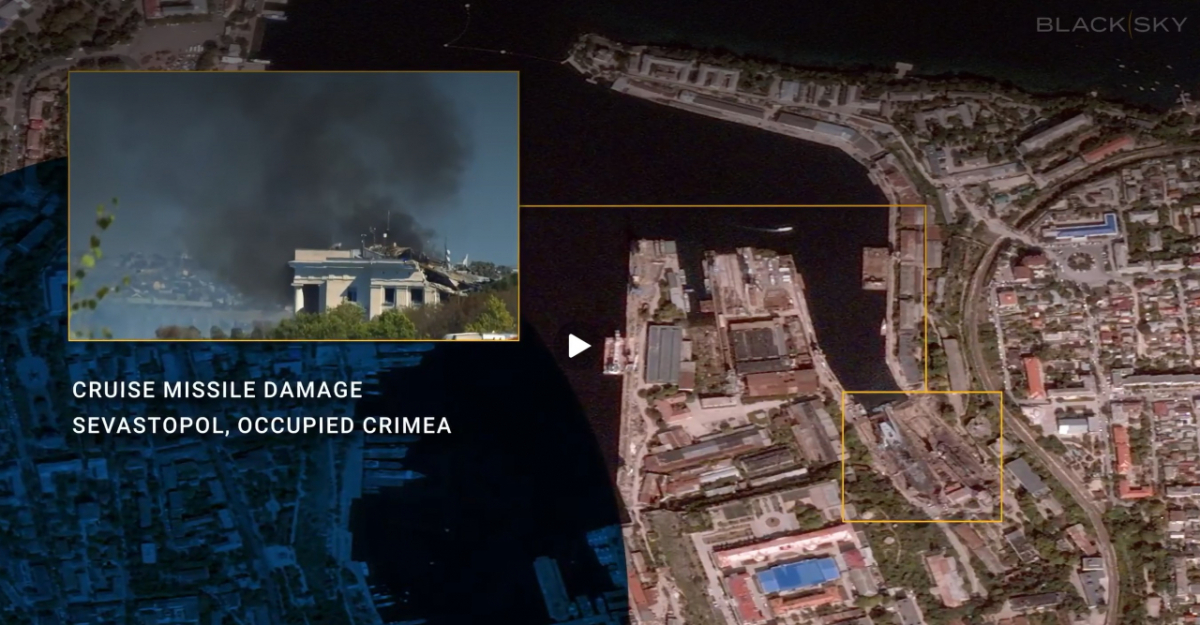
Subsequently, wars around the world became an opportunity. Shortly after Russia's invasion of Ukraine in February 2022, some satellite images capturing Russian military convoys near Kyiv came from BlackSky satellites. The fact that commercial satellite imagery is an information asset that can be shared immediately without classified status was proven in actual combat, prompting Ministries of National Defense around the world to begin joining the purchasing trend.
BlackSky's competitiveness lies in its technology, as demonstrated by its 35-centimeter resolution. BlackSky's Gen-3 satellite can identify objects on the ground that are 35 centimeters in size. This meets or exceeds Level 5 of the National Imagery Interpretability Rating System (NIIRS) used by U.S. intelligence agencies, a level capable of tactical interpretation such as distinguishing between passenger cars and trucks and identifying aircraft types. While it does not match Maxar's industry-leading 30-centimeter resolution, it is one tier clearer than Planet Labs' wide-area satellites, which offer roughly 3-meter resolution. Additionally, the satellite is equipped with a 1-meter class short-wave infrared (SWIR) sensor, enabling imaging in both nighttime and low-light conditions.
A major strength is that video updates can occur up to 15 times per day. Most of BlackSky's competitors operate satellites in sun-synchronous orbits, capturing images only once daily. In contrast, BlackSky deploys satellites in concentrated formations, allowing it to monitor the same location up to 15 times a day. This capability is why overseas satellite image evaluation institutional investors identify BlackSky as the optimal business operator for multi-time-zone surveillance. Earlier this June, BlackSky also released a series of continuous day-and-night tracking videos of the Tarifa port in Spain over three days, capturing the full rhythm of a bustling harbor where the number of moored ships surged from just one vessel in the morning to 182 by the following night. This is information closer to video than static photography.
BlackSky collects this information and delivers it within 30 minutes to one hour. From the moment a shooting request is made through satellite mission assignment, imaging, AI analysis, and transmission, the entire process flows automatically without human intervention. Inter-satellite communication reduces ground station wait times. In May of this year, an imaging operation at the Port of Manzanillo in Mexico identified 17,304 vehicles and 362 ships automatically and delivered the data within just 30 minutes of collection.
AI analytical capabilities are also outstanding. The Spectra platform automatically detects and classifies over 30 types of tactical targets, including vehicles, aircraft, and ships. At the July Farnborough Air Show in the UK, it automatically identified 86 aircraft and 22,258 vehicles from a single satellite image. At the New Jersey World Cup stadium, it captured parking lot conditions and crowd flow one hour before kickoff of the Argentina-Spain match. The system also integrates external data such as Automatic Identification System (AIS) for ships and ADS-B signals for aircraft with satellite imagery, enabling analysis that can identify vessels visible to satellites but lacking identifiable signals.
The filming techniques are also diverse. Products include burst mode, which captures five frames in a single pass to analyze movement; stereo imaging, which overlays two images to create 3D terrain; wide-area mosaics for large airports and ports; and even off-world surveillance that photographs other satellites. When compared with competitors, Planet Labs is stronger in terms of the number of satellites deployed in space, having launched hundreds. However, BlackSky is virtually the only company that sells automated AI analysis as a bundled service. Experts evaluate that in wartime scenarios, BlackSky's capabilities are overwhelmingly superior.
Immediately after its listing, BlackSky focused on developing third-generation satellites, Gen-3, and launched its first unit in February last year using Rocket Lab's Electron rocket. Due to the generational transition, revenue growth for 2024–2025 stagnated at around 4% annually, but the situation has changed this year. Second-quarter revenue reached $33.32 million (44.7 billion won), a 50.1% surge from the same period last year, marking the highest quarterly figure in the company's history.
Looking at it by business segment, sales from its core satellite information and AI services reached $24.51 million (32.9 billion won), the highest for a quarter, rising 50% from the previous quarter to reach an annualized revenue scale of 10 thousand won. The Mission Solutions segment, which sells satellites directly to governments worldwide, saw sales jump fivefold to $5.11 million (6.9 billion won) from $1.05 million in the same period last year, while the Advanced Technology Program segment, which conducts government R&D, also rose 65% quarter-on-quarter to $3.7 million (50 billion won).
The profitability indicators are even more dramatic. The cost of goods sold ratio stood at 27%, reflecting a software-type margin structure with a gross profit margin (GPM) reaching 73%. While revenue grew by 50%, cash-based operating expenses remained virtually flat at 0.2 billion won (26.8 billion won). As a result, the ratio of cash operating expenses to revenue dropped from 87% to 60% within one year, and adjusted EBITDA (operating profit before depreciation) turned profitable at $4.73 million (6.4 billion won), recording a margin of 14.2%. This marks a turnaround from a loss of $2.82 million in the same period last year. The quarter confirmed the operating leverage where, once satellites and platforms are deployed, margins expand as subscription revenue accumulates.
Although a net loss of $20.83 million (27.9 billion won) was recorded due to valuation losses on derivatives linked to stock prices, the performance continues to show an improving trend. BlackSky plans to launch two additional Gen-3 satellites during the third quarter. Three units are currently being produced at its facility in Turcville, Washington, and the number of Gen-3 satellites in orbit is set to increase to eight by year-end. As the number of satellites grows, the revisit cycle shortens and the available subscription capacity for sales increases.
The sovereign satellite business, which sells satellites themselves, is also drawing attention. This business bundles 'Gen-3 satellites + ground systems + operational training + satellite network access rights' to sell to governments of various countries that wish to own their own satellites. The first Gen-3 satellite for sovereign use is currently in production with the goal of delivery by the end of this year, and follow-up orders are also being pursued. This business is the background behind the fivefold surge in Mission Solutions' revenue in the second quarter. The Paris project is also an extension of the same trend.
BlackSky is also developing AROS, a next-generation wide-area monitoring satellite. Developed under a contract with the National Reconnaissance Office (NRO), this high-performance digital mapping satellite aims for launch in 2028. The company plans to fill the supply gap in the Maxar-class foundation imager market with commercial satellites. Customer composition is also moving according to the company's blueprint. As of the first quarter, U.S. federal government sales accounted for 45%, remaining the largest customer; however, a single overseas country now accounts for 22%, indicating a significant expansion in the overseas axis. Overseas revenue surged by 200% year-on-year in the second quarter, and more than 80% of the confirmed order backlog comes from overseas customers. The long-standing weakness of dependence on the U.S. government is being resolved amid a global trend toward sovereign information demand.
Black Sky's annual revenues increased as follows: △2021: $34.09 million (45.7 billion won), △2022: $65.35 million (87.6 billion won), △2023: $94.49 million (126.7 billion won), △2024: $102.09 million (136.9 billion won), and △2025: $106.58 million (142.9 billion won). The annual guidance for this year is revenues of $130 million to 1.5 billion won (174.3 billion to 201.2 billion won), adjusted EBITDA of $12 million to $24 million (16.1 billion to 32.2 billion won), and capital expenditures of 5 billion won to $60 million (67.1 billion to 80.5 billion won). Based on the midpoint of the guidance, the revenue growth rate is 31%.
The order flow this year is also clear. In the first quarter alone, the company secured new contracts worth $160 million (214.6 billion won), raising its annual guidance, and cumulative orders for the first half reached up to $200 million (268.2 billion won). In the United States, in addition to EOCL, it secured a renewal contract for the National Geospatial-Intelligence Agency's (NGA) commercial satellite intelligence framework, Lunab B, and added an AROS development contract with the NRO. New orders are also continuing through the U.S. Space Force's global data marketplace. Overseas, following a $25 million (33.5 billion won) multi-year subscription contract with the Ministry of National Defense in the first quarter, overseas customers who had tried the pilot program in the second quarter have converted to multi-year subscriptions. The pattern of customers expanding contracts after trying the product serves as an indirect indicator of service satisfaction.
The average target price set by eight Wall Street analysts is $38.42, which is 86% higher than the current stock price of $20.61 (closing price on September 11). However, investors should be cautious about the stock's high volatility. The share price surged more than fourfold from a 52-week low of $12.41 to $51.63 in late May this year, but has since fallen by 60% from its peak. The sharp decline followed reports that commercial satellite imagery budgets at the U.S. National Reconnaissance Office (NRO) could be cut by more than 30%, compounded by insider stock sales by executives and short-selling reports.
Liquidity issues in the stock market also impacted share prices. During the second quarter, the company raised 1.5 billion won (201.2 billion won) by issuing 3.6 million new shares through an at-the-market (ATM) offering that allowed for continuous sales of stocks in the market. As a result, cash assets increased by 157% year-on-year to $244.1 million (327.3 billion won), and total liquidity exceeded $325 million (435.8 billion won), but this placed pressure on share prices. Key issues that will determine the direction of stock prices include the Gen-3 launch schedule in the third quarter and the U.S. fiscal year 2027 budget proposal.
◇ Major Timeline of Black Sky
2014
Established as a subsidiary of Seattle Spaceflight Industries
2016
Openware acquisition, Brian O'Tool joins — Software company transformation begins
2020
Mitsui & Co. to divest launch brokerage business, focus on satellite information sector
September 2021
SPAC merger listed on the New York Stock Exchange (corporate valuation of approximately $1.5 billion), Palantir equity investment
May 2022
NRO EOCL Selected as Supplier for Up to $1.02 Billion in 10-Year Supply — Stock Surges 97% on the Day
September 2024
Stock price fell more than 90%, reverse stock split of 1-for-8 implemented
February 2025
Launch of the first Gen-3 satellite (Rocket Lab Electron)
second quarter of 2026
Sales increased by 50 percent year-on-year, and adjusted EBITDA turned positive.
September 2026
Exclusive optical supplier selected for €5 billion satellite project in Europe and UAE involving 50 satellites

 in STOCK


