

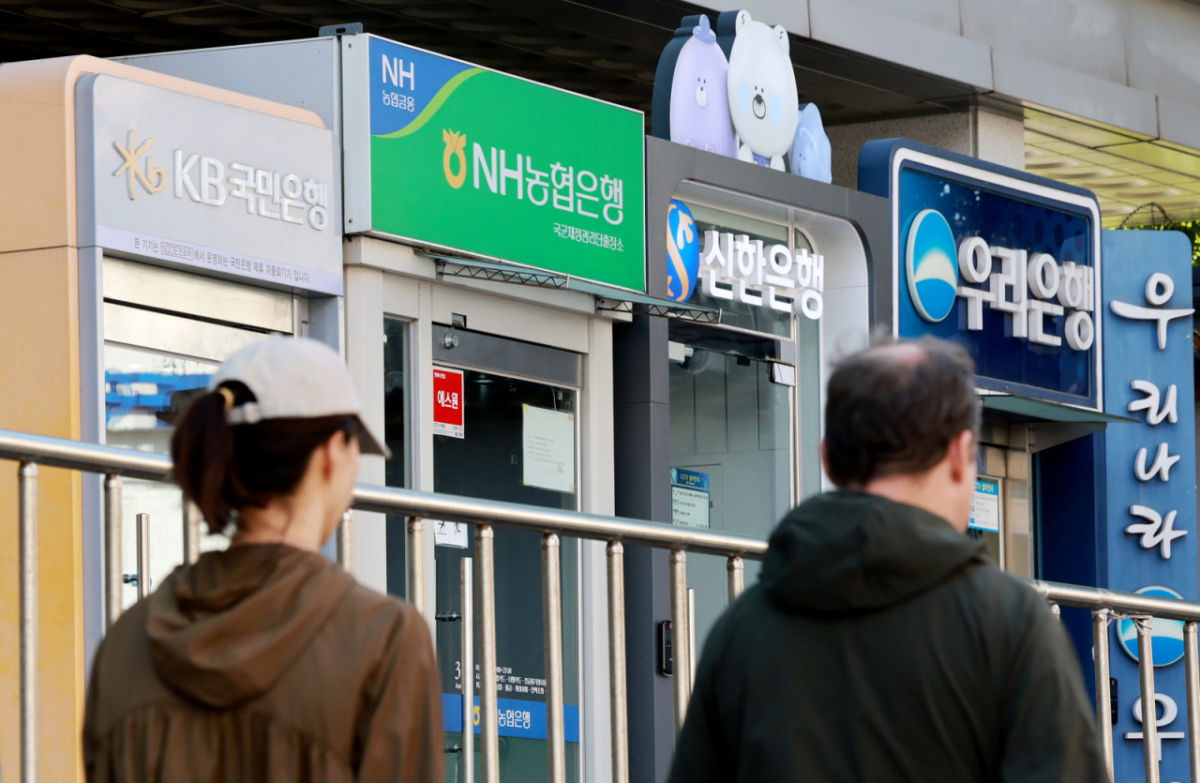
Domestic cybersecurity stocks surged sharply during morning trading on the 6th. Expectations for expanded demand for information protection products and services have risen as attempts to leak personal information and hack systems within the financial sector have been revealed one after another.
As of 11:20 a.m. on the 6th, RaonSecure was trading at 14,760 won, up 3,320 won (29.02%) from the previous close, and Giniene was trading at 24,700 won, up 4,300 won (21.08%). Both stocks traded at their daily limit up in the early session.
Sands Lab rose by 1,460 won (21.16%) to 8,360 won. S2W gained in the 18th% range, ICTK and Pasu AI in the 15th% range, MonitorLab in the 13th% range, AhnLab in the 12th% range, and Aton in the 10th% range.
Buying momentum is spreading across the entire sector, regardless of product or service type. SGA Solutions is up in the 9th% range, HanSak and K-Sign in the 8th% range, Eastsoft in the 7th% range, and Korea Information Certification in the 6th% range.
In the domestic stock market, cybersecurity stocks have consistently drawn attention as beneficiaries whenever industrial information leakage incidents occur or artificial intelligence (AI) threats are highlighted. The SK Telecom and KT incidents last year were a representative case. Security concerns related to Anthropic's AI model 'Claude MiToss' that emerged this year, as well as discussions on AI safety around the United Nations (UN) General Assembly, also triggered sharp stock price increases.
This surge in stock prices was triggered by hacking anxieties that arose within the financial sector. Starting with Shinhan Bank at the end of last month, traces of information leakage and unauthorized access were successively discovered at major commercial banks such as KB Kookmin Bank, Hana Bank, and BNK Busan Bank, as well as savings banks and other financial institutions. In response, financial authorities have raised their level of response, including convening an emergency meeting on the 4th.
The market is also paying attention to the fact that sector-specific positive news has emerged at the beginning of the third-quarter earnings announcement season. Because security equipment and service purchases by major clients—public institutions and large corporations—are concentrated in the second half of the year, the domestic cybersecurity industry has a characteristic of revenue being concentrated in the third and fourth quarters.
However, from a trading perspective, the fragmented landscape of the small-scale domestic security industry is pointed out as an investment hurdle. Because the sector consists of KOSDAQ small- and mid-cap stocks, stock price volatility is high, and it is difficult to expect support from passive funds such as exchange-traded funds (ETFs).
Kwon Myung-jun, a research analyst at Yuanta Securities, stated, "The financial sector has a relatively high level of awareness and investment in cybersecurity because it handles personal information as well as direct financial assets and transaction systems. The fact that consecutive hacking incidents have occurred in the financial sector can be interpreted to mean that the possibility of hacking is also high for general enterprises, not just the financial sector."
Research analyst Kwon added, "The public sector is likely to recognize the severity and importance of cybersecurity and expand the application of cybersecurity measures. Considering this, interest in zero trust is expected to rise," and noted that "interest in B2G (business-to-government) and B2B (business-to-business) cybersecurity companies will continue due to a series of incidents."

 in STOCK
