

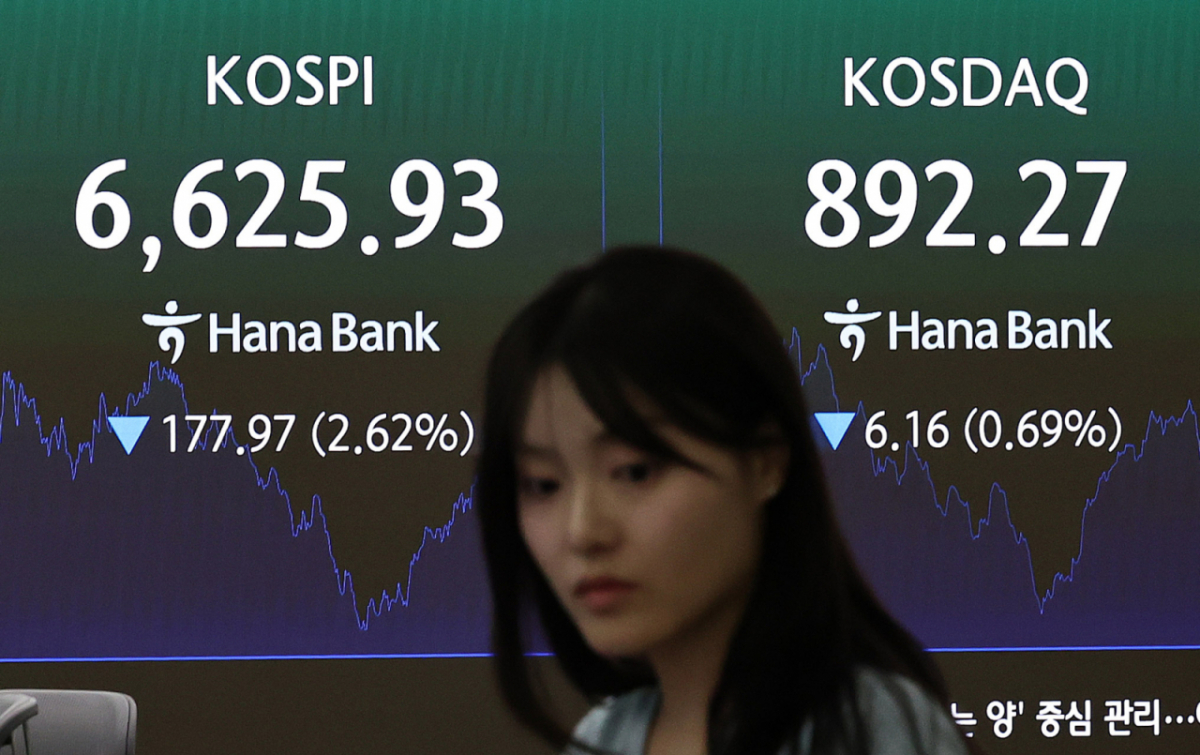
Concerns have been raised that the financial authorities’ decision to set a minimum threshold for “market capitalization” as a delisting criterion for the KOSDAQ market may lead to excessive screening of companies. It was pointed out that the financial authorities should not exclude even promising companies by considering qualitative indicators in addition to quantitative metrics.
Democratic Party of Korea lawmaker Min Byung-deok stated during the National Audit of the Financial Services Commission held by the Political Affairs Committee at the National Assembly in Yeouido, Seoul on the 8th, “There are 314 KOSDAQ companies that meet the delisting requirements to be implemented in July 2027, meaning 17.2% of all listed companies in the KOSDAQ market will be delisted,” and asked, “Among them, 76 companies have posted profits for three consecutive years recently; is it right to delist them?”
Min (Rep.) argued, “Can we distinguish between normal and distressed companies based solely on market capitalization and stock price?” adding, “Market capitalization can decline due to an overall market downturn or weakened investor sentiment in a specific industry, even if the company’s operational status has not changed.”
Following this, Min (Rep.) cited a recent court ruling granting a preliminary injunction suspending enforcement, stating, “The court also viewed that delisting from the market based solely on formal criteria carries the risk of excluding normal companies from the market,” and emphasized, “We must comprehensively consider revenue, cash flow, financial soundness, debt repayment capacity, technological capabilities, and other factors.” He also mentioned that the U.S. NASDAQ uses three criteria and that Japan conducts qualitative reviews.
Concerns were also expressed regarding dividing the KOSDAQ market into three groups: Premium (excellent), Standard, and Management Group. Min (Rep.) said, “The plan is to include indices and ETFs (Exchange-Traded Funds) in the Premium group, but won’t there be a stamping effect where companies are pushed into the Premium group while those in the Management Group suffer from a stigma?” He added, “There is a case at the Tokyo Stock Exchange in Japan where, after dividing into three groups in April 2022, the Premium group accounted for 97% of the total, leading to its eventual abolition.”
Yoo Dong-su Jeong Mu-wi (Director) also pointed out, “In a situation where the KOSPI and KOSDAQ markets are becoming polarized, I think the timing is inappropriate for segmenting the KOSDAQ market,” adding, “If we are going to divide it this way, it would be better to simply delist more companies that do not meet standards.”
Financial Services Commission Chair Lee Eui-yeon mentioned the need for structural reform of the KOSDAQ market while stating that he would further examine shock mitigation measures. Lee (Chairman) explained, “The biggest problem with KOSDAQ is that slightly successful companies are trying to transfer and list on KOSPI, and institutional investors’ funds should ultimately flow into KOSDAQ, but institutional investors say ‘(Excellent and distressed companies) are too mixed together, making it impossible to distinguish them.’” He continued, “So we are considering how to properly arrange the shelves within the KOSDAQ market.”
Lee (Chairman) stated, “As you are most concerned about, there must not be a stamping effect,” and said he would seek supplementary measures. He added, “We will select the Premium group very strictly so that passive funds can also enter it, which may encourage companies in the lower tiers to work harder to move up,” promising, “We will design it more effectively by fully taking into account the points you have raised.”

 in STOCK
