

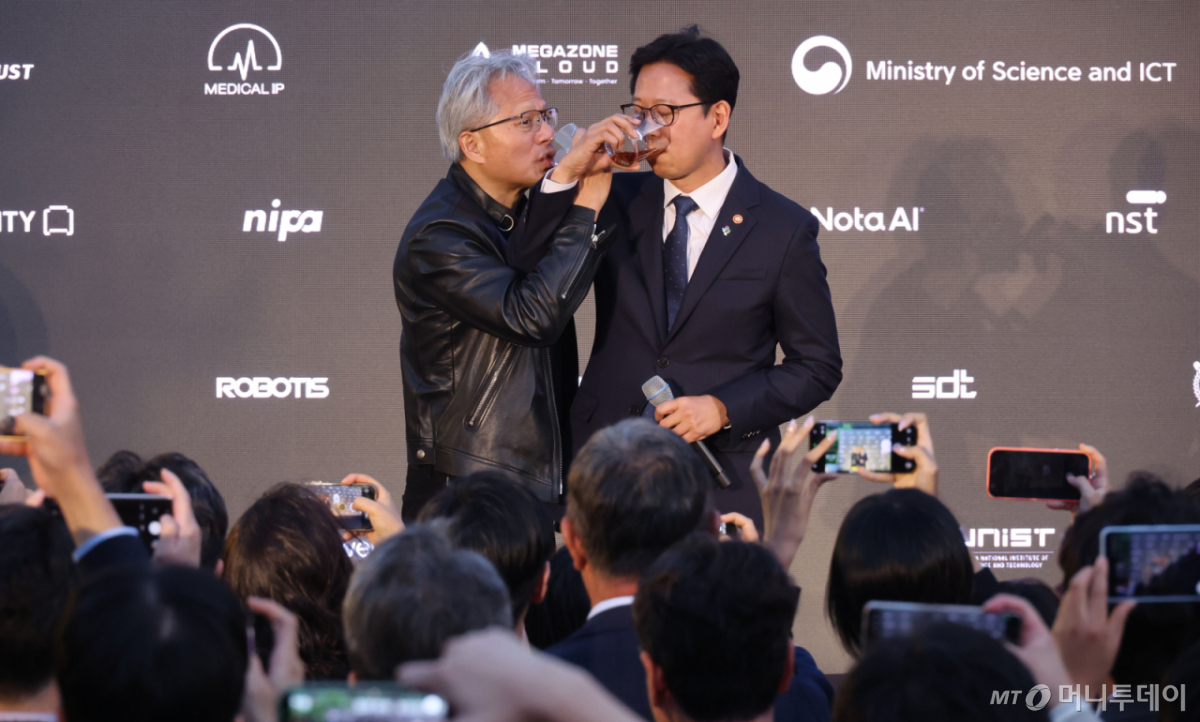
Following NVIDIA, AMD has also officially confirmed plans to establish an AI research center in Korea. This development occurred within just the past week. It is interpreted that global AI companies are rushing to plant their flags as Korea gains attention as an 'AI full-stack nation' encompassing both AI development and consumption.
NVIDIA concretized its plan for a domestic 'NVIDIA AI Technology Center (NVAITC)' earlier this month, which it had promised to establish within the year to the Ministry of Science and ICT. The center will collaborate with KAIST's Department of Mechanical Engineering on physical AI joint research and talent development, and will establish a technology center for AI research and education in partnership with Seoul National University. It plans to expand cooperation across AI foundational models, accelerated computing, physical AI, and AI infrastructure fields using the Neotron and Cosmos models.
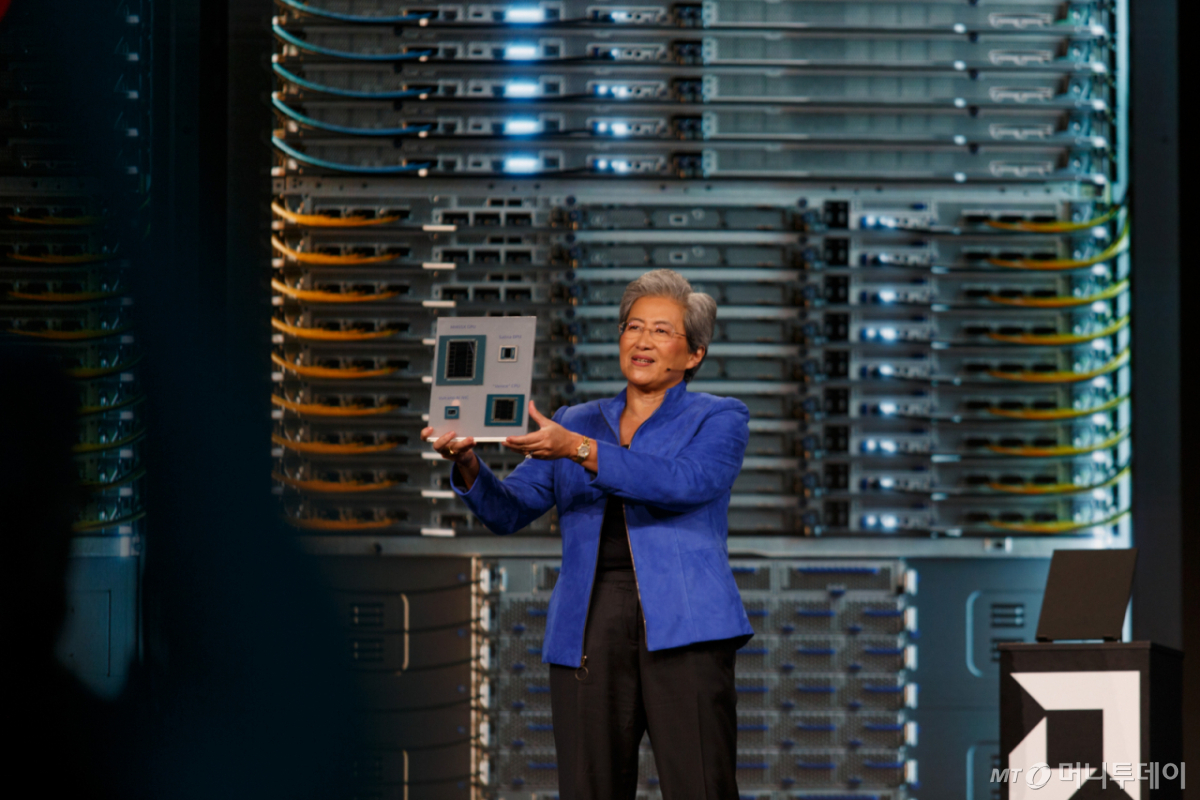
AMD also signed a memorandum of understanding (MOU) with the Ministry of Science and ICT the previous day to cooperate on building an AI semiconductor ecosystem and agreed to establish an 'AI Center of Excellence' in Korea. Based on AMD's AI computing resources and software, the center will serve as an Asian collaboration hub for joint research among domestic companies, universities, and institutional investors. If established under AMD's leadership, this research center would become the second key hub in Asia following Singapore. AMD currently maintains research hubs in the United States, Germany, the UK, Singapore, and Taiwan.
An AMD official stated regarding this matter, "It is planned to be established through cooperation with the Ministry of Science and ICT," adding that "the timing, scale, and operational methods remain undecided."
Behind the recent wave of global big tech companies establishing research hubs in Korea lies a complex motive. There is a possibility that Korea will emerge as the world's largest AI consumer market. It is well known that Korea possesses full-stack AI capabilities ranging from hardware like semiconductors to software. Furthermore, under the banner of 'sovereign AI (national sovereignty AI)', Korea is developing its own AI models while the government expands investments in AI infrastructure. Korean citizens are also recognized as the world's most active IT consumers, leading many big tech companies to view the Korean market as a testbed.
The recent consecutive investments by NVIDIA and AMD are interpreted not merely as establishing research centers but as moves to preempt Korea's market, which is poised to grow into a core hub for AI in Asia. Experts explain that their direct involvement in talent development reflects a medium-to-long-term plan considering future AI consumption.
Professor Byung-ho Choi of the Department of Mechanical Engineering at Korea University stated, "The R&D center established by NVIDIA will not train individuals who are simply good at AI but rather cultivate talent optimized for the NVIDIA ecosystem." He added, "Ultimately, Korea's top talents will enter these R&D centers, and all those who will become Korea's future leaders will be locked into NVIDIA, solidifying the ecosystem."
Analysis suggests that while NVIDIA previously formed cooperative relationships with companies to maintain its monopoly, it has now entered talent development to lock in specific markets (local) as threats from Google TPU and others have become apparent.
AMD is seen as stepping in to prevent NVIDIA's monopoly in the Korean market. Securing top-tier talent is merely a bonus.
An industry official remarked, "Cornered AMD views NVIDIA's vacant NPU (neural processing unit) space as a new market and approaches Korea accordingly." He further added, "Israel has an AI ecosystem comparable to Korea's but lacks manufacturing facilities, resulting in no developer ecosystem. Korea possesses a full-stack ecosystem, making it suitable for simultaneously advancing research and development and commercialization."

 in TECH

