

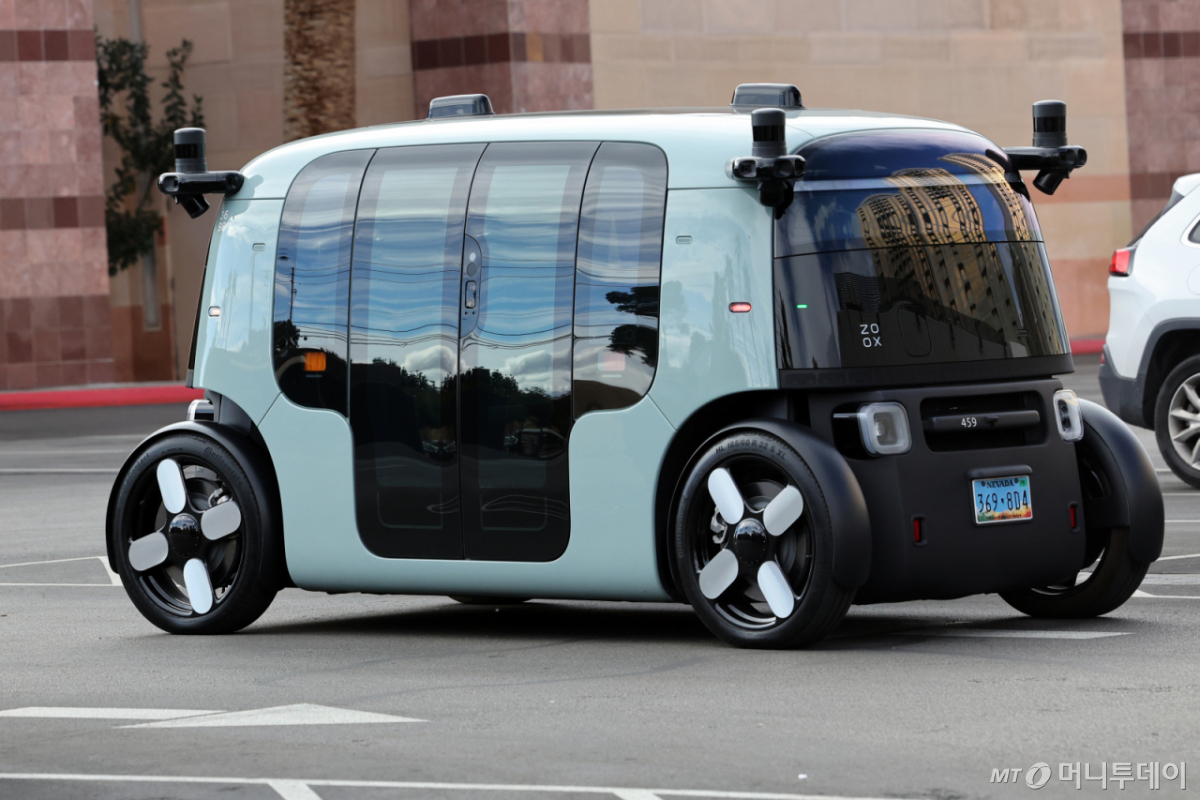
There is no steering wheel. No pedals. No side mirrors. The seats are arranged facing each other. This vehicle, resembling subway seating, will begin carrying passengers for a fee in Las Vegas, USA, as early as the 10th (local time). This is the story of Zoox, an Amazon subsidiary. The U.S. National Highway Traffic Safety Administration (NHTSA) granted exemptions from eight items under the Federal Motor Vehicle Safety Standards (FMVSS) last month, paving the way. For the first time, a dedicated vehicle with no driver's seat has received approval for paid commercial operations.
The time it took to gain approval reflects the pace of this market. Zoox has been offering free rides in Las Vegas and San Francisco since September last year. Over 500,000 people have already ridden, and another 500,000 are waiting in line to try it. If that was a demonstration, now comes the actual business.
The conditions are stringent. First, up to 2,500 vehicles may be operated annually for two years. Reports must include not only collision accidents but also situations where vehicles stop improperly on the road. Operation zone maps must also be disclosed. Most importantly, all personnel remotely monitoring the vehicles must be located within the United States. NHTSA firmly stated that it can adjust conditions based on performance reports or revoke exemptions if significant issues arise. The door is open, but the leash remains in hand.
Just five days after the path was cleared, on the 5th, Uber dipped its toes in a different way. At its second-quarter earnings announcement, Uber revealed plans to invest more than 10 billion won (approximately 14 trillion won) in robotaxis. Most of this will go toward equity investments in autonomous driving partners, vehicle purchase commitments, and operating funds. There was no mention of manufacturing autonomous vehicles directly.
It does not matter who makes the cars. Those who control customers and dispatching will survive. This is Uber's judgment. In fact, Uber has partnered with over 25 autonomous driving companies, including Waymo, Zoox, Wave, China's WeRide, and Baidu. It invested up to $1.25 billion in Rivian to secure a fleet of 50,000 vehicles. The goal is to operate robotaxis in at least 15 cities by year-end and deploy 120,000 vehicles in the future. Rather than selecting carefully, it is acquiring everything. Zoox, which will begin charging fares in Las Vegas, is on that list.
The market remained lukewarm. On the same day, Uber's adjusted third-quarter earnings per share forecast of 84–88 cents fell short of market expectations (89 cents). Despite total bookings generated through the Uber app in the second quarter reaching $58 billion—exceeding expectations—the stock price dropped by about 3% in after-hours trading. The reason: 14 trillion won is outgoing money, while robotaxi revenue has not yet come in.
The key questions are how many times a single robotaxi can carry passengers per day, whether its revenue exceeds the vehicle cost and insurance premiums, and how much labor costs for remote monitoring personnel add up. Answers will begin to accumulate starting this week.

 in TECH
