

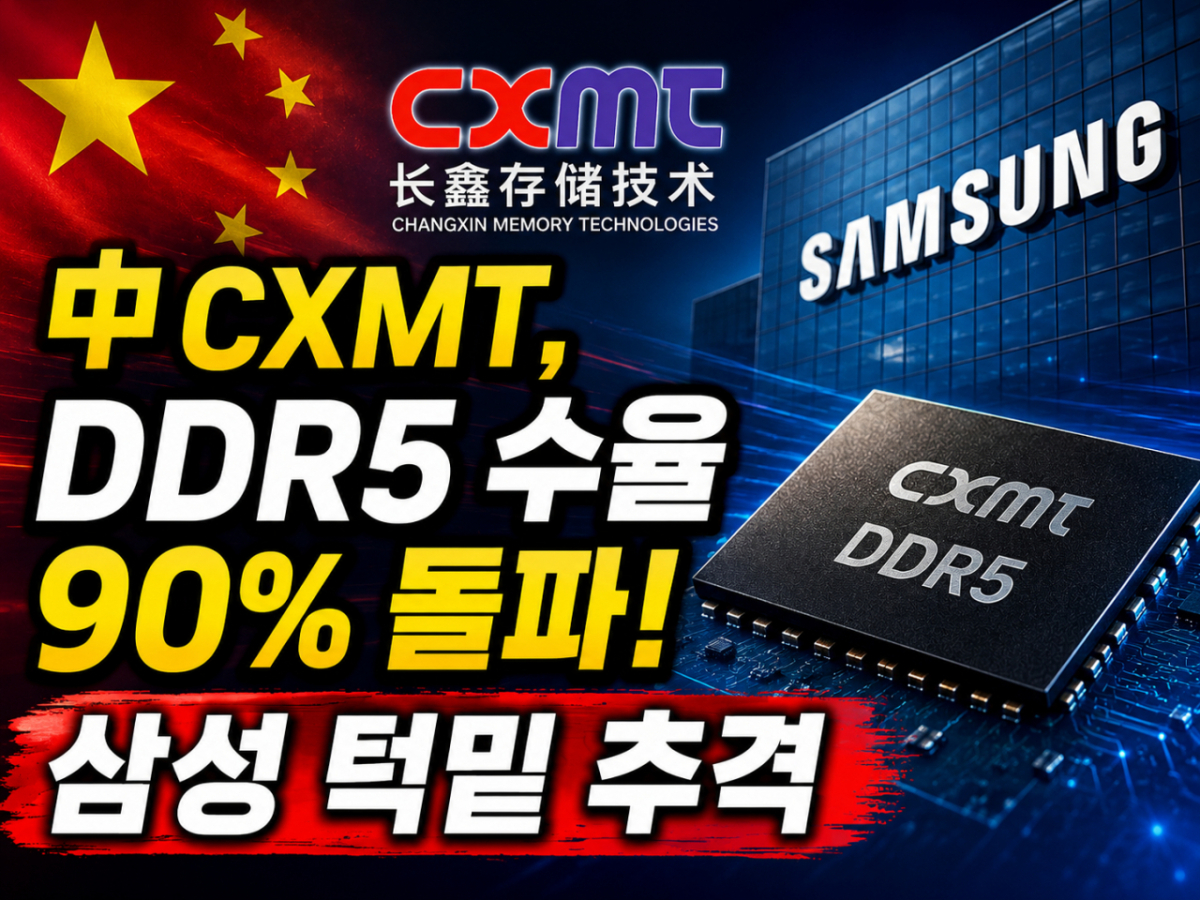
China’s largest DRAM manufacturer, Changxin Memory Technologies (CXMT), has reportedly raised its DDR5 production yield rate to over 90%. Global PC manufacturers such as HP, ASUS, and Acer have begun incorporating CXMT products into select laptops, signaling that Chinese-made DRAM is gaining a stronger presence in the global supply chain.
According to a report by Chinese IT media Quicker on the 11th, CXMT’s production yield rate for its 17-nanometer-grade DDR5 chips has recently surpassed 90%. The outlet estimates that Samsung Electronics’ equivalent product yield rates stand at around 92% to 93%, suggesting that the gap between the two companies has narrowed to just 2 to 3 percentage points.
Yield rate refers to the proportion of functional products among all manufactured semiconductors, directly influencing productivity and cost competitiveness. Higher yields allow more units to be produced from the same wafer, reducing costs and increasing supply volumes. If CXMT can consistently maintain a yield rate above 90%, it would signify a substantial improvement in its DDR5 Yangsan competitiveness.
Technological catch-up is now translating into actual entry into global supply chains. Recent foreign media reports indicate that major PC manufacturers including HP, ASUS, and Acer have completed certification for CXMT DRAM around mid-year this year and have started limited integration of the chips into select laptops. These products are primarily sold in markets outside the United States, including China.
Responses from individual companies vary. ASUS and Acer are reportedly applying CXMT memory to certain models sold in China and emerging markets, while HP has also adopted the chips mainly for products targeting the Chinese market. In contrast, Dell is understood to have a policy of not using CXMT products.
However, as claimed by Chinese media, CXMT does not yet pose an immediate threat to the three leading DRAM manufacturers—Samsung Electronics, SK Hynix, and Micron. The number of PC models equipped with CXMT chips remains limited, and the existing three companies still account for over 90% of global DRAM supply. Consequently, PC manufacturers are reportedly proceeding cautiously in expanding their adoption of CXMT products, taking into account their existing supply relationships with established memory vendors.
The shortage of memory supply driven by the AI boom is seen as an opportunity for CXMT to expand its market reach. While Samsung Electronics, SK Hynix, and Micron are concentrating their efforts on high-value-added products such as HBM (High Bandwidth Memory) for AI applications, CXMT is focusing on increasing shipments of general-purpose DDR5 memory used in PCs and other devices.
If CXMT can translate its yield improvements into expanded production volumes, it could trigger shifts in the competitive landscape of the general DRAM market. Having transitioned from a domestic-only supplier to entering the supply chains of global PC manufacturers, CXMT is emerging as a long-term competitive variable for Samsung Electronics and SK Hynix.

 in TECH
