

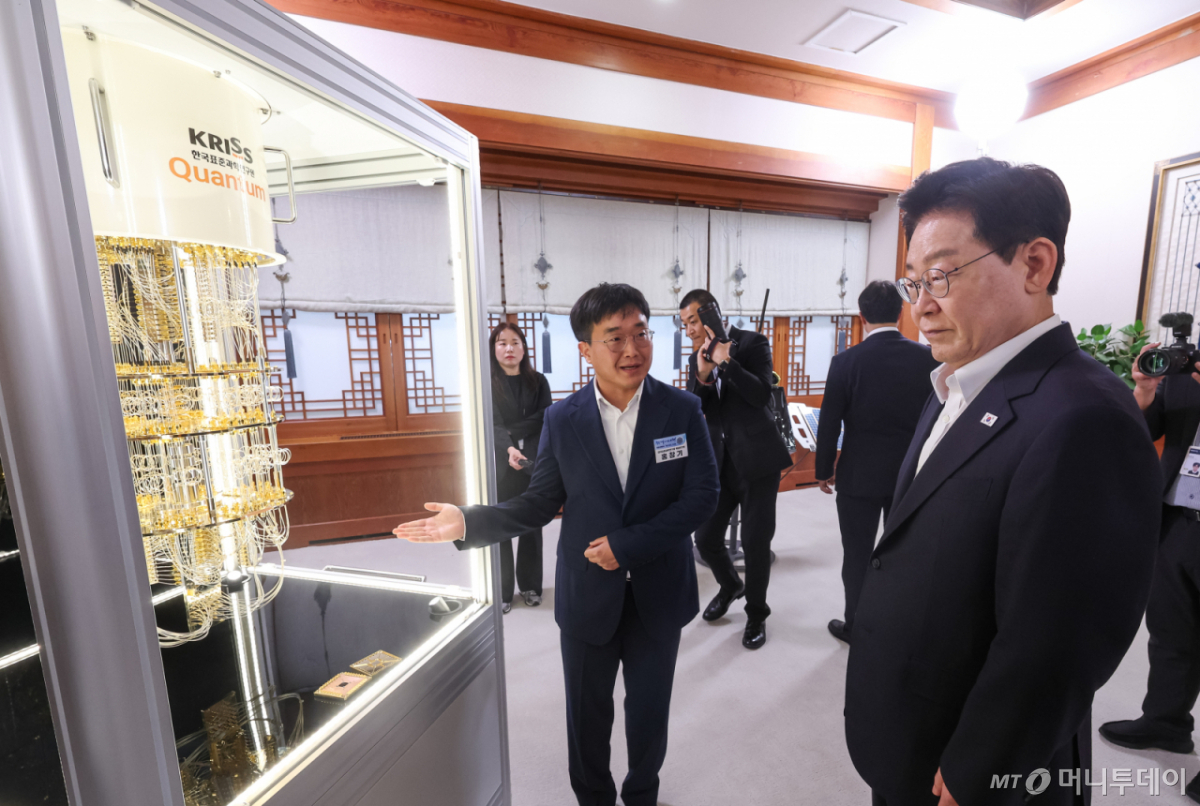
Three domestic quantum clusters, designed to create a quantum technology ecosystem linked with regional specialized industries, have been selected.
The Ministry of Science and ICT announced on the 1st that three consortia were ultimately chosen as the first round of quantum clusters: △Seoul (quantum computing), △Gwangju in Jeonnam (quantum communication), and △the southeastern region (Busan-Ulsan-Gyeongnam, quantum sensing). This followed an application process in April where seven regional consortia applied, undergoing expert committee review and on-site inspections.
The quantum cluster project aims to establish specialized 'Quantum Transition' (QX) hubs by linking quantum technologies with local key industries. It is being implemented by the Ministry of Science and ICT according to the 'First Quantum Cluster Basic Plan (2026–2030)' approved by the Quantum Strategy Committee in January. The goal is to build a quantum industry ecosystem that integrates advanced technologies, equipment, and talent based on quantum technology R&D infrastructure, ultimately connecting to actual products in Yangsan.
The Seoul quantum computing cluster will leverage the capital region's strengths in quantum research, corporate capabilities, and investment to create an ecosystem for quantum computing applications linked with diverse industrial demands such as biotechnology, finance, and AI. It plans to support everything from algorithm development to device packaging and product commercialization, while also promoting technology startups, investment, and talent cultivation.
The Gwangju (Jeonnam) quantum communication cluster aims to build a quantum communication materials, components, and equipment (MCE) ecosystem by utilizing the domestic optical communication and optical device industry base. A key strength is its ability to establish a demonstration foundation linked with regional industries such as energy, AI, and aerospace.
The southeastern region quantum sensing cluster will consolidate the area's abundant manufacturing base along with quantum sensing research, manufacturing, and MCE capabilities. It aims to support everything from quantum sensor fabrication to packaging, testing, certification, and on-site demonstrations, while creating quantum application cases linked with specialized industries such as marine, manufacturing, and defense.
The Ministry of Science and ICT explained that the selection was based on a comprehensive review of factors including quantum technology capabilities and talent foundations, potential for quantum applications linked with regional industries, conditions for expansion based on demand companies and industrial groups, and local government implementation capabilities. An execution plan will be prepared within this year, with full-scale cluster construction set to begin next year.
Park Hyeong-hoon, Vice Chairman of the Quantum Strategy Committee and Minister of Science and ICT, stated, "We will nurture quantum clusters as a representative model of 'real growth' where scientific and technological achievements lead to regional strengths and industries, creating new markets."

 in TECH
