

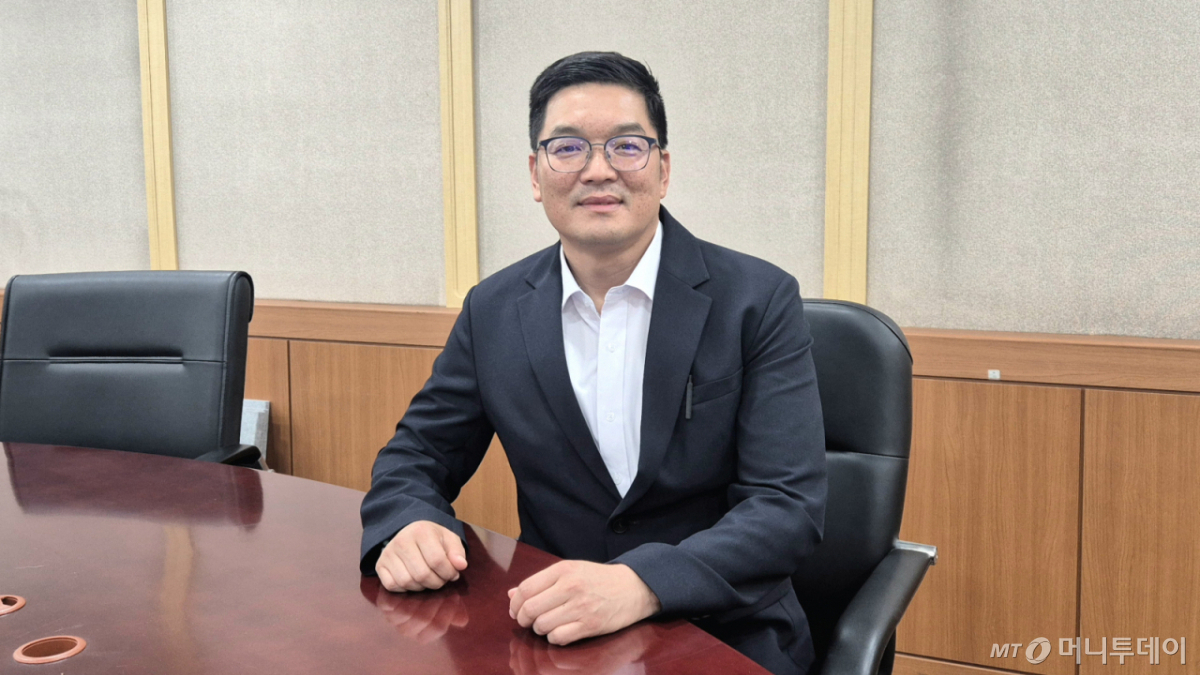
"You can start a company with 10 billion won and grow it into a 10 billion won enterprise, but transferring technology to an existing 10 billion won company to build a unicorn (a private company valued at over $1 billion) is also valuable."
In a recent interview with Money Today, Jeon Nam-jung, Director of the Center for Solar Energy Research at Korea Institute of Chemistry and Materials Science, stated, "The more deep-tech it is, the more continuous advice and consultation from researchers are needed during the product commercialization process." He added, "With the 'Conflict-of-Interest Prevention Special Exemption' set to be implemented in March next year, we will accelerate efforts to nurture deep-tech."
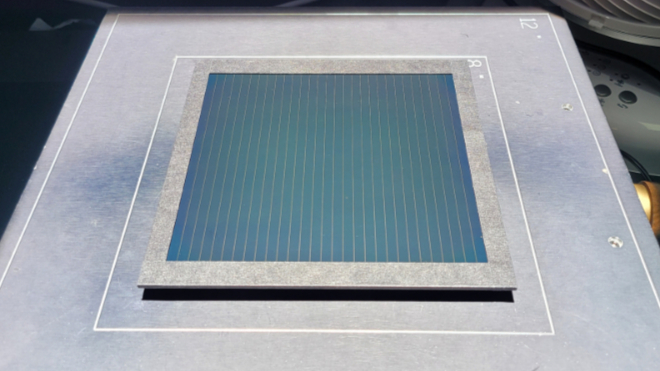
The former director is an authority on perovskite solar cells. For three consecutive years, his research on solar cells has been selected by Clarivate Analytics as one of the "Highly Cited Researchers (HCR)" — the most influential researchers in the world. This indicator selects only the top 0.1% of researchers globally. In June 2025, he transferred inkjet printing materials and process technologies for mass production of solar cells to Gosan Tech, and in July 2026, he transferred material composition and manufacturing technologies for high-efficiency silicon-perovskite tandem solar cells to LK Chem. Perovskite is a new material used in solar cells as an alternative to silicon.
Until now, researchers at government-funded research institutes found it difficult to provide paid consulting services to startup companies or companies that received technology transfers. This was due to legal interpretations stating that conflicts of interest arise when a researcher's specific duties are directly intertwined with the company.
This will change starting in March next year. The 'Conflict-of-Interest Prevention Special Exemption' has been included in the revised version of the "Act on the Establishment, Operation, and Nurturing of Government-Funded Research Institutes" (Government-Funded Research Institute Act), which passed the State Council on the 8th. Starting in March next year, researchers at government-funded research institutes will not be entangled in conflicts of interest even if they hold equity stakes in companies they founded using technologies held by their respective institutes or in companies to which they have transferred technology.
The former director stated, "Due to regulations, countless researchers at government-funded research institutes have effectively provided follow-up technology support for free." He added, "The voice from the research community is that supporting not only direct startups but also the growth of transferred-technology companies should be recognized as a form of startup activity in a broad sense."
Compared to the scope of activities for university professors, the gap is significant. The former director noted, "University professors are exempt from serving as outside directors, paid consulting, and dual employment, but researchers at government-funded institutes have been completely blocked from paid activities by various higher-level laws and internal guidelines." Nevertheless, startup achievements and technology transfer results were included in various evaluation indicators.
The former director said, "This special exemption will somewhat relieve the pressure on researchers at government-funded research institutes," while also noting, "However, there is still a long way to go." A representative issue is the 'double taxation' that occurs when technology is transferred from government-funded research institutes.
Researchers who transfer technology to private companies receive rewards for job-related inventions as compensation. Of this amount, 40% goes to their respective institute. The problem arises afterward. Since 2017, rewards for job-related inventions have been classified as "employment income" and became subject to taxation. When the reward is combined with the existing salary, the income bracket sees a sharp increase. Consequently, after withholding tax at the time of payment, another 'tax collection' occurs during the year-end settlement and comprehensive income tax reporting period. This is why complaints are heard from the field that researchers gain nothing even when they transfer technology. Although multiple bills to amend this have been introduced in the National Assembly, they were repeatedly blocked at the review stage.
The former director emphasized, "Government-funded research institutes serve as a bridge between industry and academia; there is no need to create disparities in treatment or systems." He added, "We must ensure that excellent research personnel do not leave government-funded research institutes due to issues regarding their working conditions."

 in TECH

