

[For more diverse corporate information on startups mentioned in this article, visit the Unicorn Factory big data platform 'Data Lab'.]
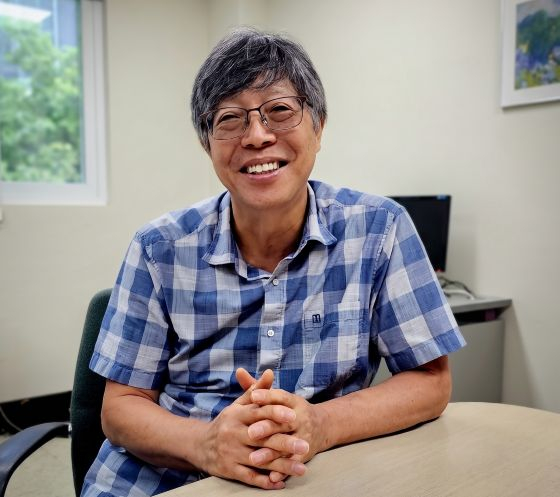
"There is no such equipment anywhere in the world that indicates whether an experiment is proceeding properly."
Room 202, Startup Workshop at Korea Research Institute of Standards and Science (KRISS) in Yuseong-gu, Daejeon. Park Sang-yeol, CEO Noh Si-seu-raep (CEO), who has spent over 30 years researching bio-measurement standards at KRISS and served as both institutional investor head and department director, introduced his self-developed bio-research equipment 'Ultra-OD' and said this.
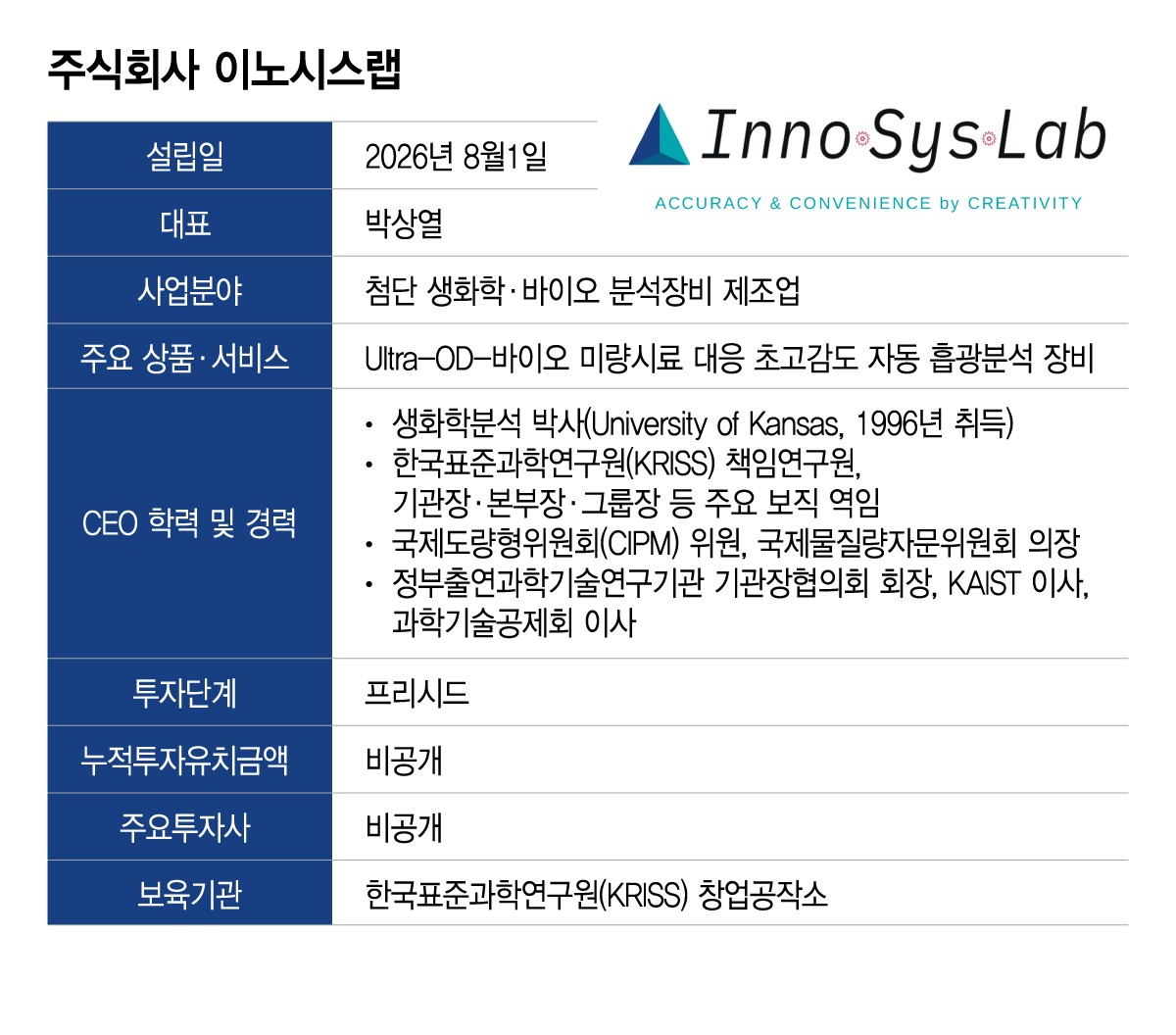
With the help of KRISS's step-by-step startup support program (STEP), Park (CEO) established the research institute's startup company Inosys Lab last month after three years of preparation, picking up a long-delayed task he had set aside. This is the 'domestication of bio-analysis equipment,' which he resolved to accomplish before his career as a researcher ends.
He said, "There are times when I wonder what I'm doing at an age when others have retired and are enjoying life," but added, "Since my co-founder Yoo Hui-bong (Director) and I have always created new equipment in the lab and achieved good results, I am confident that persistent effort will eventually solve this."
Park (CEO) has been interested in 'equipment domestication' since his early days at KRISS. When he served as institutional investor head in 2017, he established the 'Advanced Measurement Equipment Research Institute,' demonstrating strong attachment to equipment domestication and nurturing the research industry.
Park (CEO) pointed out, "The situation of relying heavily on foreign products for measurement and analysis equipment has not changed significantly then or now," adding, "A significant portion of research funds is spent on purchasing equipment and reagents, but since these cannot be replaced with domestic products, the trade deficit remains serious."
He further noted, "Foreign companies seem to give their all when selling, but once sold, they demand 'buy a new one' at the slightest problem, showing poor after-sales service," and added, "Just as we sustain our country through semiconductor exports, we must grow the research industry into an industry centered on equipment and reagents to balance with our scientific and technological development."
Digging into blind spots in bio-labs
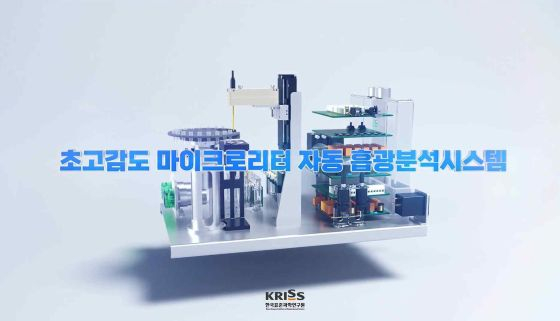
Inosys Lab's first product, the ultra-high-sensitivity microliter automatic absorbance analysis system 'Ultra-OD,' originated from an idea conceived by Park (CEO) ten years ago. It aimed to solve the chronic blind spot of bio-labs: 'lack of feedback.'
The most frustrating aspect for researchers in bio-experiments is the difficulty of checking results midway through the experiment. The process is complex and involves multiple steps, so one can only confirm whether results are correct after completing all prescribed procedures. Park (CEO) explained, "Researchers follow protocols and only discover errors after receiving final results much later."
Ultra-OD solves this 'midpoint check' problem. It measures conditions with trace samples and automatically repeats collection, measurement, and cleaning processes, allowing researchers to monitor sample status during experiments.
The core technology is a 60mm-long 'capillary absorbance cell.' This component measures the amount of light absorbed by passing light through a sample, significantly increasing measurement sensitivity by extending the light path (optical path) from less than 1mm in existing equipment to 60mm. The longer the optical path, the more quickly minute differences can be detected even with the same amount of sample.
Instead of 'chips'... Bypassing a 20-year challenge in lab-on-a-chip
Ultra-OD incorporates the laboratory integration idea known as 'lab-on-a-chip.' This technology condenses analyses previously conducted across multiple steps in large laboratories onto a single chip no larger than a fingernail. Although academia has worked on this concept for over 20 years, no significant success has emerged yet.
Park (CEO) identified the reason in the fundamental differences between semiconductors and bio-analysis. Semiconductors operate in solid form; even when miniaturized, they function precisely as designed. In contrast, bio-analysis involves handling all processes with liquids (solutions). The moment liquid flows through tubes thinner than a hair, issues such as air bubbles or clogged tubes arise everywhere. This is why semiconductor fabrication techniques cannot be directly applied to bio-analysis.
Inosys Lab abandoned the approach of precisely carving chips. Instead, it adopted a method of stacking blocks layer by layer and creating fluid paths (channels) between blocks. These channels are formed along grooves engraved on thin sealing plates (gaskets) inserted between blocks. The grooves are precisely carved using lasers. The key is flexibility. If one wants to change the path, only the groove shape needs to be re-engraved. Block materials can also be selected as needed. Unlike existing chips that are difficult to modify once made, Inosys Lab's approach allows paths to be redrawn at any time.
This flexibility leads directly to 'scalability.' For example, instead of discarding samples after absorbance measurement using light, they can be directed to subsequent channels for sequential passage through pH, ion, fluorescence, and immunosensors. This enables obtaining multiple types of biochemical information from a single sample simultaneously, paving the way for development into 'composite equipment' that measures multiple items at once. Park (CEO) stated, "We plan to first establish brand recognition with Ultra-OD before immediately commencing research on composite equipment," adding, "This is an area with almost no competition."
Building trust through equipment, expanding through reagents
Ultra-OD is currently at Technology Readiness Level (TRL) 7–8, having entered the verification stage assuming actual usage environments. It has also completed performance testing for 300 consecutive automatic measurements. The core capillary absorbance cell's foundational patents have been secured or are pending in major markets including the European Union (EU), Japan, and China. After commercialization, Park (CEO) plans to leverage the global network established through international standardization activities to conduct beta testing with institutions such as the U.S. National Institute of Standards and Technology (NIST) and the UK's National Measurement Laboratory LGC to verify technical reliability.
Inosys Lab's growth strategy consists of two stages: first building trust through equipment, then expanding into reagent business. Park (CEO) stated, "Entering the reagent market without equipment is difficult. Securing brand power through equipment makes reagent access much easier," and added, "We aim to expand into high-value-added general-purpose reagents and standard materials, capturing more than 0.5% of the entire bio-equipment and reagent market." Through this, Inosys Lab plans to achieve profitability by 2028 and reach annual sales of 100 billion won by 2033.
[MoneyToday startup media platform Unicorn Factory]

 in TECH


