

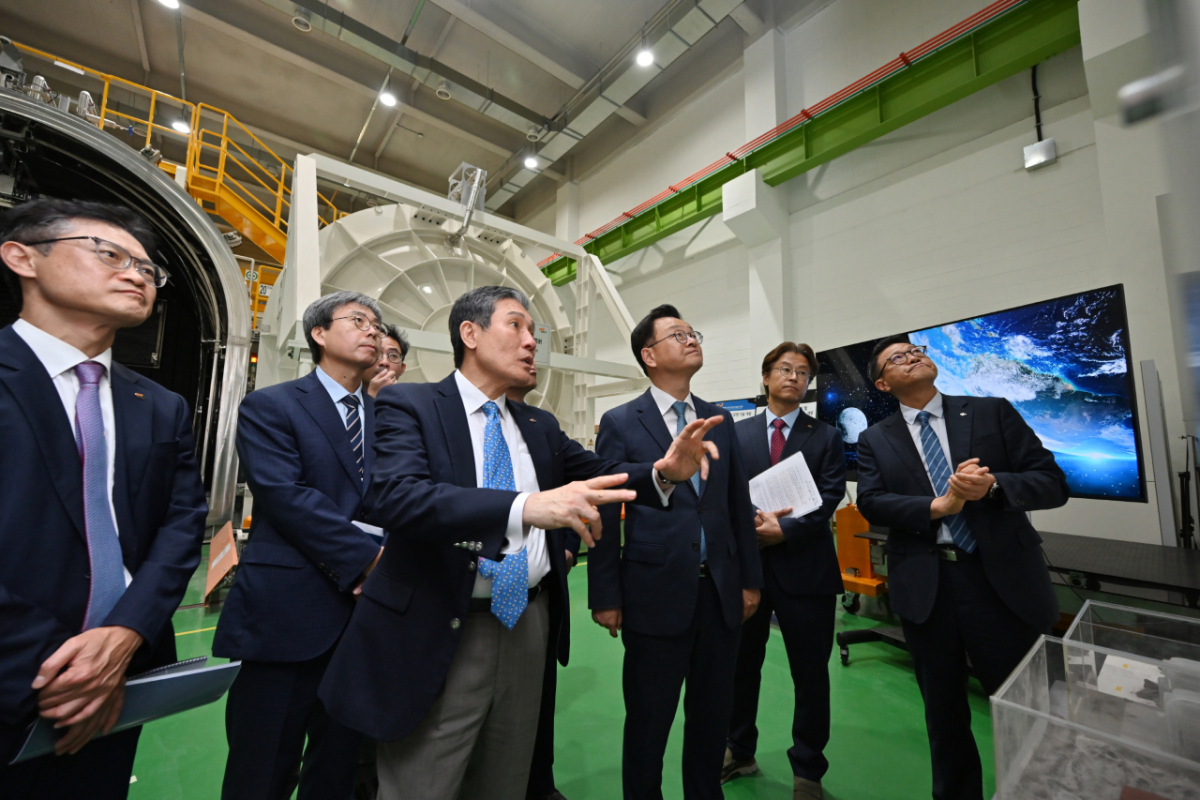
The Korea Institute of Civil Engineering and Building Technology (KICT) is expanding cooperation with Goyang Special City in the field of advanced infrastructure.
On the 18th, KICT announced that it held a meeting at its main campus in Goyang-si, Gyeonggi Province, with Goyang Special City to expand regional future development and cooperation on advanced infrastructure. The meeting was attended by key officials from both parties, including Park Sun-kyu, Director of KICT, Min Kyung-seon, Mayor of Goyang Special City, and other major institutional investors.
Both institutional investors plan to link research and policy capabilities centered on areas closely related to citizens' lives, including AI-based traffic systems, aerospace and space construction, Korean Urban Air Mobility (K-UAM), Peace Economic Special Zone, smart construction and startups, and disaster safety, through this meeting.
Attendees toured the Future Convergence Hall, Structural Experiment Building, Breakwater Experiment Building, and Smart Construction Support Center within KICT's main campus to confirm the current status of advanced infrastructure research and its potential for on-site application.
Park Seon-gyu (Director) said, "Goyang City has been a partner with KICT for the past 30 years," adding, "We will actively link KICT's research capabilities to create the region's future together."
Min Kyung-seon, Mayor of Goyang City, stated, "Through cooperation with KICT, we aim to ensure that advanced construction technologies lead to improved citizen safety and quality of life."

 in TECH
