

While Samsung Electronics is expected to have posted an operating profit exceeding 107 trillion won in the third quarter of this year, its MX (Mobile eXperience) division, which oversees the smartphone business, is projected to have recorded a loss of approximately 1 trillion won. Analysts attribute this to the company's inability to overcome rising cost burdens driven by surging prices of key components such as mobile DRAM, despite expanded sales of flagship smartphones like the Galaxy Z series.
Samsung Electronics disclosed on the 8th that, on a consolidated basis, it provisionally recorded revenue of 195 trillion won and an operating profit of 107.4 trillion won for the third quarter of this year. Revenue increased by 13.7% and operating profit rose by 20.01% compared to the previous quarter. Year-on-year, these figures surged by 126.59% and 782.5%, respectively.
Samsung Electronics does not disclose segment-specific performance during its preliminary earnings release. However, the financial investment industry anticipates that the MX and Network division recorded an operating loss of around 1 trillion won in the third quarter of this year. Depending on forecasts from various securities firms, the size of the loss ranges from 900 billion won to 1.9 trillion won. Specific segment performance will be revealed when final earnings are announced at the end of this month.
If current estimates hold, the MX and Network division will have posted losses for two consecutive quarters, following the second quarter. In the previous second quarter, the division recorded revenue of 33.2 trillion won and an operating loss of 700 billion won. This represents a significant deterioration in profitability compared to the 3.1 trillion won operating profit generated during the same period last year.
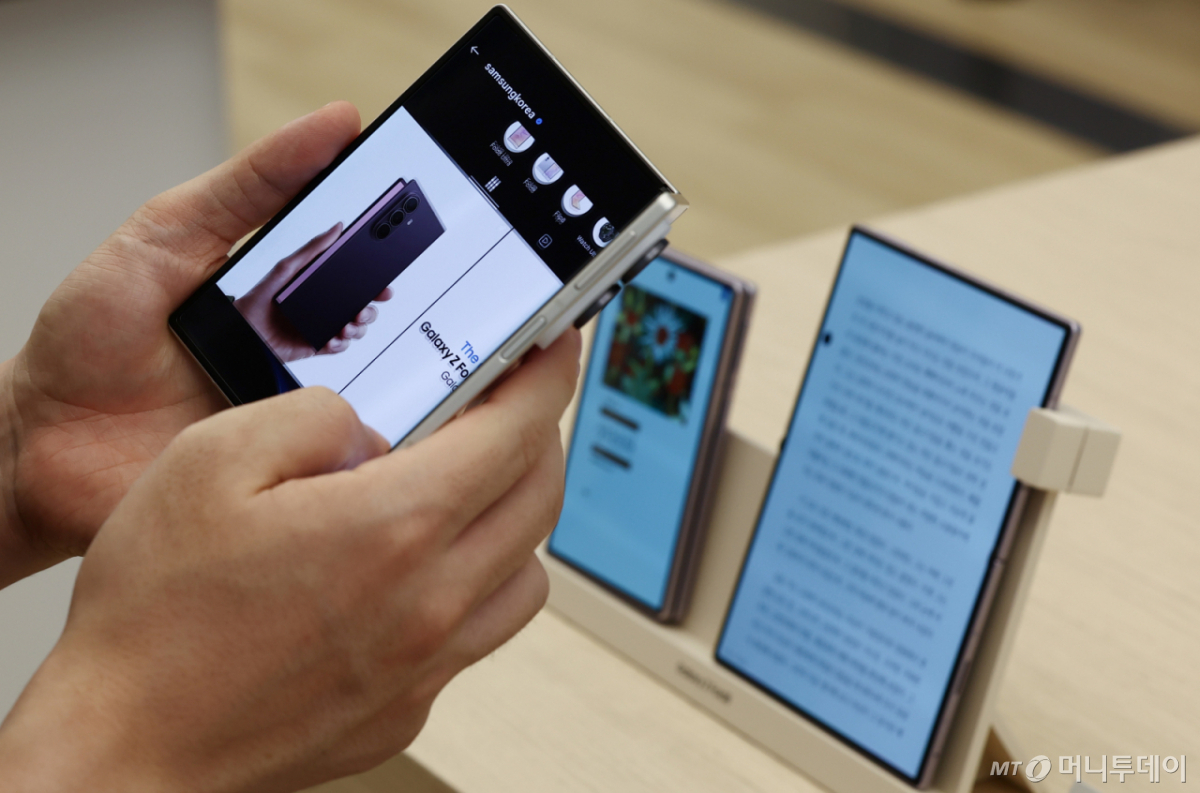
In the third quarter, smartphone sales are estimated to have increased from the previous quarter, driven by the launch of new Galaxy Z Fold and Flip models. As the third quarter is typically when Samsung Electronics releases its new foldable products, improvements were also expected due to expanded sales of high-priced devices. However, it appears that this sales expansion did not translate into a recovery in profitability.
The most significant burden has been the rise in component prices, particularly memory. With memory demand surging, centered on AI data centers, prices for mobile DRAM and NAND flash have also risen sharply. For Samsung Electronics, while its semiconductor business benefits from rising memory prices, its smartphone business continues to face the situation of having to purchase the same memory at higher costs.
In fact, Samsung Electronics has partially reflected rising component prices in product pricing. Following price increases for domestic models such as the high-capacity Galaxy Z Fold7 and Flip7 in April, the company recently also raised prices for some Galaxy S26 products. Analysts note that the strategy of limiting product price hikes to maintain shipment volumes and market share has become insufficient to absorb rising costs.
The issue is that the upward trend in memory prices is likely to continue for the time being. Since semiconductors, such as memory and application processors (APs), account for a high proportion of smartphone production costs, sustained increases in component prices could delay any recovery in profitability.

 in TECH
