

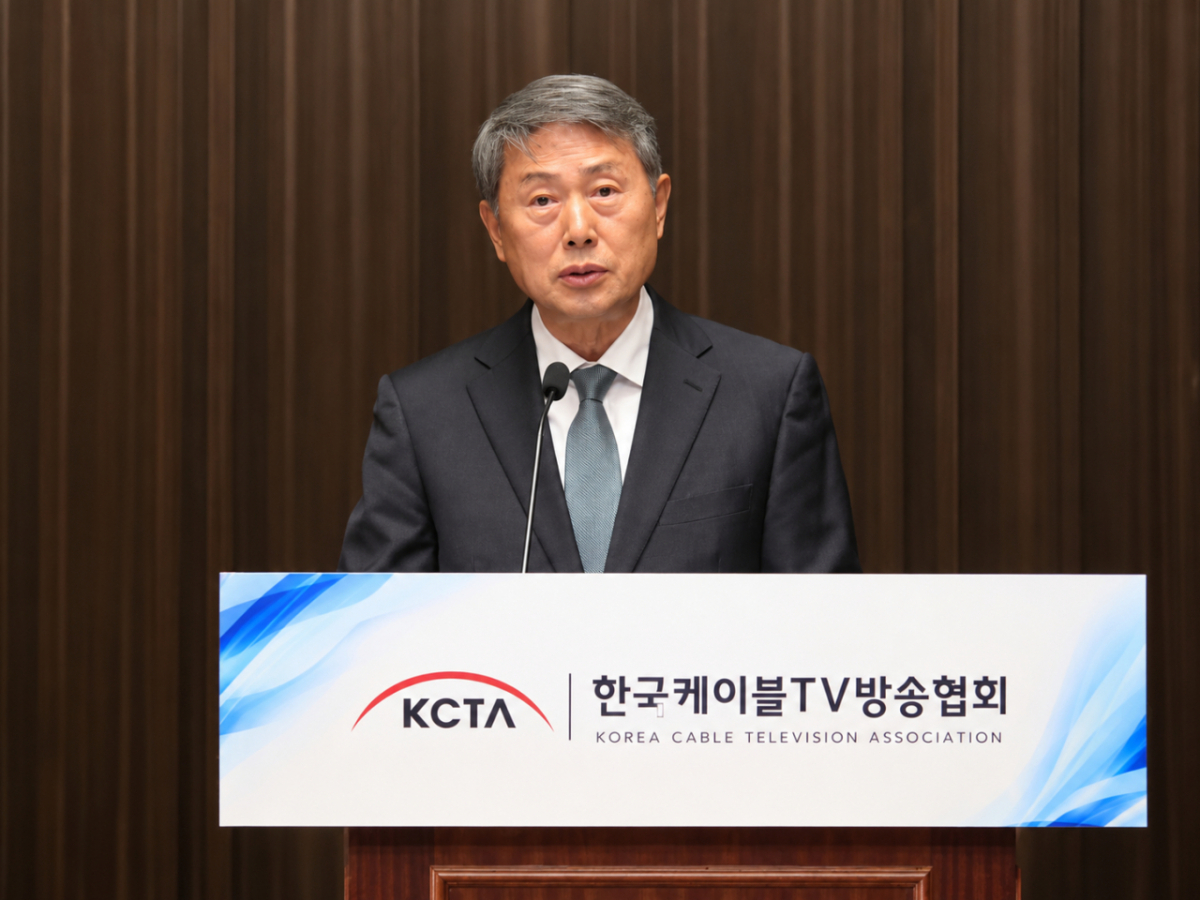
“You are well aware that the cable TV industry is currently facing very difficult circumstances. However, today we do not wish to speak of those difficulties. We will first focus on what we need to do.”
The cable TV industry stated as much, noting that its open letter addressed to President Lee Jae-myung includes a commitment to strengthen the public role of local media. The industry plans to bundle low-cost broadcasting services under a joint brand called “TV for All” and to launch AI (artificial intelligence) education programs for the elderly. The aim is to draw the government’s policy attention through these initiatives.
The Korea Cable TV Broadcasting Association held a press conference on the 8th at Seoul Garden Hotel in Mapo-gu, Seoul, announcing three key practical tasks: strengthening local character, ensuring universal media access, and bridging the AI divide.
Hwang Hui-man, chairman of the Korea Cable TV Broadcasting Association, said, “OTT (online video streaming services) and mobile devices have become part of daily life, and now AI is even changing how people use media.” He added, “No matter how much technology advances, there are things we must not overlook.” He emphasized, “Stories from our neighborhoods should not disappear simply because where we live is different,” and “People should not be excluded from media just because they are elderly or unfamiliar with new technologies.” He further stated, “Cable TV will become the closest medium to connect citizens’ basic right to media.”
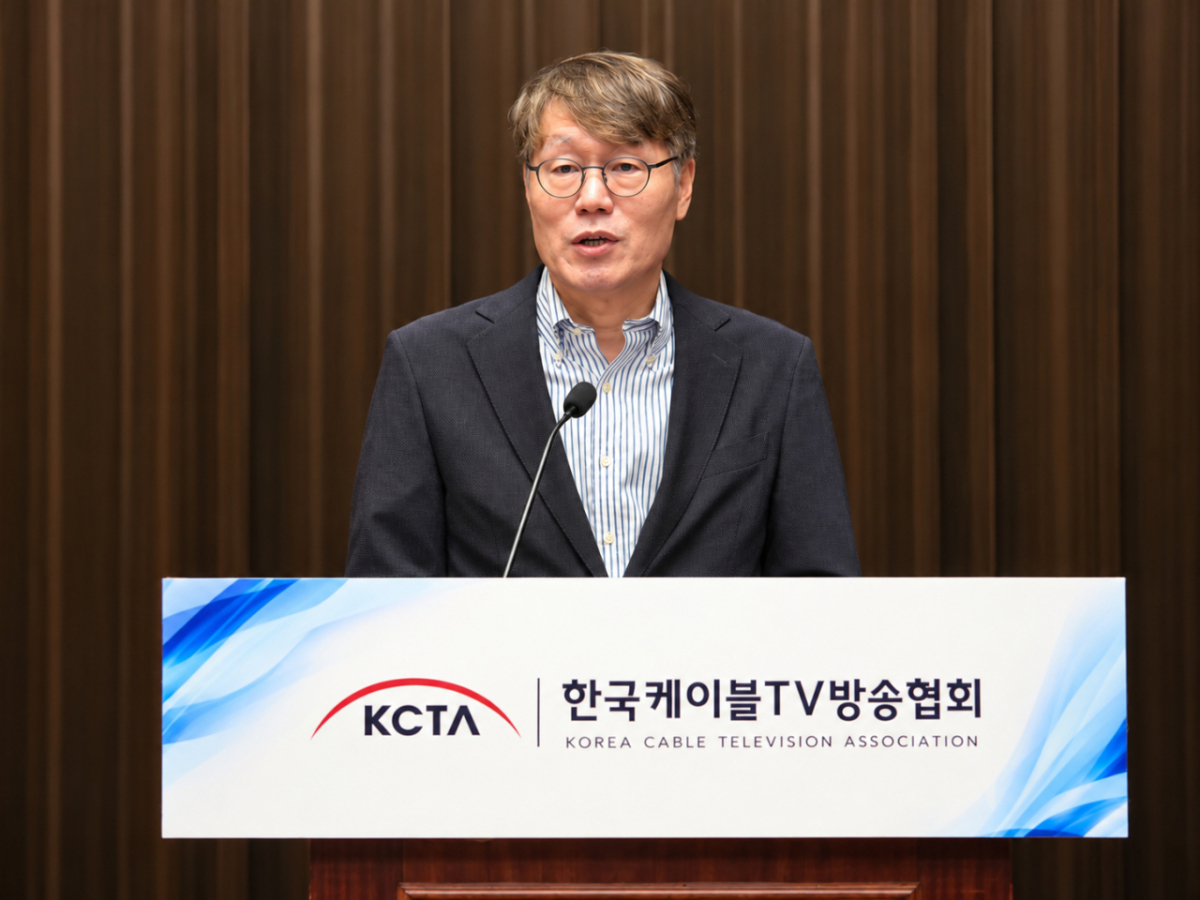
The specific practical tasks were presented by Lee Han-oh, chairman of the SO Council of the Korea Cable TV Broadcasting Association. The first is strengthening local residents’ right to know. In addition to local news and lifestyle information, the industry will continuously report on issues closely related to residents’ daily lives, such as disasters and safety, the local economy and small businesses, and local elections and regional councils. It plans to reflect residents’ voices in the government’s policies aimed at revitalizing the local economy.
The second is ensuring universal media access. The 8VSB service, which has been operated under different names depending on the region and operator, will be consolidated under the joint brand “TV for All.” 8VSB is a transmission method that allows viewers to watch digital broadcasts through cable networks without a separate digital set-top box. The goal is to enable the elderly and digitally vulnerable groups to access broadcasting at low cost.
The third is bridging the AI information gap. In collaboration with local welfare centers, senior universities, and community centers, the industry will promote “AI Classes in Our Neighborhood.” This program supports the use of AI by the elderly and digitally vulnerable groups.
The industry is also promoting a joint AI planning program involving local cable TV channels nationwide. As its first project, it is considering “Local AI Sovereignty: Is Our Region Ready?” The program will cover topics such as the use of AI by local SMEs (small and medium-sized enterprises) and traditional markets, talent development at regional universities, and changes in agricultural and fishing villages and local industries.
The council chairman said, “To ensure that the promises we have made today do not remain mere declarations, SOs across the country will each implement one initiative in their respective regions and show the results to the public.”
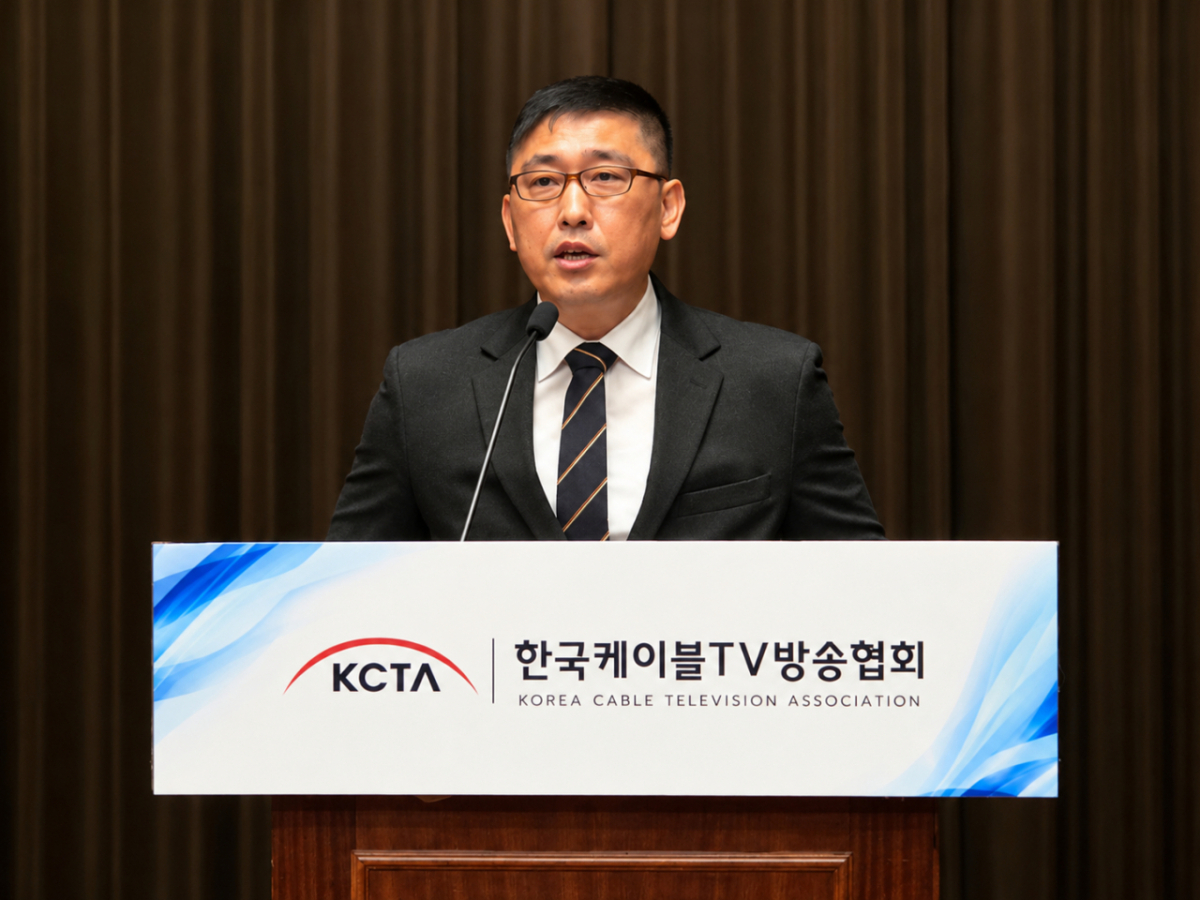
The cable TV industry’s emphasis on expanding its public role is intended to remind the government of the importance of local media in its media policy. Lee Jae-pil, a director of the Korea Cable TV Broadcasting Association, read an open letter addressed to President Lee Jae-myung and said, “As we work to create new media policies, we ask that you pay attention not only to global platforms and new technologies but also to the field realities of local media.” He added, “We hope to discuss the sustainability of cable TV together with the government.”

 in TECH


