

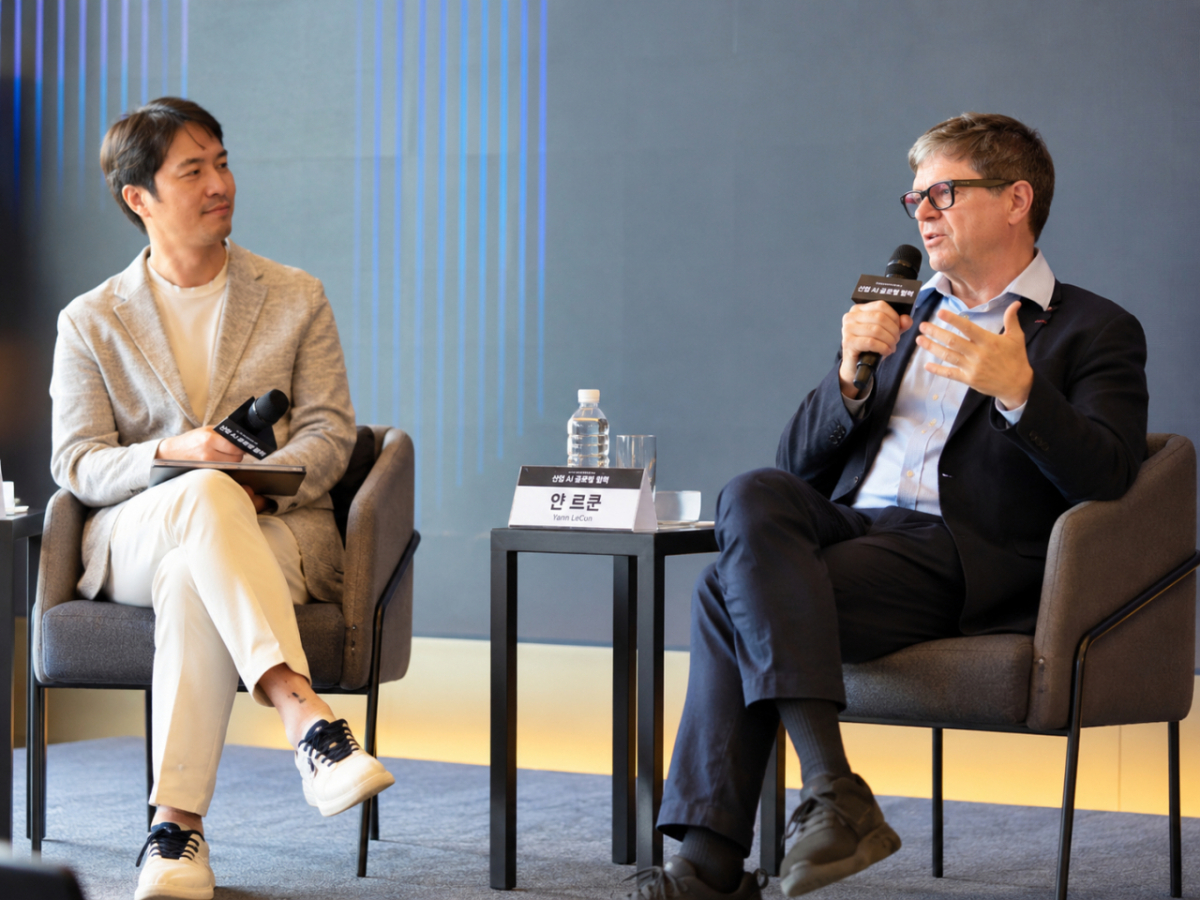
Yann LeCun, founder and chairman of AMI Labs, one of the "three godfathers of AI," highly praised South Korea's manufacturing competitiveness and predicted that the country could play a significant role in the physical AI revolution. Global AI experts also cited data accumulated on manufacturing sites and industrial capabilities as South Korea's differentiated competitive advantage.
At the press conference on "Global Cooperation in Industrial AI" held on the 12th at the Westin Josun Seoul in Jung-gu, Seoul, Chairman LeCun stated, "Another revolution will occur in AI, and South Korea has an opportunity to play a crucial role." He focused on the manufacturing foundation that South Korea has built over a long period in the fields of physical AI and robotics.
Ha Jeong-woo, vice chairman of the National AI Strategy Committee, said in his congratulatory remarks, "In the AI competition, it is important to go beyond creating excellent foundation models and connect them to productivity and competitiveness on industrial sites." He added, "It is difficult for the United States and China to secure all capabilities independently," emphasizing that each country's technology, data, and research capabilities must be combined.
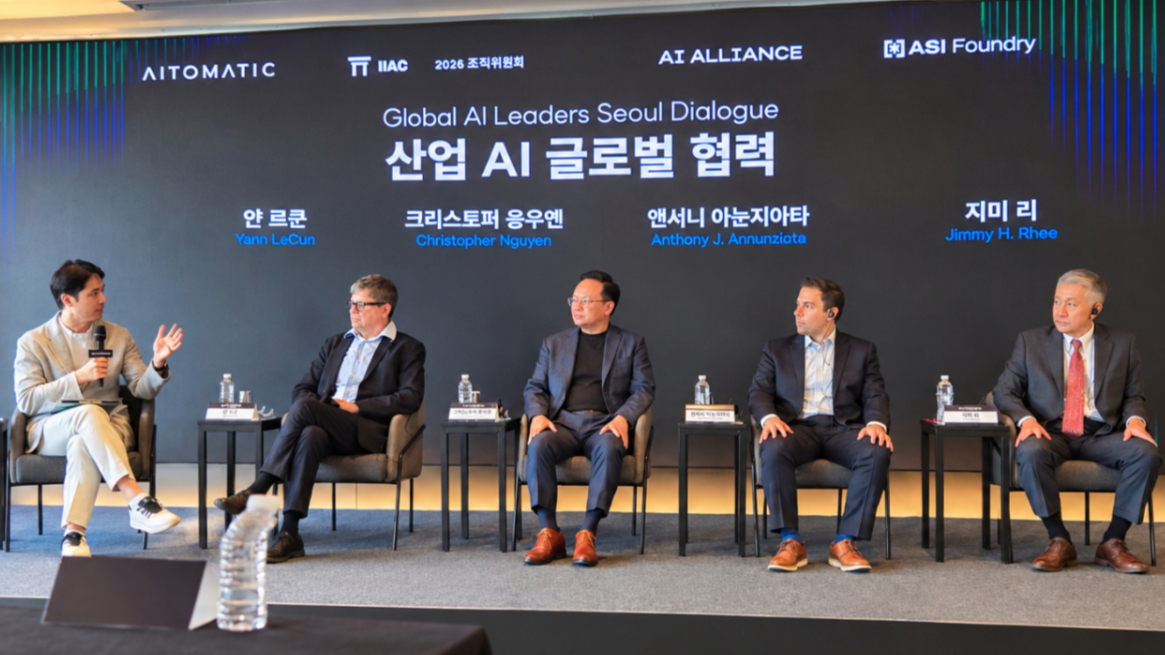
Chairman LeCun also pointed out the limitations of LLMs (large language models). He stated, "There is AI that can prove mathematical theorems, but robots cannot even do what a 10-year-old child can," explaining the need for "world models" that understand the physical world and predict the outcomes of actions. He also predicted that as AI becomes essential infrastructure, foundation models will develop centered on open weights and open source.
He positively evaluated South Korea's research capabilities. Chairman LeCun mentioned the Global AI Frontier Lab jointly established by the South Korean government and New York University in the United States, assessing that it has secured excellent science and technology talent. However, he advised strengthening the research and innovation ecosystem to attract overseas talent as well.
Christopher Nguyen, co-founder and CEO of Automatik, warned against the U.S.-style large-scale AI investment competition. He pointed out, "If South Korea and Japan focus solely on building massive infrastructure like OpenAI and Anthropic, they may waste resources." Instead, he said, "Invest in safety and governance. Adopt AI early and often," adding, "It may sound contradictory, but having safety, security, and governance in place actually allows for faster movement."
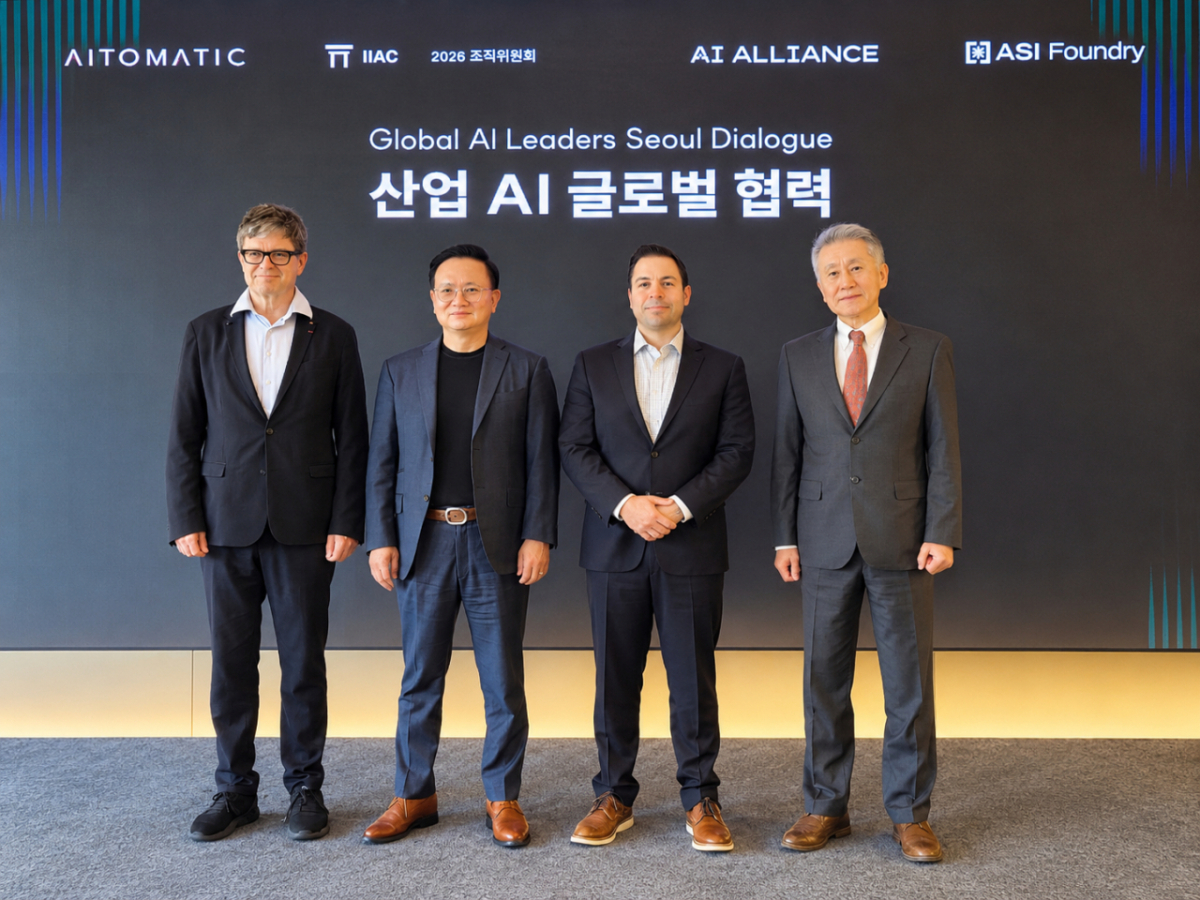
Anthony Anunziata, co-founder and co-chair of the AI Alliance, emphasized that independent AI development and international joint development can coexist. He said, "If you ask whether South Korea's own AI models and the Project Tapestry model can coexist, it is 100% possible." The intent is that while common foundation models are developed through cooperation, South Korea can maintain control over industry-specific technologies and data.
Jimmy Lee, chairman of ASI Foundry, cited South Korea's manufacturing competitiveness as a strength in the era of physical AI. He stated, "South Korea has built a robust manufacturing ecosystem ranging from SMEs (small and medium-sized enterprises) to large corporations," emphasizing that "data accumulated on actual factory sites is important, not data scraped from the internet." He added, "The cost of hesitating while waiting for perfect information will be greater than the cost of acting boldly," advising that the adoption of physical AI should be expedited.

 in TECH


