

"Even companies that have achieved revenue growth through innovative ideas find it difficult to secure investment, go public, or expand globally without a systematic management foundation."
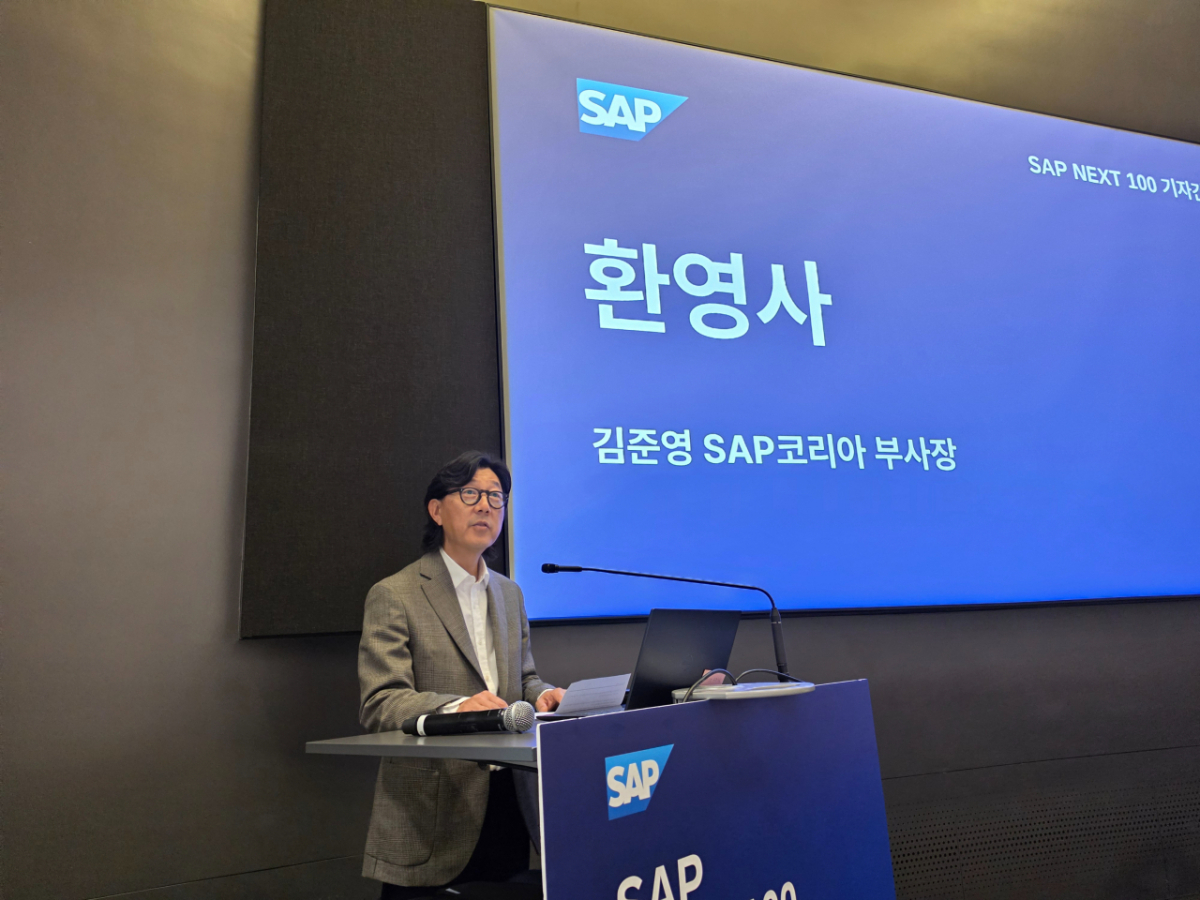
Kim Jun-young, vice president of SAP Korea, held the SAP Next 100 press conference on Tuesday at Two IFC in Yeongdeungpo-gu, Seoul, stating, "We will become a partner that supports domestic companies to take a leap forward through digital transformation and AI innovation," and said as much. SAP is an ERP (Enterprise Resource Planning) software company headquartered in Germany.
SAP Next 100 is a mutual growth program by SAP Korea that selects 100 promising small and mid-sized companies and supports them for eight months. It consists of four stages: one month for growth diagnosis, one month for innovation design, four months for actual system construction, and two months for stabilization and growth. The first two stages are free, and subsequent processes are offered at a discount compared to the standard price.
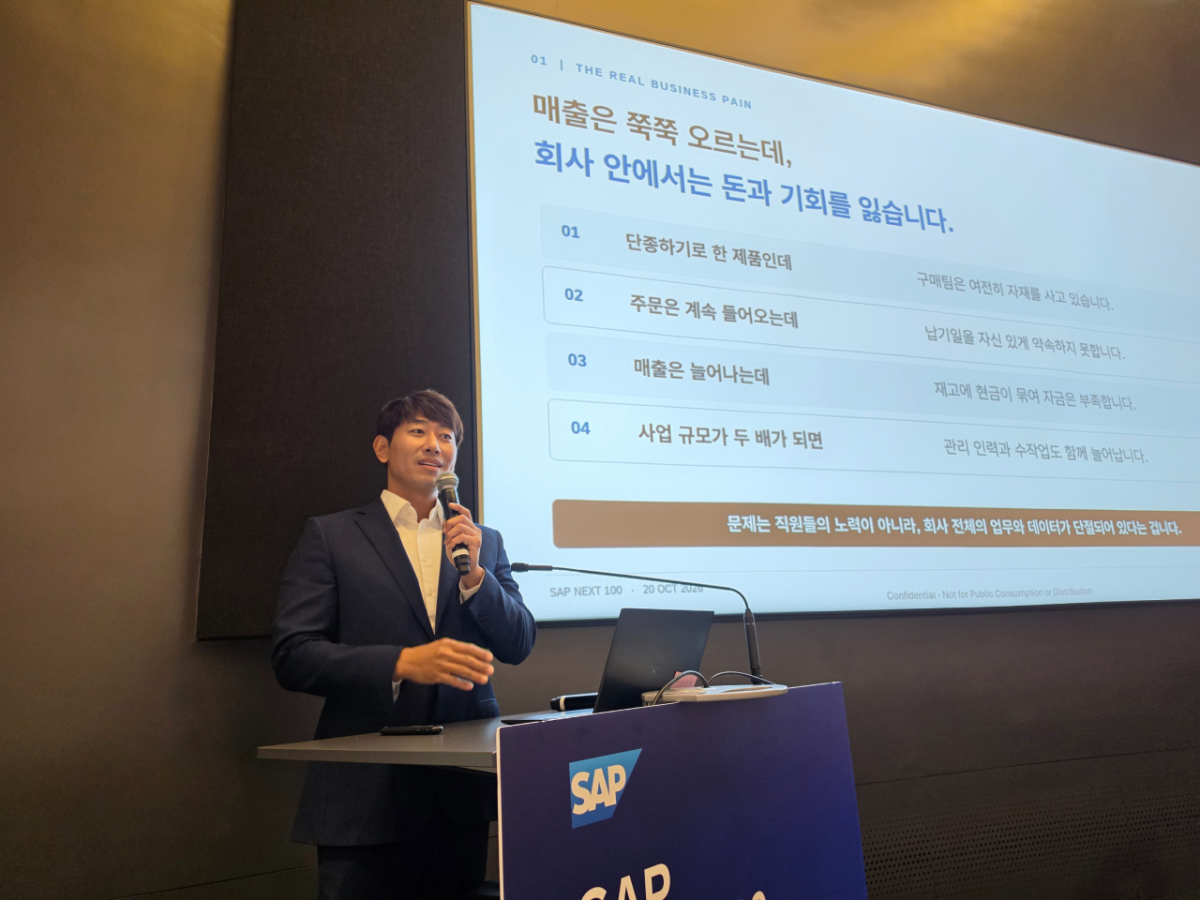
Kang Ji-hoon, head of the Customer Business Division at SAP Korea, said, "Although SAP software is not cheap, we spent about a year requesting headquarters to approve a price close to cost," adding, "Partner companies have also agreed to support services such as building firm banking and additional development."
Target companies are selected through a process of approximately one month, including online applications, suitability evaluation, preliminary interviews, final selection, and project initiation. The criteria are: 30% growth potential, 30% need for innovation, 30% standard suitability, and 10% feasibility. The application period runs from September 1 to the 31st of this month, and the recruitment for the second cohort, originally planned for next year, is scheduled to begin on November 1.
SAP prepared this program to expand its business targets to small and mid-sized companies. Previously, SAP was more expensive than domestic ERP competitors such as The One Bizon and Younglim Softlab, so large corporations were the main target. With SAP Next 100, the calculation is that if promising companies use SAP ERP from the early stage, they will continue to use it even after growing.
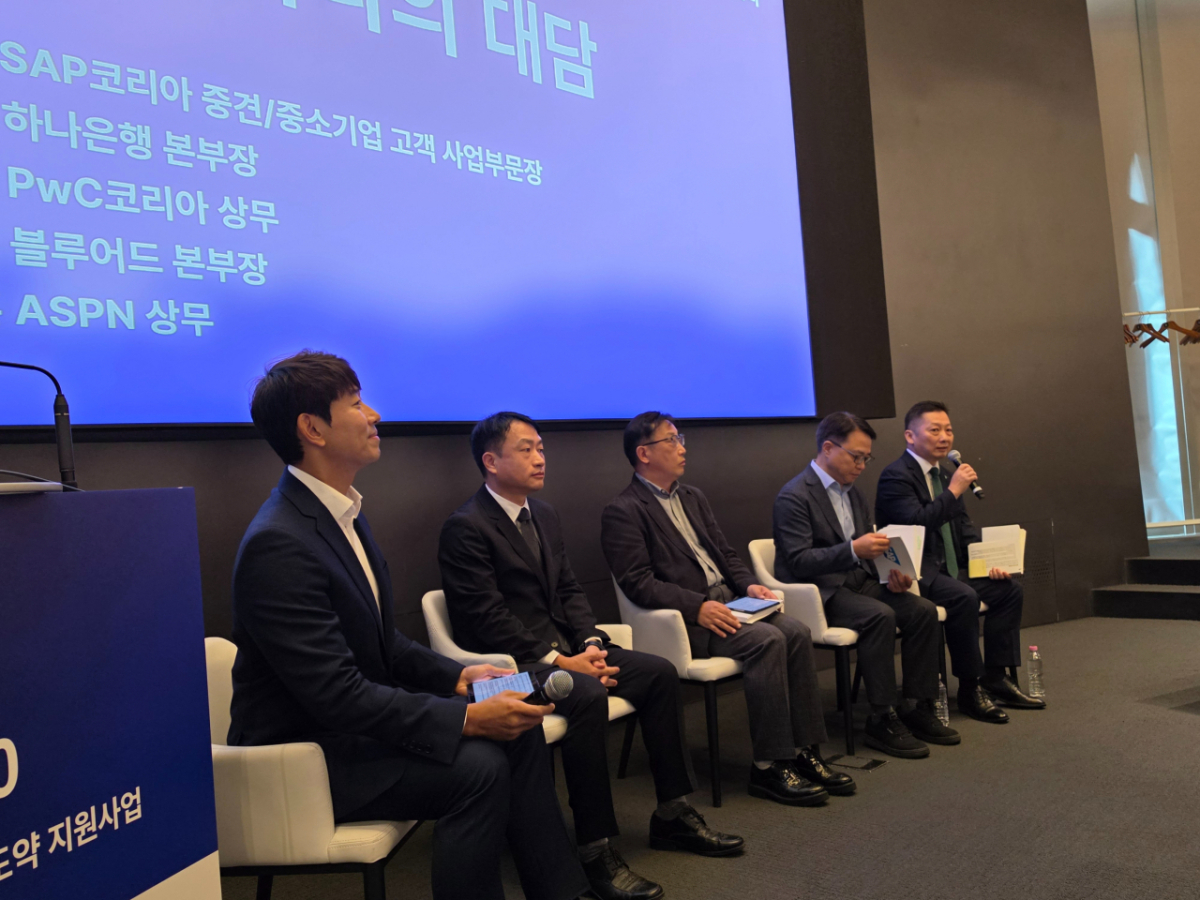
Partner companies are also participating. PwC Consulting is in charge of management and AI innovation consulting, while ASPN builds and operates standards. Blueard constructs cloud ERP, and Hana Bank manages funds and plays a role in linking with banks. Visa supports the project. Cheon Jae-moon, Executive Director at PwC Consulting, explained the purpose of the business by saying, "PwC Consulting has also been expanding its business targets from large corporations to small and mid-sized companies for the past two years," adding, "When they become large corporations, they will come back to PwC."
The target companies presented by SAP fall into three categories. First are companies pursuing innovation and growth. Second are companies looking for AI that can be applied immediately without a PoC (Proof of Concept). Finally, there are companies aiming to introduce a digital business culture from an enterprise-wide perspective. Division Head Kang explained, "You can apply more than 400 AIs embedded in SAP Cloud ERP immediately without a PoC," adding, "We would like companies that want to create a culture where employees think without silos (partitions) in their respective jobs to apply."
Meanwhile, participants expressed the view that concerns about 'SaaSpocalypse' are exaggerated. This is because ERP companies such as SAP possess long-term business experience and know-how, making them superior to AI. Opinions also emerged that AI has weaknesses in terms of internal control and data reliability. Cheon Seok-beom, Head of Blueard, explained, "Companies developing internal systems with AI agents often face confusion over issues such as which data should be provided to whom and how much can be shared externally," adding, "SAP is a company that releases only precise functions, so it is trustworthy."

 in TECH


