

The Korea Aerospace Administration (KASA) will launch rockets carrying public and defense satellites at least once a year from next year through 2032.
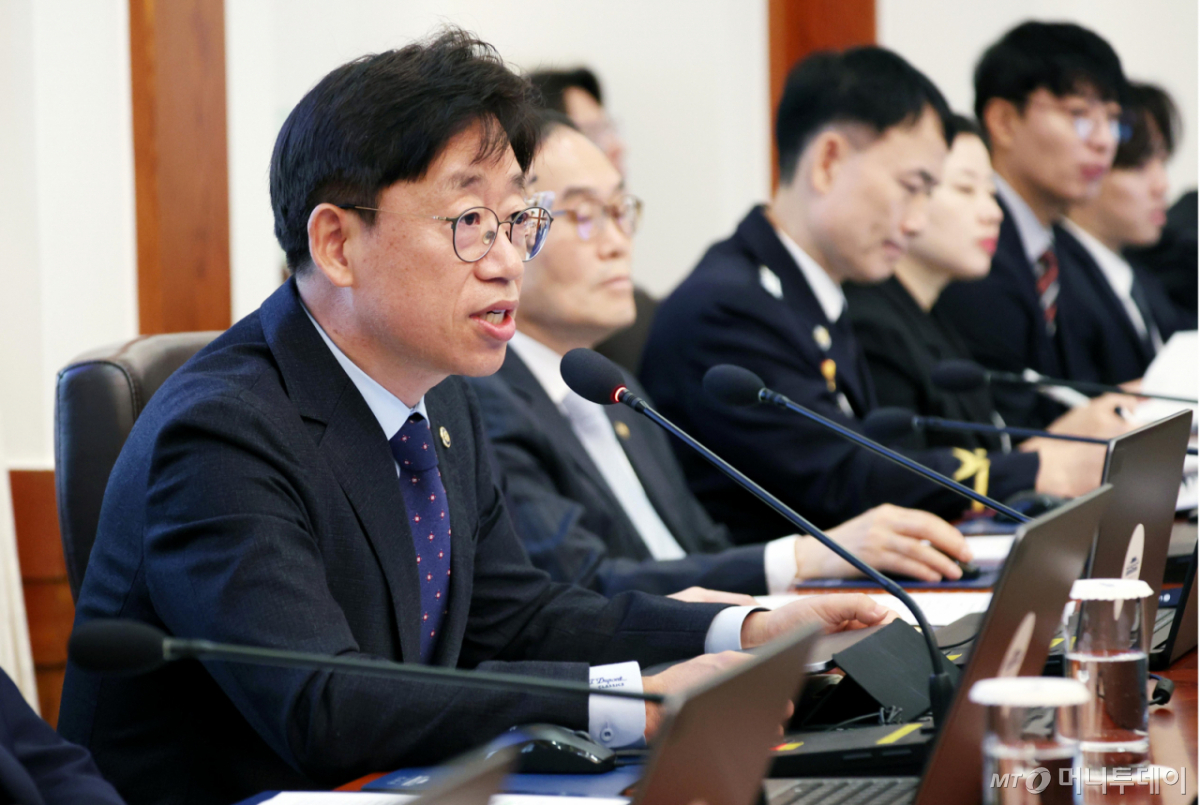
At the State Council meeting held on the 20th, KASA reported its plans following the fifth Nuri launch.
Oh Tae-seok, head of the KASA, said, "Following the successful separation of all 14 satellites carried by the fifth Nuri launch, initial communications were also established," adding, "With this successful launch, the success rate of the Korean-made rocket has increased to 80%."
He further noted, "Nuri is scheduled to be launched at least once a year going forward, and we will attempt two launches in 2030."
Plans for national satellites (public and defense satellites) to be carried on Nuri have also been detailed. The sixth Nuri launch, scheduled for 2027, will carry microsatellite constellation satellites No. 7 through No. 11, following the microsatellite constellation satellites No. 2 through No. 6 from the fifth launch. The seventh launch in 2028 will carry Next-Generation Medium Satellite No. 5. This satellite is being developed for water resource observation and river management purposes.
The eighth launch in 2029 will carry one lunar orbit communication satellite. Subsequently, in 2030, which marks the first attempt at two consecutive launches, plans include launching two 'low-orbit communication satellites' that will serve as verification units for a Korean low-orbit communication network, as well as the launch of a small lunar lander, South Korea's first.
The eleventh launch in 2031 will carry four Earth observation (EO) microsatellite system satellites, while the twelfth launch in 2032 will carry three companion satellites for Multi-Purpose Practical Satellite No. 8 (Arirang No. 8). Multi-purpose practical satellites are Earth observation satellites.
Oh also said, "We will review whether additional launches are possible before 2030, including launch demand for the demonstration of a space data center."
Development of reusable rockets is also being fully accelerated. Following a flight test of a small-scale test vehicle measuring 12 meters in length in 2028, a vertical takeoff and landing (VTOL) test to recover the first stage of a rocket to the ground will be conducted in 2032. The completion of rocket reuse technology is expected by 2035.
The results of the public competition for the 'Second Space Center,' which is set to become the main launch site for reusable rockets and private commercial rockets, are expected to be announced around December. The candidate sites are Gwangju Metropolitan City in South Jeonnam Province and Jeju Special Self-Governing Province.
Oh said, "The Second Space Center will be a multi-purpose launch site capable of reusing next-generation rockets for more than 10 launches per year and accommodating small and medium-sized commercial launches by the private sector."

 in TECH
