

"AI infrastructure cannot be built alone."
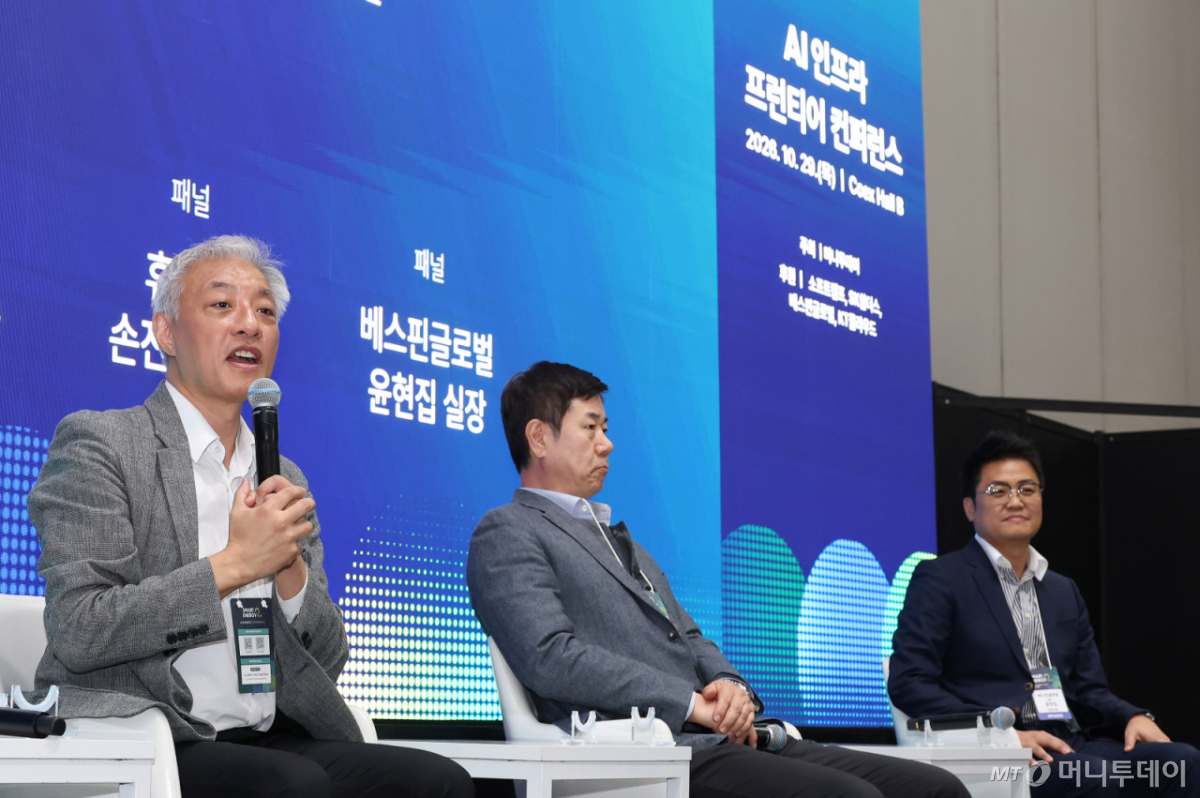
The "AI Infrastructure Frontier" (AIF), the first platform dedicated to discussing the future of Korea's AI infrastructure industry, was officially launched at the "2026 AI Infrastructure Frontier Conference" held on the 29th at COEX in Samsung-dong, Seoul.
During a special dialogue held alongside the launch ceremony, Yoon Seok-bin, a special professor at Sogang University's Graduate School of AI and Software (and CEO of Trust Connector), stated, "AI infrastructure requires demand-side stakeholders, suppliers, investors, and policymakers to join forces to find optimal solutions," adding that the platform will serve as a space where various stakeholders meet and communicate in each other's language.
Experts agreed that alternatives must be found quickly to resolve bottlenecks in the AI infrastructure market, marking the launch of AIF as a turning point.
Son Jin-ho, CEO of Hubertec, identified two major issues causing bottlenecks in Korea's AI data center (AIDC) market: hardware procurement delays (supply chain bottlenecks) and limitations regarding site selection and power supply.
"Domestic investment in AI infrastructure is growing by 20% to 30% annually, yet bottlenecks in the memory and core chip supply chains are severe," Son said. "Network equipment takes at least six months after ordering, while server delivery times can be delayed from six months to nearly a year." He noted that as supply cycles lengthen, fatigue on the ground is increasing.
He continued, "The AI data center market is still dominated by 30- to 40-megawatt (MW) hyperscale facilities, but additional expansion in the metropolitan area has been effectively halted due to power supply and permitting limitations," adding that decentralization to regional areas is inevitable. He emphasized the need to rapidly introduce energy reinforcement technologies on-site, such as those integrating renewable energy sources.
Yoon Hyeon-jip, a division head at Bespin Global, cited "insufficient circulation of public data" as a bottleneck factor. Yoon stated that the cost incurred to address data shortages is more than 10 times the cost of developing AI agents, and argued that public data must be opened to the private sector swiftly.
He pointed out, "While the government and local governments have been working for years to increase the rate of public data opening, a significant amount of public data remains only in document form," adding that bottlenecks in open data can only be resolved and allowed to flow into the market by strengthening communication and cooperation between ministries.
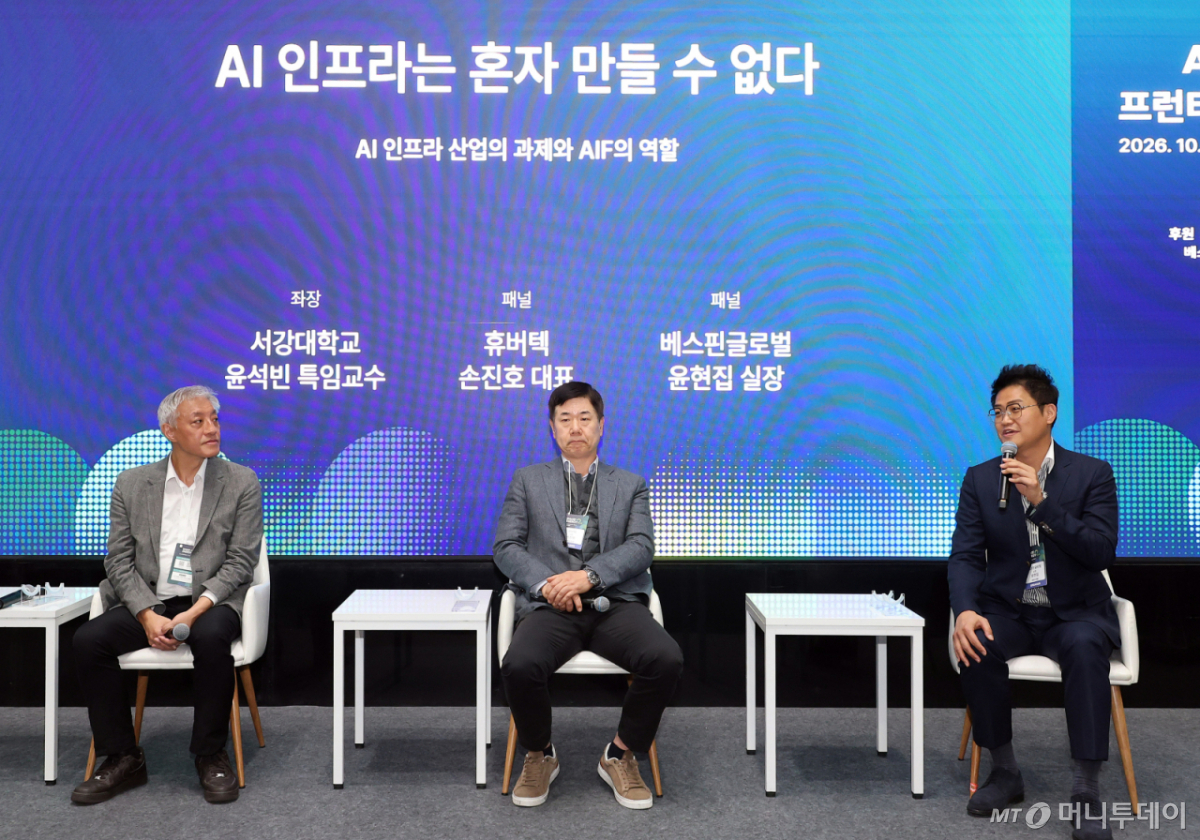
He also noted that there is a significant gap between demand and supply in AI infrastructure, stating that on-site needs must be recognized and regulations improved to narrow this gap.
"While it takes approximately two years physically from planning to completion for an AIDC in the United States, it reportedly takes four to five years in Korea," Son said, suggesting that permitting processes and regulations need to be rationally improved.
Yoon stated, "Based on field experience, I have concluded that every domestic company wants to become a 'sovereign enterprise.'" This reflects a high demand for companies to possess their own infrastructure and frameworks rather than being dependent on big tech technologies.
He added, "We must reach a stage where not only enterprises but also individuals can utilize AI independently to achieve true sovereign AI," emphasizing that Korea must leverage its robust manufacturing sector while minimizing gaps and bottlenecks in the AI infrastructure market to be recognized as an industry-leading nation.

 in TECH

