

[For more diverse corporate information on the startups featured in this article, please visit the "Data Lab" of the Unicorn Factory big data platform .]

"What AI is taking away is not simply the number of jobs. The bigger problem is that the 'first job,' where young people begin their working lives, make mistakes, learn the work, and develop their judgment, is disappearing."
Kang Min-ah, a professor in the Department of Public Administration at Ewha Womans University (and chair of the Social Economy and Cooperative Program), diagnosed that the door for young people to take their first step into society is narrowing due to the spread of AI. This is because companies are responding not by laying off existing employees, but by simply not hiring new recruits who can be replaced by AI. The impact is particularly severe in office, administrative, and service sectors, which have traditionally seen high participation from women and young people.
While entrepreneurship is emerging as an alternative, barriers remain on this path as well. Female and young entrepreneurs identified by universities stall after demo days because they fail to secure their first investment or first customer. This is because private capital is reluctant to enter at the early stage when it is difficult to prove viability.
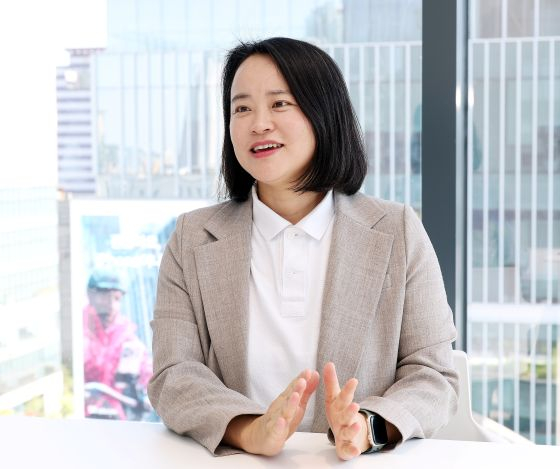
A fund designed to fill this gap with donation money will be launched at Ewha Womans University. It is called the "Ewha Seeding Impact" fund, which invests in early-stage startups and connects them to follow-on investments and business expansion. We recently met with Professor Kang, Seo Ji-hee, CEO of Ewha Womans University Technology Holding (visiting professor at the School of Business), and Lee Soon-yeol, representative of the Qunesti Foundation (chief fund manager and chief impact strategy officer), to hear about changes in youth and women's employment in the AI era, the reality of university entrepreneurship, and the background and operational plans for launching a fund to bridge the funding gap for early-stage startups.
Ewha Womans University Technology Holdings, established in 2016, has formed six investment funds totaling 7 billion won and invested in 32 companies. Of these, 18 were selected for the Ministry of SMEs and Startups' technology startup support program TIPS (Technology Innovation Promotion Scheme) and the LIPS (Linkage Investment Support Program for Small and Medium Enterprises), receiving a total of 18.8 billion won in follow-on investments. In its 10th anniversary year this year, it was also selected as an operating company for the education account of the fund of funds (Korea Venture Fund). Qunest has invested a cumulative 74.9 billion won and supported 1,649 companies through May this year. It is leading a model that converts donations into investment resources, including investing 9.55 billion won in 57 companies from 2022 to the first half of 2026 through the "ESG Double Impact Matching Fund" established with Hana Financial Group.

How is the spread of AI changing jobs for young people?
▲Kang Min-a=Rather than simply reducing the "quantity" of jobs, AI is fundamentally altering the nature of employment and the pathways through which young people enter the workforce for the first time. According to an analysis by the Bank of Korea, the majority of sectors where employment among those aged 15 to 29 declined between June 2022 and June 2026 were industries heavily impacted by AI. However, within these same industries, jobs for those in their 50s actually increased. This indicates that it is not that jobs across entire sectors have disappeared, but rather that the opportunities available for young people to enter the workforce have narrowed. It is less a case of large-scale layoffs and more a matter of employers simply choosing not to hire.
A greater concern is that the first jobs, where young people learn work skills, gain experience, and develop judgment, are disappearing. This shift may be more pronounced for women. Office, administrative, and service roles, which employ a large number of women, involve relatively standardized tasks and are therefore more likely to be affected by generative AI early on. An analysis by the International Labour Organization (ILO) also found that in high-income countries, 9.6% of women and 3.5% of men work in jobs with a high risk of automation.
-In a situation where AI is narrowing the entry points to employment, what role should universities play?
▲Seo Ji-hee = In the AI era, universities must go beyond teaching and research to become places that actually create companies and jobs. Students should be nurtured not merely as "job seekers" preparing for employment, but as "job creators" who identify problems on their own, solve them, and generate new employment opportunities. Universities, with their concentration of diverse academic disciplines and research capabilities, along with a relatively lower burden of failure, are well-suited environments to launch startups. The key is not the number of programs, but rather establishing step-by-step "growth pathways" that ensure university-generated ideas and technologies do not remain one-off projects, but instead secure investment and customers to enable sustainable growth.
▲Kang Min-a = Universities should become "laboratories where students can safely fail." If opportunities to learn from mistakes in the corporate world are diminishing, universities must recreate those opportunities. The key is "metacognition," which is the ability to reflect on what one knows and does not know, and why one made a particular judgment. AI is now better at quickly finding correct answers. In the future, it will be important for people who do not simply accept AI's answers as they are, but can critically examine whether they are truly correct.
Entrepreneurship is ideally suited for this kind of training. It involves identifying problems on one's own, coordinating opinions with peers, and experiencing small failures firsthand. It is a way for students to reclaim their "right to make mistakes." Ewha Womans University has operated the "Impact Entrepreneurship Academy" since 2019, producing 97 teams comprising 265 undergraduate and graduate students. Results have followed. AgeTech startup "SeniorVibe," led by CEO Kim Soo-min of the Department of Psychology, secured a pilot partner in Kyoto, Japan, and achieved its first export. "Embargo Media," led by CEO Jang Yoon-jin (majoring in Smart Curation), is expanding into the Asian market after establishing a subsidiary in Hong Kong with an AI-based senior hearing care solution.

While it is said that universities should cultivate entrepreneurs, in reality, it does not seem as easy as it sounds.
▲Lee Soon-yeol = Although the venture capital market is recovering, investment funds continue to concentrate on large-scale investments in the AI and biotech sectors or companies that have already demonstrated their growth potential. As a result, early-stage companies with limited track records, female-founded startups, and impact enterprises are not receiving sufficient funding.
In particular, women-led entrepreneurship is not merely a matter of increasing women's participation, but of expanding opportunities for access to capital. According to government statistics, the proportion of female entrepreneurs rose to 33.3% in 2023, yet the share of total investment funds allocated to startups led by women was only 1.8% in 2024. Female venture capital reviewers also account for just 15.4%. Under such a structure, it is difficult for the realities faced by female entrepreneurs and their perspectives on the market to be adequately reflected in the investment decision-making process. Prejudices still persist, such as questioning how much focus an entrepreneur can maintain on her business when she mentions marriage or child-rearing.
▲Seo Ji-hee = The biggest obstacle for student entrepreneurs is not a lack of ideas, but the fact that their “growth path is cut off” after starting a business. Students must balance their studies with running a startup, and teams can become unstable due to graduation or the departure of team members. Without a track record, customers hesitate to adopt their products, and without customers, investors find it difficult to verify market potential. Even if teams survive through competitions or government support, many stall in the gap between when that support ends and when they generate revenue or secure follow-on investment.
What solutions are needed to fill this funding gap that student-founded startups face during their growth process?
▲Lee Soon-yeol = It is necessary to pay attention to “donor capital” as a resource for reconnecting broken growth pathways. Impact startups, particularly in the healthcare and climate sectors, take a long time because they must directly build and verify markets and value chains. Given that they must go through everything from obtaining licenses to lengthy verification processes, “patient capital” that can wait until the end is needed. However, private capital that prioritizes returns finds it difficult to bear such early-stage risks. Since Korea’s annual donation resources amount to 3 trillion won in official statistics alone, and reach 5 trillion won when unofficial sources are included, a portion of this could be utilized as initial capital for the startup ecosystem. The strength of donor capital lies in its “circularity.” Unlike general funds, it can reinvest recovered funds into the next company. If donation funds serve as “catalytic capital” that bears the initial risk, they can also play a role in attracting larger amounts of private capital.
How is the "Ewha Seeding Impact" fund, designed for early-stage startups founded by women and young entrepreneurs, managed, and what kind of change does it ultimately aim to create?
▲Lee Soon-yeol=The current plan is for Ewha Womans University Technology Holding and Qunesty to jointly participate in the operation, with the first fund targeting a size of 10 billion won and gradually expanding up to 30 billion won. The portfolio will consist of more than 50% women founders or companies managed by women, focusing on early-stage companies that pursue both social value and growth potential in areas such as education, employment, youth, care, healthcare, climate, and environment. In addition to investing in female entrepreneurs, the plan includes an educational program to cultivate female investment reviewers alongside the investments, aiming to attempt systemic changes in the startup ecosystem.
The most distinctive feature of this model is that a donation does not end with a single act of support. While typical funds return investment returns to their investors, investment capital based on donated funds can reinvest recovered proceeds into the next startup. The core of the model lies in creating a virtuous cycle in which one donation leads to multiple entrepreneurs’ challenges and growth.
[Money Today Startup Media Platform 'Unicorn Factory']

 in TECH


