

A ryokan hotel in the Ureshino hot spring town of Saga Prefecture, Japan. The reporter, who visited without a reservation on the 18th, first had to ask if there were any vacant rooms. What the reporter had purchased and packed before the trip for exactly such moments was Meta's AI glasses.
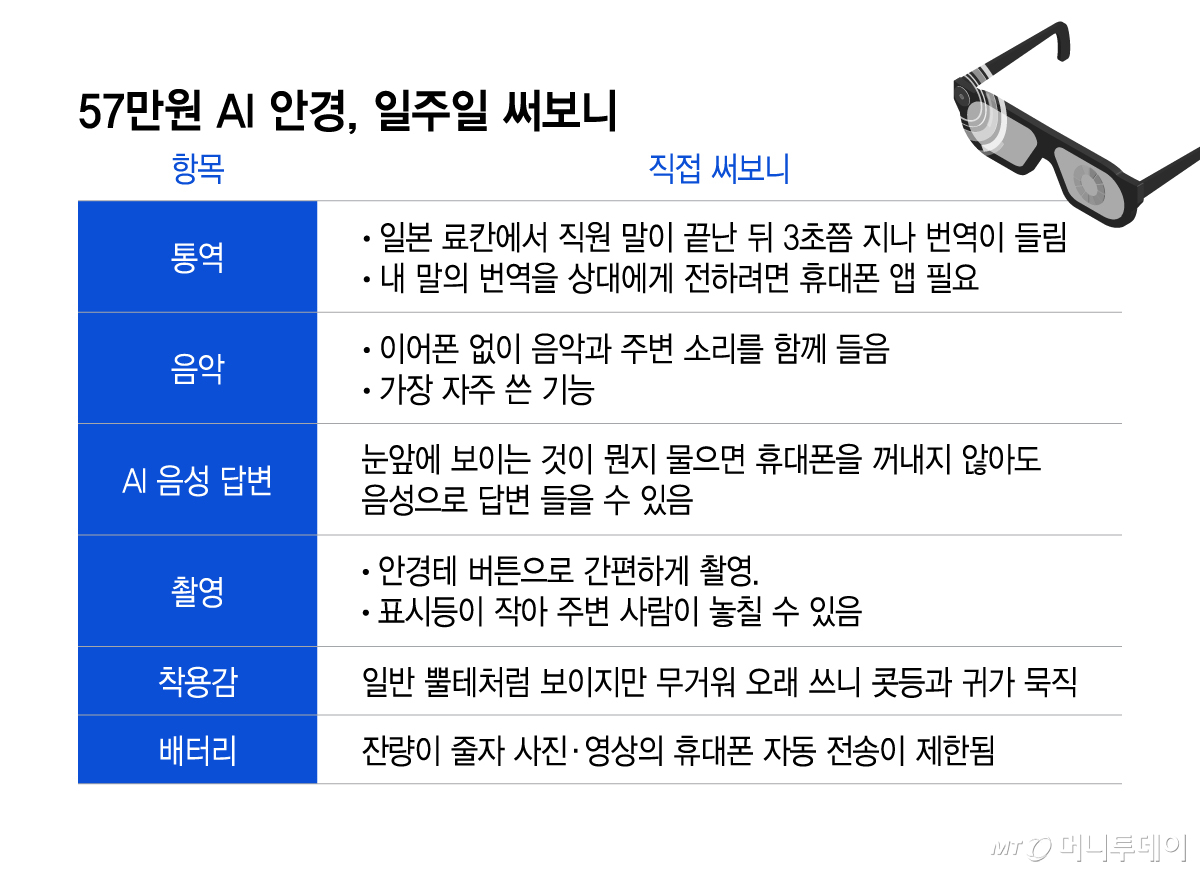
The staff member replied in Japanese. It took about three seconds from when the speech ended until Korean flowed out of the temple of the glasses. The staff waited for the reporter's answer, while the reporter waited for the glasses' translation. Every time words were exchanged, the conversation was interrupted by a beat.
The glasses sometimes recognized the Korean the reporter spoke in order to reply and translated it into Japanese in an odd way. Focusing on the sounds heard through the earpieces, even familiar Japanese phrases no longer came out of the reporter's mouth immediately. Eventually, the reporter turned off the translation feature. The room was booked via a lodging app, and questions were asked directly to the staff in short Japanese phrases. That proved faster.
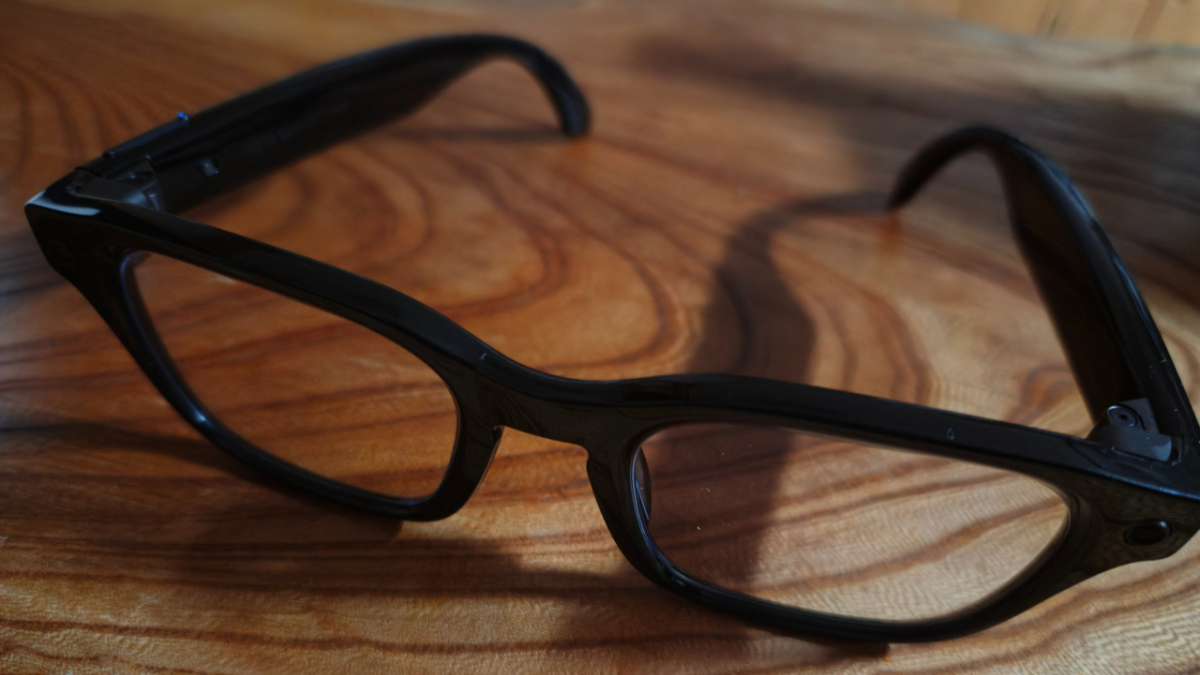
The product tested for one week is the 'Meta Adventurer' model with photochromic lenses. The design, which looks like ordinary horn-rimmed glasses, appealed to the reporter, who purchased it directly from Lotte Hi-Mart's online store for approximately 570,000 won. First unveiled in June, the product entered the domestic market in September. The frames are equipped with a 12-megapixel camera capable of taking photos and 3K videos, as well as speakers that do not block the ears.
The most anticipated feature was translation. The glasses translate the counterpart's speech and play it through the earpieces. However, to have my own words translated for the counterpart, I had to take out my smartphone and either show the sentence displayed in the Meta AI app or play it aloud. An internet connection is also required for Korean-Japanese translation. I had assumed that simply wearing the glasses would allow me to converse with my phone in my pocket, but my expectations were too high.
The most frequently used feature during the week was listening to music. Songs played from the temples of the glasses without the need for earphones. Because the ears remained open, surrounding sounds could also be heard. When calling out "Hey Meta" and asking what was in front of me, a response came back immediately. The convenience of not having to take out my smartphone and turn on the camera was appreciated.
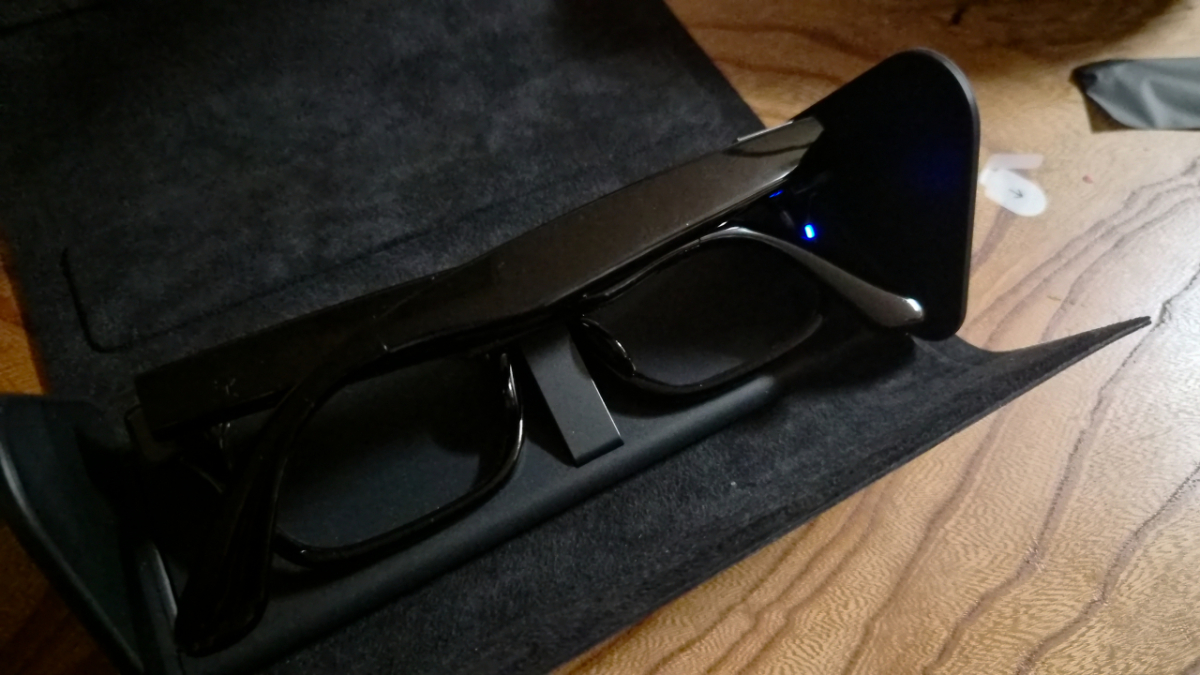
However, despite looking like ordinary horn-rimmed glasses, the wearing comfort was not the same. After prolonged use, weight was felt on the bridge of the nose and ears. During the trip, notifications also appeared stating that photos and videos could not be automatically transferred to the smartphone due to low battery levels. Meta states that the glasses can be used for about eight hours on a single charge, and up to an additional 40 hours with a fully charged case. This figure includes the time used after recharging via the case.

Photography was convenient enough to be concerning. Pressing the button on the right frame takes a photo. There is no need to raise a smartphone. The only signal visible to the counterpart is a small indicator light that briefly blinks in front of the frame. While one action is reduced for the person taking the photo, one clue for detecting the recording is removed for the person being photographed.
The Personal Information Protection Commission also urged on the 9th that when using smart glasses to photograph people up close or when conversations may be recorded, the counterpart should be notified, and if they refuse, the recording should stop. It also recommended that manufacturers design the devices so that surrounding people can easily recognize whether photography is taking place. The relevant guidelines are being pushed for distribution within the year.
The market is growing rapidly. According to Omdia, global AI glasses shipments in the first half of this year reached 4.2 million units, a 127% increase from a year earlier. Meta shipped approximately 3.4 million units, accounting for 81.3%. AI glasses developed by Samsung Electronics and Google in collaboration with Gentle Monster are also set to be released domestically on the 10th of next month.
It was certainly convenient that there was less need to take out a smartphone when listening to music or taking photos. However, the translation feature, which had been most anticipated, slowed down conversations at critical moments. The glasses did not come out of their case again until the trip ended.


 in TECH


