

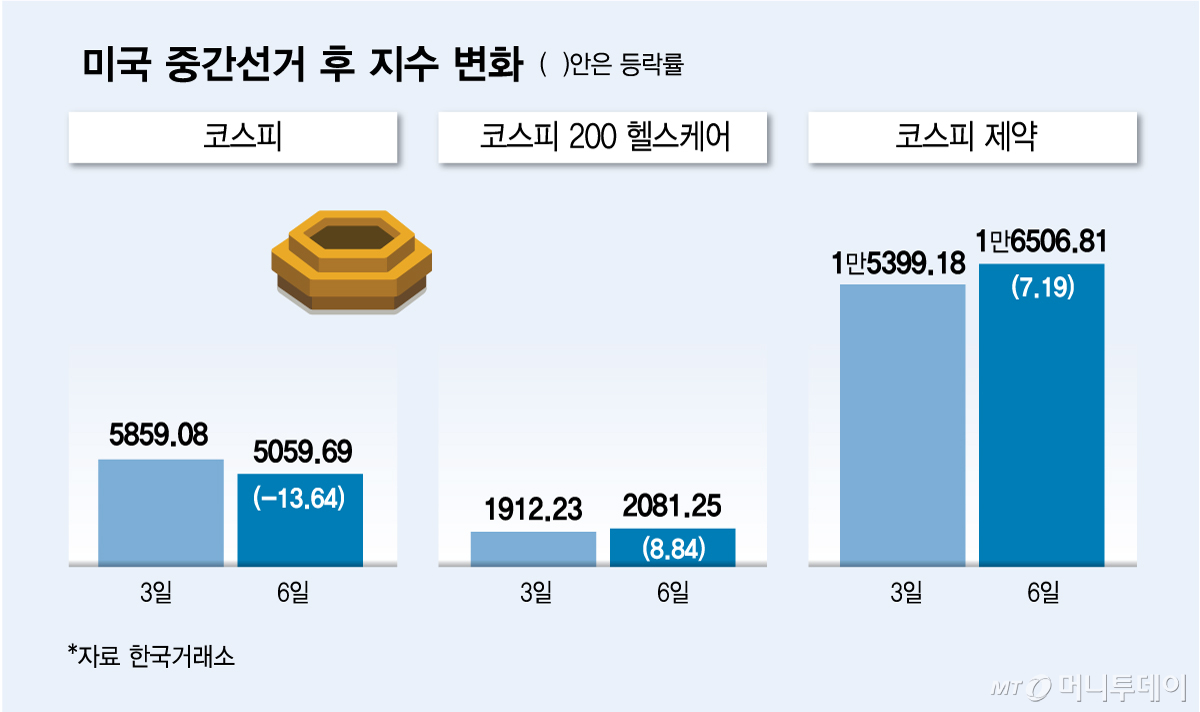
Following the U.S. midterm elections, the pharmaceutical and biotechnology sectors showed relatively strong momentum in the domestic stock market. This comes amid expectations that a future trend of expanded healthcare support could work in favor of biosimilars (biologic copy drugs) and CDMO (contract development and manufacturing organizations), while drug tariffs and policies to check Chinese biotech firms remain in place.
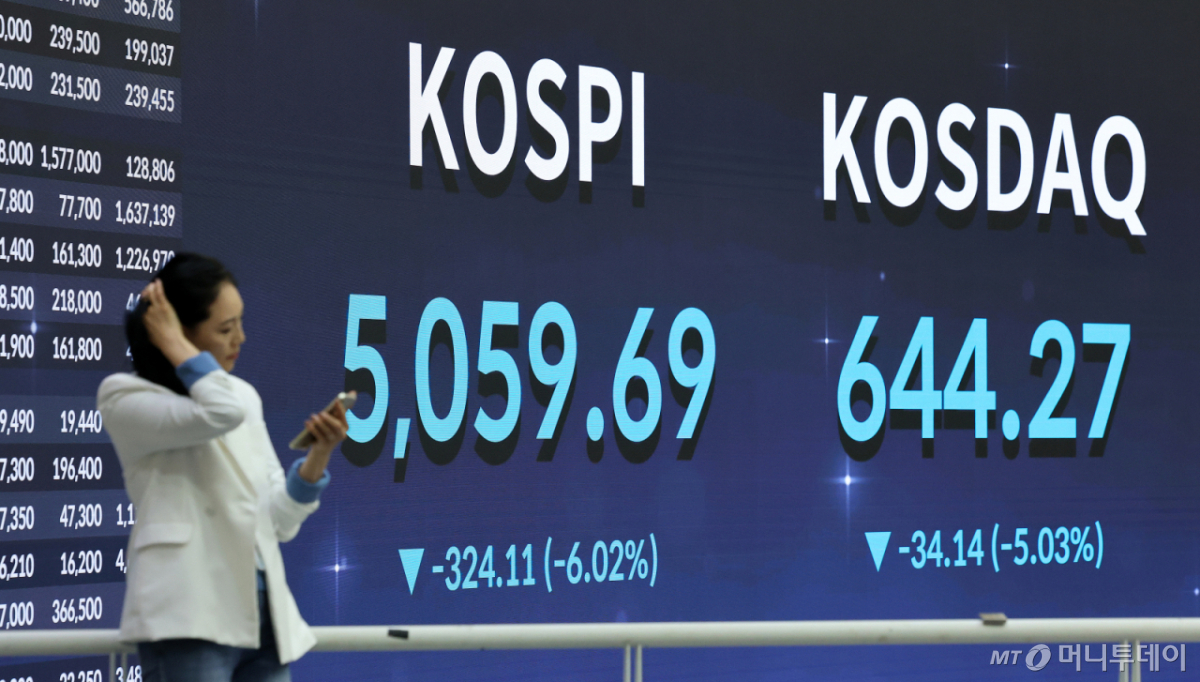
According to Korea Exchange on the 8th, the KOSPI index fell 13.64% from 5,859.08 to 5,059.69 over the four days from the 3rd to the 6th, when the U.S. midterm elections were held. This was attributed to regulatory anxiety over AI (artificial intelligence) data centers stemming from the “Blue Wave,” in which the Democratic Party won a landslide victory in both houses of Congress, dragging down large-cap semiconductor stocks.
In contrast, the “KOSPI 200 Healthcare Index,” composed of major domestic pharmaceutical and biotech companies, rose 8.84% from 1,912.23 to 2,081.25 over the same period, posting the highest gain among all indices. The KOSPI Pharmaceutical Index, which covers the broader pharmaceutical and biotech sector, also climbed 7.19% (from 15,399.18 to 16,506.81), showing a trend distinct from the overall market slump.
Traditionally, the Democratic Party has taken drug price reductions and expanded patient access to healthcare as key policy directions. As biosimilars, which are cheaper than original (brand-name) drugs, are seen as an alternative for cutting medical costs, expectations have risen that a favorable environment will be created for prescriptions and market expansion, fueling a tailwind for K-bio.
Even with the Democratic Party’s control of Congress, the policy direction of the Donald Trump administration, which pressures drug price cuts through tariffs, is not expected to change significantly. Companies such as Samsung Biologics Logistics, Celltrion, and SK Biopharmaceuticals have already prepared by securing production facilities in the U.S. While tariffs on generics (copy drugs) and biosimilars—major export items to the U.S.—have been temporarily postponed (until April next year), uncertainty from “erratic tariffs” is expected to be less severe than before, as oversight of the executive branch by Congress is anticipated to strengthen.
In addition to expanding domestic production, regulations on Chinese biotech are likely to continue regardless of election results, given that bipartisan consensus has formed around national security and supply chain stability. Consequently, expectations are rising that global pharmaceutical companies will increase their interest in domestic firms with global CDMO competitiveness. Analysts also suggest this could serve as a catalyst for expanding interest in new drug candidates and platform technologies.
Expectations of easing Middle East tensions, which could lead to calmer oil prices and interest rates, are also boosting the appeal of biotech, a high-risk, high-return growth sector. Han Ji-young, a researcher at Kiwoom Securities, noted, “As interest rate burdens ease, supply and demand may diversify into sectors such as biotech.”
However, with volatility intensifying across the domestic stock market, traditional fundamentals logic, such as earnings, is not being reflected in stock prices, prompting opinions that cautious investment from a long-term perspective is necessary. Seo Geun-hee, a researcher at Samsung Securities, advised, “Post-midterm healthcare investment strategies should focus on structural changes rather than simply targeting Democratic Party policy beneficiaries.”

 in THEBIO

