

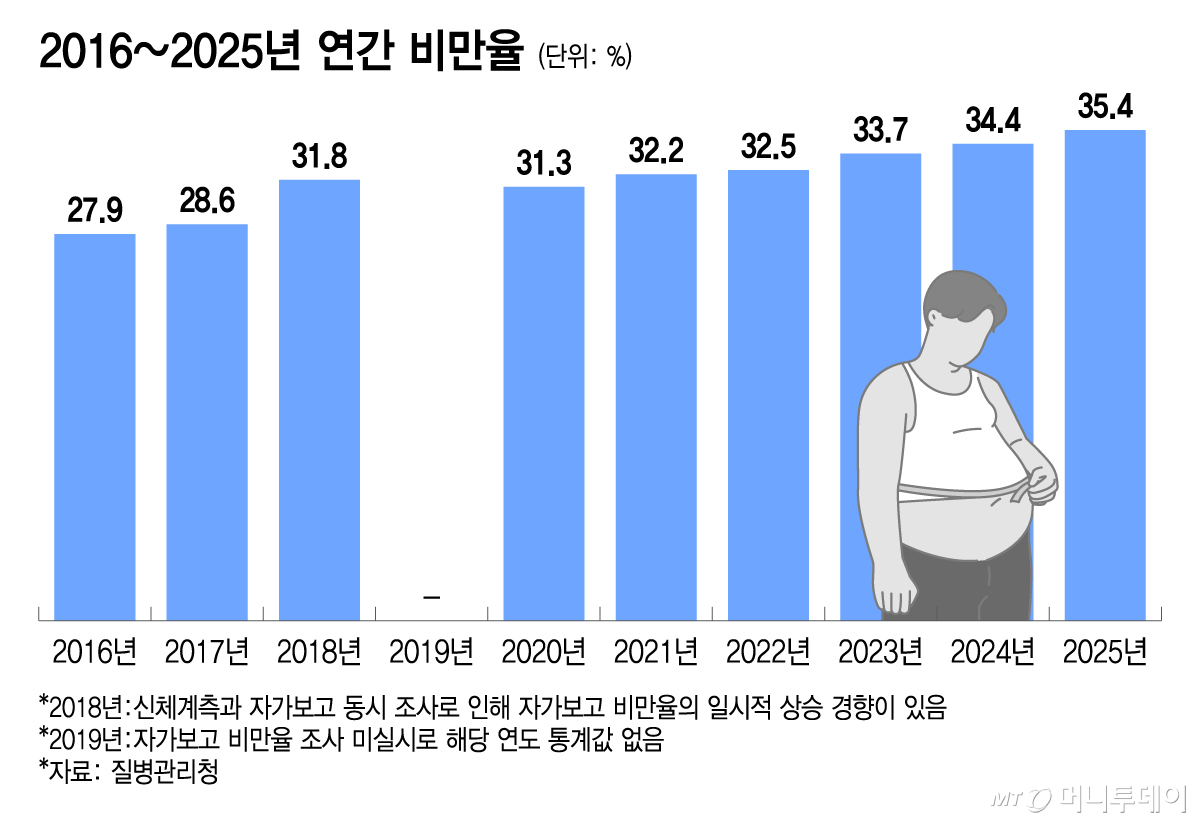
A statistical analysis revealed that one in three adults in South Korea is obese. The obesity rate was highest among men in their 30s and 40s and women aged 70 and older, while the age group with the largest increase in obesity rates was those in their 20s for both men and women.
On the 9th, KDCA announced these findings while releasing the results of "Obesity Status and Health Behaviors," a detailed analysis of data from the past 10 years (2016-2025) based on the 2025 Community Health Survey. According to the report, the domestic adult obesity rate last year was 35.4%, an increase of 26.9% (7.5 percentage points) compared to 2016 (27.9%).
The weight management attempt rate was 68.5%, and the subjective obesity awareness rate was 45.1%, both of which have steadily increased over the past 10 years, but the underweight rate has continued to decrease at 4.2%. The weight management attempt rate refers to the proportion of people who have tried to lose or maintain their weight within the last year, while the subjective obesity awareness rate refers to the proportion of people who subjectively consider themselves "slightly obese" or "very obese."
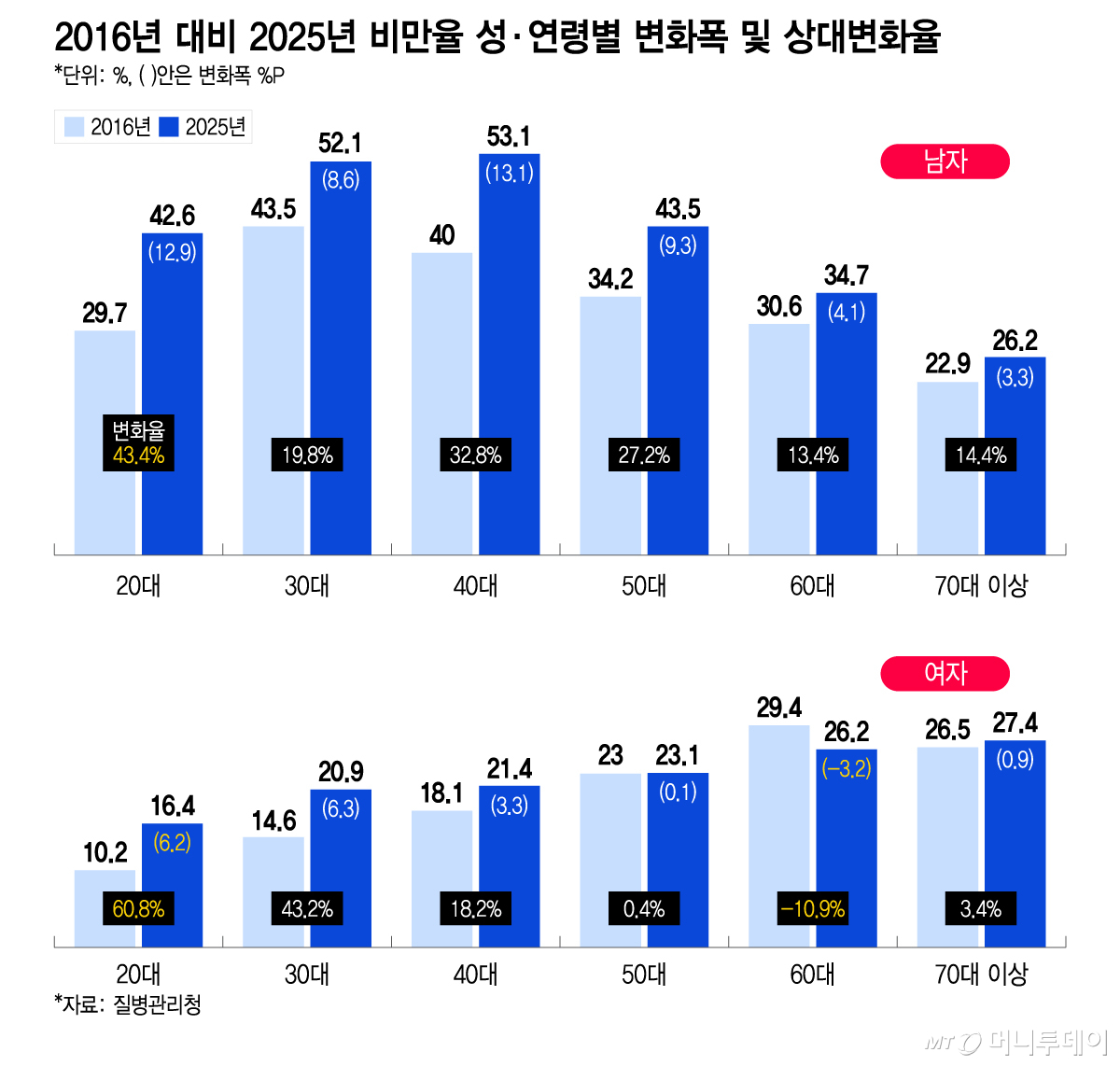
The obesity rate showed differences by gender and age group. The male obesity rate was 42.5%, about 1.9 times higher than that of women (22.9%). In particular, the obesity rate was highest among men in their 30s (52.1%) and 40s (53.1%). This means that one in two people in these age groups is obese. After the age of 40, the obesity rate tended to decrease as the age group increased. On the other hand, women had the lowest obesity rate in their 20s (16.4%), which increased with age, reaching its highest point among those aged 70 and older (27.4%).
Looking at the trend of changes in obesity rates over the past 10 years, the obesity rate increased across all age groups for men. The age group with the largest increase in obesity rate was those in their 20s for both men and women. Health behavior factors that increase the risk of obesity include △non-practice of strength training (1.3 times) △short sleep of six hours or less (1.2 times) △skipping breakfast (1.1 times) △non-practice of walking exercise (1.1 times) △drinking alcohol (1.1 times), among others.
Cases were also identified where actual obesity status did not match subjective awareness of obesity, leading to inappropriate weight management patterns such as not attempting weight loss or, conversely, attempting unnecessary weight reduction.
According to an analysis by the Disease Control and Prevention Agency, 36% of the group who are obese but do not perceive themselves as obese made no effort to manage their weight. The majority of these individuals were men (77.4%), with a higher proportion among those aged 60 and older. On the other hand, 39% of the group who are underweight but perceive themselves as obese made efforts to lose weight, with the majority being women (80.6%) and a higher concentration among those in their 30s and 40s.
The obesity rate also showed differences by region. The cities and provinces with high obesity rates were Ulsan (38.2%), South Jeolla (38.0%), and Gangwon (37.4%), in that order. Those with lower rates included Sejong (29.4%), Daejeon (29.8%), and Seoul (30.2%). Compared to 2016, the obesity rate increased in all cities and provinces except Sejong, with particularly large increases in Ulsan, South Jeolla, and Jeju.
Regions with high and low obesity rates showed significant differences in aspects such as health behaviors. A comparison by the Disease Control and Prevention Agency of the health behaviors and regional characteristics of the top 10 and bottom 10 regions by obesity rate found that regions with high obesity rates had a higher proportion of population aged 65 and older at 37.5%, compared to regions with low obesity rates (20.5%). The chronic disease diagnosis rate (40.6%) and high-risk drinking rate (12.3%) were also higher in regions with high obesity rates than in those with low obesity rates. The monthly household income in areas with high obesity rates was 3.77 million won, which was lower than that in areas with low obesity rates (6.84 million won). The practice rates of walking and strength training were also lower in top obesity rate regions compared to bottom regions.
Globally, obesity is considered a major public health issue. This is because it is not simply a state of having a high body weight, but a chronic and recurrent disease that requires long-term management. In fact, obesity is known as a risk factor for death, leading to diabetes, cardiovascular diseases, and some types of cancer.
Disease Control and Prevention Agency Director Lee Seung-gwan emphasized, "Since obesity is a major health issue that increases the risk of chronic diseases, it is important to correctly recognize one's weight status and practice a healthy lifestyle, including a healthy diet and regular physical activity." He added, "Local governments and related agencies need to promote customized obesity prevention and management policies that reflect the health behaviors, socioeconomic characteristics, and regional environment of local residents."

 in THEBIO


