

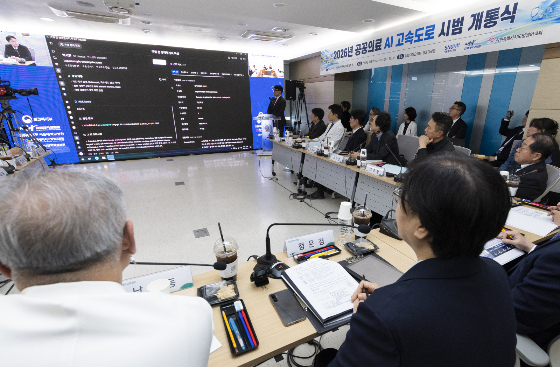
Patient A, a premature infant three months old, visited Yeongwol Medical Center with symptoms of coughing, fever, and difficulty breathing. Medical staff suspected acute bronchiolitis caused by respiratory syncytial virus (RSV) infection and decided to transfer the patient to a higher-level hospital. When medical staff at Yeongwol Medical Center pressed the AI draft generation button on the electronic medical record (EMR) screen, a draft of the transfer referral form containing the patient's medical history, test results, and medication history was completed in seconds. Previously, this task took more than 10 minutes for medical staff to review medical records individually and write them directly.
The government has piloted the "Public Healthcare AI Highway," enabling regional public hospitals to use AI to create medical records necessary for patient transfers, surgeries, and discharges. Starting with Gangwon Province, it plans to expand this to up to 35 public hospitals next year and 72 nationwide by 2029.
At the Medical AI Highway pilot launch ceremony held on the 11th at Kangwon National University Hospital, a demonstration was conducted connecting Yeongwol Medical Center and Kangwon National University Hospital in real time to show how AI is utilized in actual clinical processes. Patient A was a virtual patient set up for the demonstration, simulating a scenario where the patient was transferred from Yeongwol Medical Center to Kangwon National University Hospital for treatment and surgery, then returned to a regional hospital.
Jo Seung-yeon, head of the Department of Surgery at Yeongwol Medical Center, who conducted the demonstration, reviewed the patient's medical records and reason for transfer before using AI to generate a draft of the transfer referral form. Jo stated, "It seemed to take less than 10 seconds. Highly refined content was summarized in a very short time," adding, "If a doctor reviews the content and finds no issues, it can be sent as is; parts requiring correction can be edited."
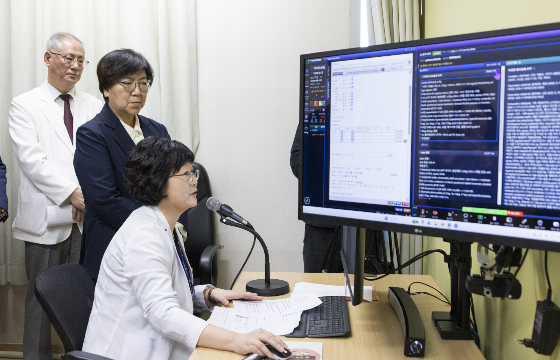
In an examination room at Kangwon National University Hospital, a scene followed where Jo Hee-seung, director of the Children's Hospital, reviewed the referral form sent from Yeongwol Medical Center. The process was demonstrated of proceeding with patient treatment based on medical information organized by AI, and creating preoperative anesthesia status assessment forms, discharge records, and return transfer documents.
In particular, AI analyzed the patient's medical history and test results to present a Physical Status Classification Grade 3 under the American Society of Anesthesiologists (ASA) system. Jo reviewed factors such as the premature infant's corrected age and recent oxygen and mechanical ventilation treatment history, determined the grade was appropriate, and entered it directly. The method involves AI organizing information necessary for judgment, while medical staff perform final verification and signing.
In the discharge process as well, AI summarized hospitalization progress, test results, and treatment details to create a draft of the record form. Jo explained, "At a time when there is a shortage of doctors providing essential healthcare, if AI serves as a kind of secretary, it can extract important content for immediate use." After medical staff reviewed the written content and signed, the return transfer document was sent back to Yeongwol Medical Center.
The Medical AI Highway is a project that provides medical AI technology developed and verified by leading medical institutions such as Seoul National University Hospital to regional public hospitals through national graphics processing unit (GPU) computing resources, ultra-high-speed dedicated networks, and standard linkage platforms. It is designed to allow the use of AI functions in existing EMRs without each hospital individually building expensive computing equipment and AI systems.
Minister Jeong Eung-kyeong of the Ministry of Health and Welfare pointed out the limitations of the existing medical information transmission system, stating, "Regional patients had to copy thick paper charts and carry videos on CDs when transferring to larger hospitals." She emphasized, "A major goal of the project is to reduce the time medical staff spend on complex paperwork so they can focus on patient care."
The government will verify EMR linkage stability, data security, and clinical validity at eight medical institutions, including Kangwon National University Hospital and Yeongwol Medical Center, by next March. Subsequently, starting in April, it will launch the main project, adding 27 new participating hospitals and expanding connected hospitals to a maximum of 35. By 2029, the scope of application will be expanded to 72 public hospitals nationwide, including local medical centers and Red Cross hospitals.

 in THEBIO

