

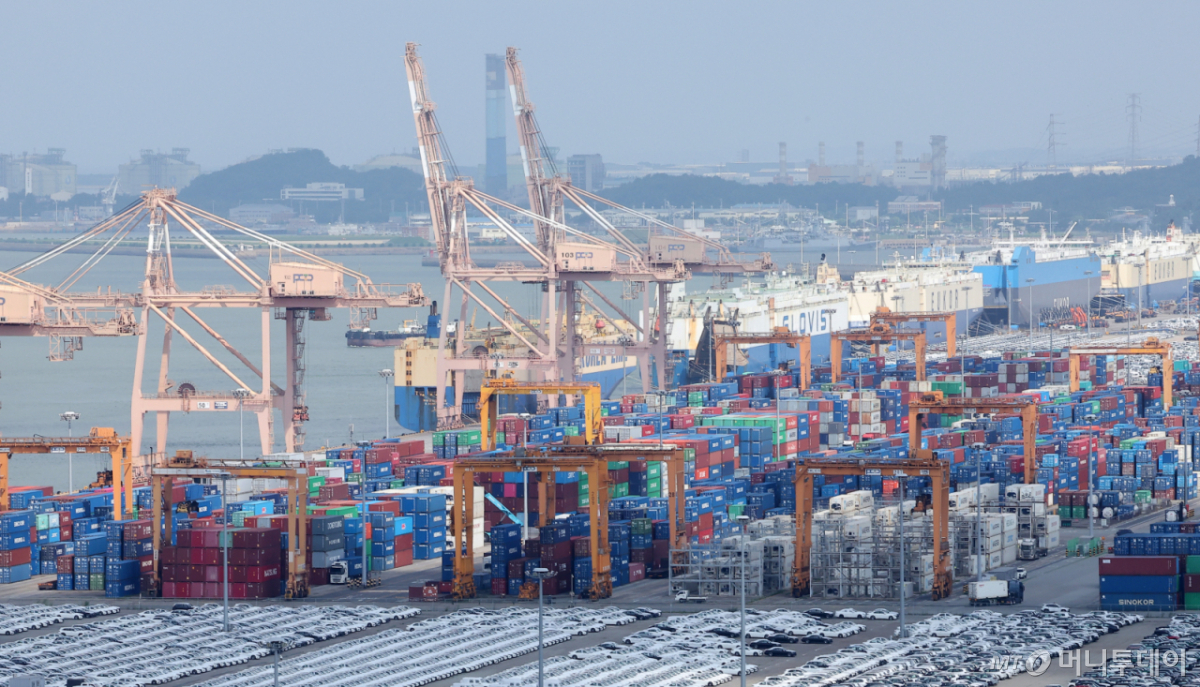
With production, consumption, and investment all rising last month, the economy recorded its second 'triple increase' of the year. Normalization of parts supply boosted automobile output significantly, driving growth in manufacturing production and retail sales. Notably, the cyclically adjusted leading composite index, which forecasts future economic trends, showed its largest increase in 17 years and two months.
According to the National Data Administration's "June 2026 Industrial Activity Report" released on the 31st, total industrial production last month rose 2.3% from the previous month (hereafter same basis). This marks the largest increase since June 2020 (2.9%), six years later. Compared to the same period last year, production increased by 4.2%. After declining for two consecutive months in April (-0.5%), it turned positive.
This is the second time this year that production, consumption, and investment have all risen, following March. Retail sales and equipment investment also grew by 2.7% and 5.8%, respectively. In March, all three indicators increased for the first time in six months since September 2025.
Manufacturing production fell in sectors such as electronic components (-10.4%) but rose in automobiles (15.4%) and semiconductors (4.5%), resulting in a 6.4% overall increase. This is the highest growth rate since June 2020 (6.6%), six years later. In particular, automobile production showed strong growth driven by increased output of finished vehicles such as HYBE Ridesedan and RV sedans.
Semiconductor production has been fluctuating month-to-month recently due to base effects and other factors. After recording a 10.0% decline in May, it rose sharply.
Lee Du-won, an official at the National Data Administration's Economic Trends Statistics Review Committee, explained: "Parts supply was extremely tight last March due to engine fires in automobiles, but normalization of parts supply and increased domestic and foreign demand led to a significant rise in automobile production." He added, "The launch of the new Grandeur and the end of the June reduction in registration tax also contributed to a substantial increase in automobile shipments."
He further stated: "Semiconductor production has continued to adjust monthly according to production plans amid growing inventory buildup. Overall demand for both memory and non-memory semiconductors has increased."
Service sector production declined in information and communications (-3.0%), professional/scientific/technical services (-2.0%), and accommodation/restaurants (-2.3%) but rose in finance/insurance (2.8%) and transportation/warehousing (2.0%), resulting in a 0.7% overall increase.
Retail sales, which reflect goods consumption, fell in semi-durable goods such as clothing (-1.7%) but increased in durable goods like automobiles (12.6%) and non-durable goods such as food and beverages (0.2%), leading to a 2.7% overall rise.
Equipment investment rose by 5.8%, driven by increases in machinery such as precision instruments (6.9%) and transportation equipment centered on automobiles (3.4%). Construction starts increased by 4.1%, with civil engineering projects declining (-1.3%) but building construction rising (5.9%). In contrast, construction orders fell by 28.1% due to a sharp drop in architectural orders for factories and warehouses (-36.9%).
The cyclically adjusted coincident composite index, which reflects current economic conditions, rose 0.5 points to 100.3. The leading composite index, used to forecast future trends, increased by 0.9 points to 105.7. Driven by rises in KOSPI, exports-imports ratios, and price indices, it has risen for eight consecutive months. This marks the largest increase since April 2009 (1.1 points), 17 years and two months later.
While viewing the situation positively, the government remains vigilant. A Ministry of Economy and Finance official stated: "External uncertainties persist, including renewed tensions in the Middle East following the resumption of military conflict between the U.S. and Iran." He added: "We plan to fully implement the second-half economic growth strategy without delay, focusing on managing energy and supply chain risks while alleviating public burdens related to prices and employment."
Meanwhile, total industrial production in the second quarter of this year rose 0.9% from the previous quarter, and equipment investment increased by 3.6%. However, retail sales fell by 1.7%, marking a reversal after three consecutive months of growth.

 in ECONOMY
