

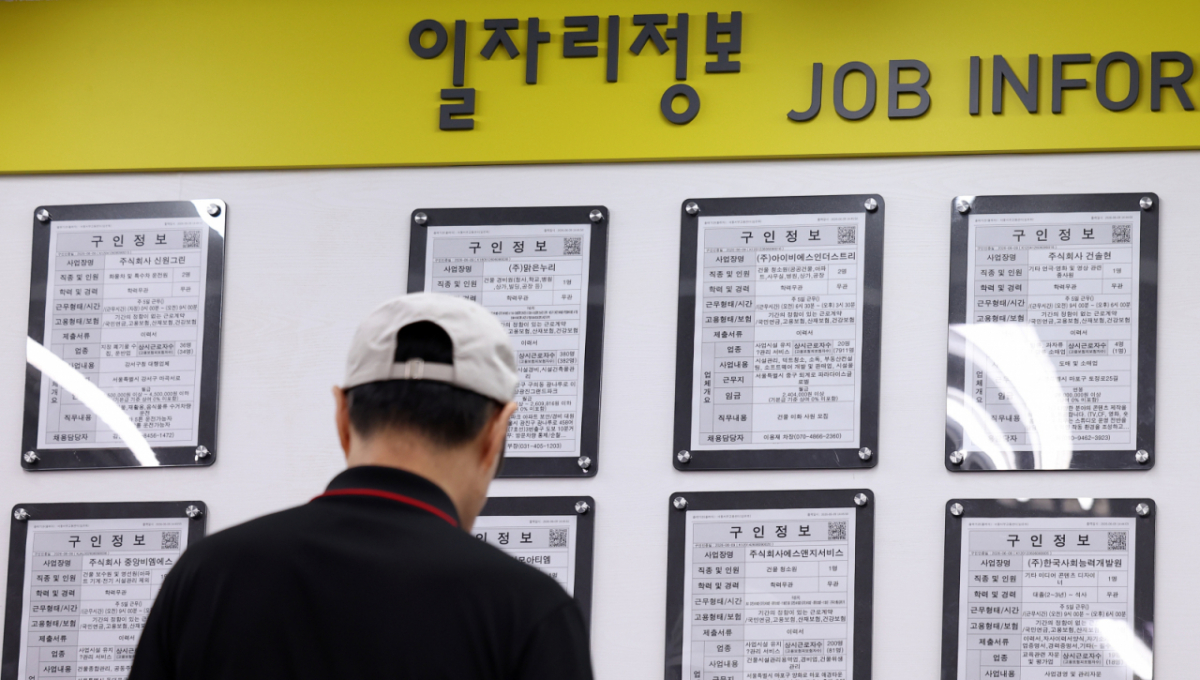
The number of employed elderly people (aged 55–79) has surpassed 10 million. Among every 10 elderly individuals, 7 expressed a desire to continue working, with living expenses cited as the primary reason. On average, they hope to work until age 73.6.
According to the 'Supplementary Survey Results on Economic Activity of the Elderly' released by the National Data Administration on the 5th, as of May, the elderly population reached 17.017 million, an increase of 570,000 from a year earlier. The elderly account for 37.0% of South Korea's total population.
The economically active elderly population stood at 10.362 million, up by 352,000 compared to the same month last year. The economic participation rate among the elderly reached a record high of 60.9%.
The number of employed elderly people was 10.125 million, an increase of 345,000 from a year earlier. This marks the first time since the start of relevant statistics in 2005 that the number of employed elderly has exceeded 10 million.
The employment rate for the elderly remained at 59.5%, matching last year's figure and maintaining a record-high level.
A total of 11.782 million elderly individuals expressed their intention to continue working in the future, an increase of 361,000 from a year earlier.
The most common reason for wanting to continue working was "to supplement living expenses," accounting for 53.4%. This was followed by "the joy of working" (36.7%), "it's free" (4.3%), "society needs them" (3.2%), and "to maintain health" (2.3%).
The elderly population hoping to work in the future stated they wish to work until an average age of 73.6, an increase of 0.2 years compared to the same month last year.
Their desired average monthly wage levels were highest for "3 million won or more" (23.3%) and "between 2 million and under 2.5 million won" (18.0%). By gender, men most frequently chose "3 million won or more" (34.9%), while women most often selected "between 1 million and under 1.5 million won" (21.0%).
Among elderly individuals with work experience, the average age at which they left their longest-held job was found to be 53.0 years. On average, men left their longest-held jobs at 55.3 years, while women did so at 51.1 years.
The most common reason for leaving a job was "business downturn, suspension of operations, or closure," accounting for 24.9%. This was followed by "poor health" (22.1%), "to care for family members" (15.2%), "mandatory retirement" (13.2%), and "involuntary resignation, honorary retirement, or layoffs" (9.9%).
The average tenure at their longest-held job was 17 years and 7.1 months, an increase of 0.5 months from a year earlier. Men had an average tenure of 21 years and 8.6 months (a 2-month increase), while women had 13 years and 7.1 months (a 1-month decrease), indicating longer tenures for men.
The proportion of elderly individuals who received pensions in the past year was 52.7% (8.969 million), an increase of 1.0 percentage points from a year earlier.
The average monthly pension amount was 880,000 won, up 2.1% from last year. By gender, men received 1.13 million won, while women received 610,000 won.

 in ECONOMY
