

The government and ruling party are considering using part of the National Pension Fund (approximately 1,800 trillion won) as a source for public housing to stabilize the real estate market, which is facing a severe shortage of housing supply. In particular, their plan aims to achieve two goals at once: securing appropriate returns for pensions—funds meant for citizens' retirement—and ensuring housing stability by treating pension assets not as welfare expenditures but as alternative investments in residential real estate.
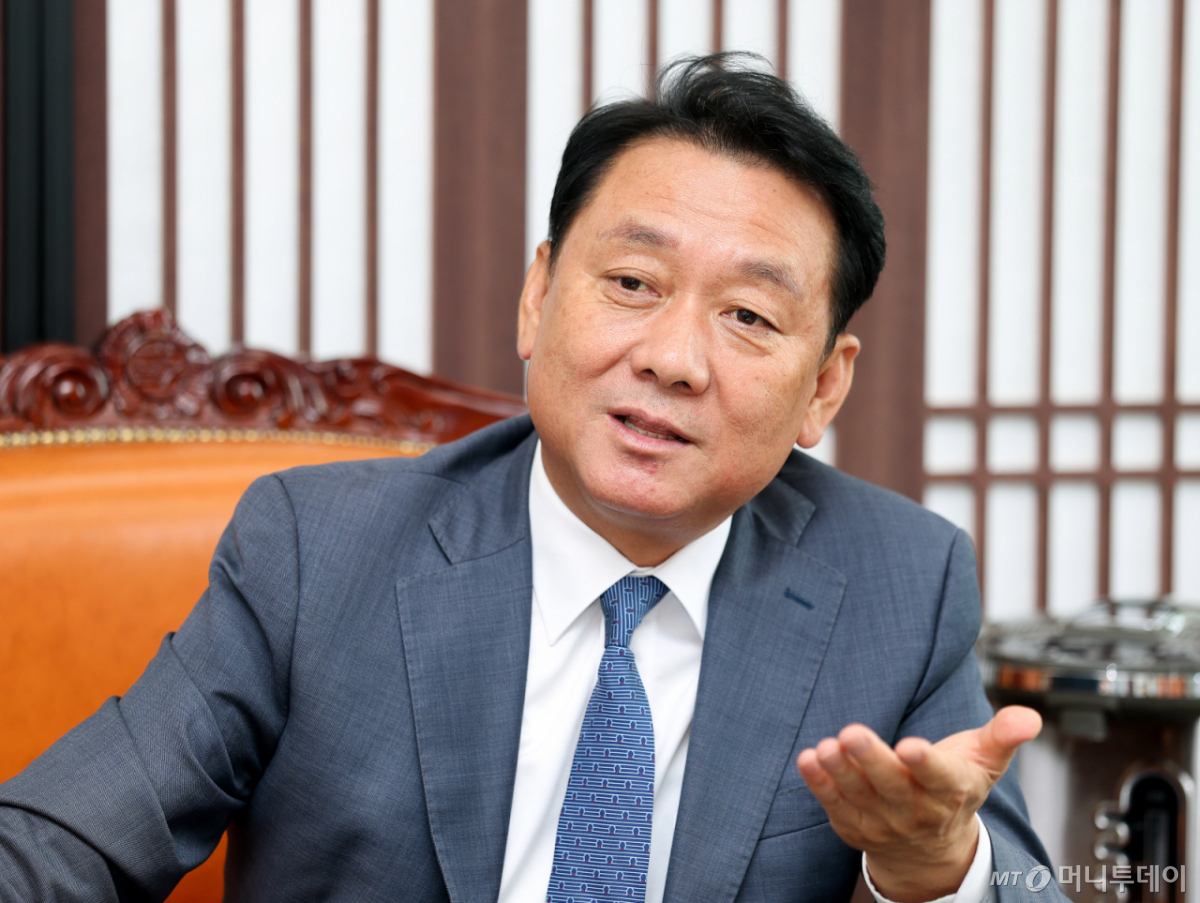
In an interview with Money Today's the300 (the300) on the 5th, Lee Kwang-jae, Chairman of the National Assembly's Special Committee on Budget and Accounts, emphasized that "the most important thing in the real estate market is rapid supply." He added, "With single-person households now exceeding 60% of the total population, it is essential to provide high-quality rental housing and youth housing suited to changing times." Lee (Chairman) further stated, "From the perspective of private developers or Korea Land and Housing Corporation (Korea Land and Housing Corporation), the profitability of public rental housing projects is low, creating a burden. As a result, large-scale housing projects are not gaining momentum. We must build 'high-quality public housing' to improve citizens' quality of life."
It is widely believed that the success or failure of the government's top-priority task—stabilizing the real estate market—depends on whether sufficient housing supply can be achieved. Although a tax reform plan was recently announced, focusing on strengthening taxes on non-resident single-home ownership, there are limits to relying solely on tax measures and loan regulations. The government and ruling party judge that only by supporting high-quality housing supply capable of meeting market demand can home price stability be ensured and fundamental housing insecurity be resolved.
The problem lies in the fact that the Housing Development Fund, which plays a 'reservoir' role for public housing projects, does not have sufficient financial capacity. According to the Korea Real Estate Board, as of late June, the number of subscribers to the national housing subscription accounts nationwide dropped by more than 540,000 in just one year, falling to 25.83 million. Annual subscriptions have declined for four consecutive years from 2022 through the end of last year. With soaring private pre-sale prices and low returns on housing subscription accounts, the argument that "housing subscription accounts are useless" has spread, causing even the fund's foundation to become unstable.
A simple calculation shows that investing just 1% of the National Pension Fund would secure 18 trillion won in housing project funding. The National Pension Service is considering alternative investments in residential real estate based on profitability, targeting young people, newlywed couples, and middle-class households—not welfare-oriented housing projects with low returns. Like major overseas pension funds such as ABP (the Dutch public pension fund) or TIAA (the U.S. teachers' retirement fund), the goal is to secure long-term and stable cash flows through alternative investments in rental housing.
According to market sources, the National Pension Service reportedly insists that any investment must guarantee a return of at least 7% or higher. Investment methods that simultaneously satisfy both profitability and public interest—such as rental housing REITs (Real Estate Investment Trusts) or senior housing—are being prioritized. Ultimately, the key question is whether an alternative investment model can be established that goes beyond consumptive welfare spending to ensure stable, income-generating returns. A National Pension Service official stated, "The National Pension Service is already making significant real estate investments abroad, including in the United States, Australia, and Europe. Going forward, we plan to design an investment model that considers both the role of investors and social contributions, referencing domestic and international housing policies and major cases."
Separately, the National Pension Service is also exploring diversification of its fund operations. It has launched a feasibility study on "elderly welfare housing projects," among other initiatives, aiming to respond to an ultra-aged society by supplying welfare-oriented housing while simultaneously achieving both fund profitability and housing stability. Kim Sung-ju, President of the National Pension Service, Lee (President), also revealed in a press briefing last June that "in relation to domestic rental housing investments, we are reviewing new investment models that can achieve both pension profitability and housing stability, premised on securing internal target returns."
However, some voices raise cautious concerns about using the National Pension Fund as a source for housing supply policies. The highest priority in fund management is preserving retirement funds and maximizing returns. There are worries that using the fund as a catalyst for housing policy could undermine its inherent independence and stability.

 in ECONOMY
