

The government is considering easing restrictions on diesel exports while maintaining the maximum price system for petroleum products. This is because the need to adjust export restrictions has grown as domestic diesel demand declines and refiners' production capacity recovers. According to the Ministry of Trade, Industry and Energy, exceptional export permissions are possible under current regulations, allowing the measure to be pursued without separate regulatory revisions.
According to the government on the 22nd, the Ministry of Trade, Industry and Energy is reviewing plans to ease export restrictions based on requests from the refining industry and domestic inventory and supply-demand conditions. A Ministry of Trade, Industry and Energy official stated, "Exceptions can be permitted under current regulations, so we are preparing necessary measures," adding, "While a specific timing cannot be identified, it can be considered as being in preparation." Since exceptions can be allowed without separate regulatory revisions, the measure is not expected to take a long time.
President Lee Jae-myung also revealed on X (formerly Twitter) the previous day that he is preparing measures to adjust domestic mandatory supply volumes and increase export quantities, considering the recovery of refiners' production capacity and the decrease in domestic diesel consumption. With presidential remarks added to industry requests, discussions on easing export restrictions are expected to gain momentum.
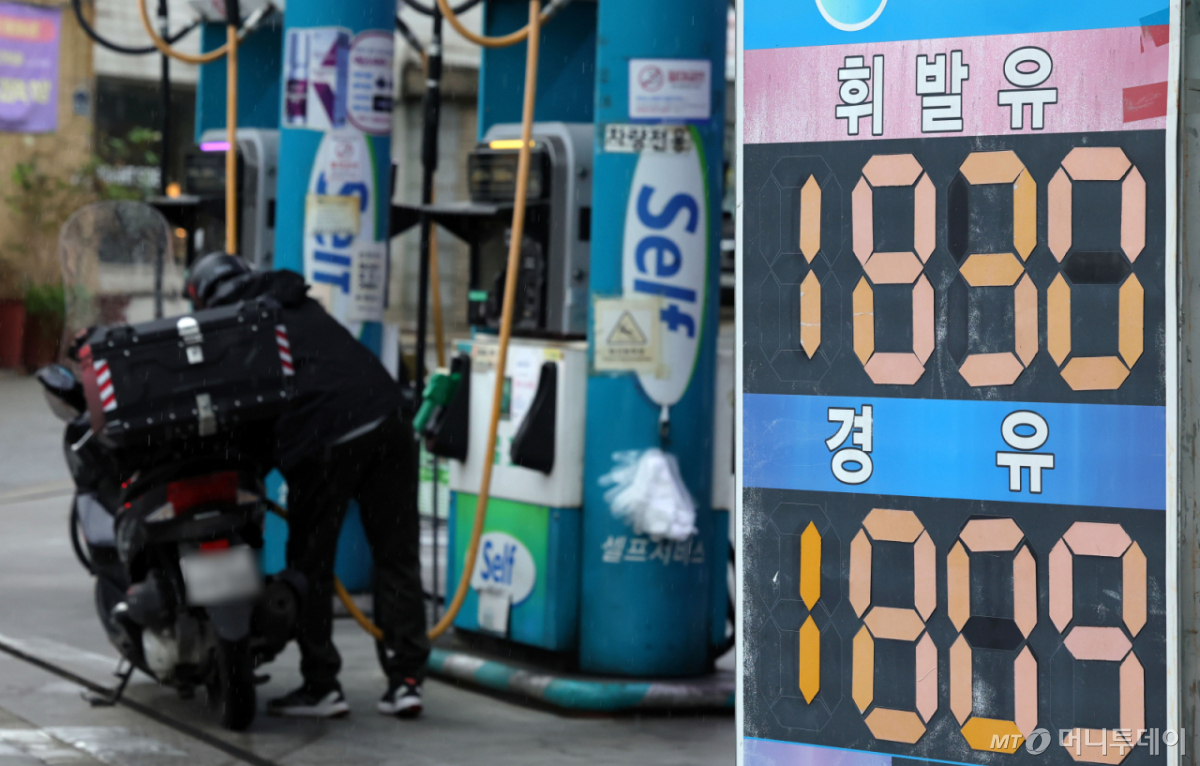
Since the implementation of the maximum price system, the government has managed monthly export volumes of gasoline, diesel, and kerosene to be within 100% of the same month in the previous year, while maintaining domestic shipment volumes at 90% or more of the same month in the previous year. This is a measure to prevent domestic supply disruptions due to expanded exports. The 11th maximum price, applied from the 17th, was frozen for four consecutive months at 1,784 won per liter for gasoline, 1,773 won for diesel, and 1,380 won for kerosene.
The refining industry views the cap linked to export volumes of the same month in the previous year as acting as an export constraint when combined with this year's domestic demand decline. This is because domestic diesel consumption was high last year, resulting in relatively low export volumes, and domestic demand has also decreased this year, increasing surplus quantities. It is explained that while refinery operating rates dropped due to crude oil supply disruptions in the first half, operating conditions recovered in the second half, increasing the burden according to existing export limits.
In fact, according to Ministry of Trade, Industry and Energy statistics, cumulative diesel sales from the second week of March, after the implementation of the maximum price system, to the second week of October decreased by 7.6% compared to the same period last year. September sales also decreased by 9.0% compared to the same month last year. In contrast, gasoline sales increased by 3.0% due to factors such as Chuseok holiday demand and special discounts at highway gas stations. The Ministry of Trade, Industry and Energy stated that it has secured crude oil import volumes for October and November at more than 100% of the previous year's average, indicating no issues with crude oil supply.
International diesel prices recorded $170 per barrel as of the 15th. The industry expects that selling unsold domestic quantities overseas will reduce inventory storage costs and financial burdens while increasing operational flexibility for plants. However, since exports are only expected to increase slightly, overall profits are not anticipated to rise significantly.
The items subject to easing are also a point of contention. It is known that the industry has been informed of plans to ease export restrictions centered on diesel. Voices are emerging within the refining industry that gasoline should also be eased together. This is because refining crude oil produces not only diesel but also gasoline and kerosene, making it difficult to increase production for specific products alone.
A refining industry official stated, "If operating rates are increased to boost diesel production, gasoline and kerosene production also increase simultaneously," adding, "Easing export restrictions for gasoline as well would be more helpful to the industry than lifting restrictions on specific products only."
However, since domestic gasoline sales in September increased compared to the same month last year, it remains unclear whether it will be included in the easing targets. The Ministry of Trade, Industry and Energy is reviewing plans to adjust export restrictions while monitoring inventory and supply-demand conditions to ensure no disruptions to domestic supply.

 in ECONOMY
