

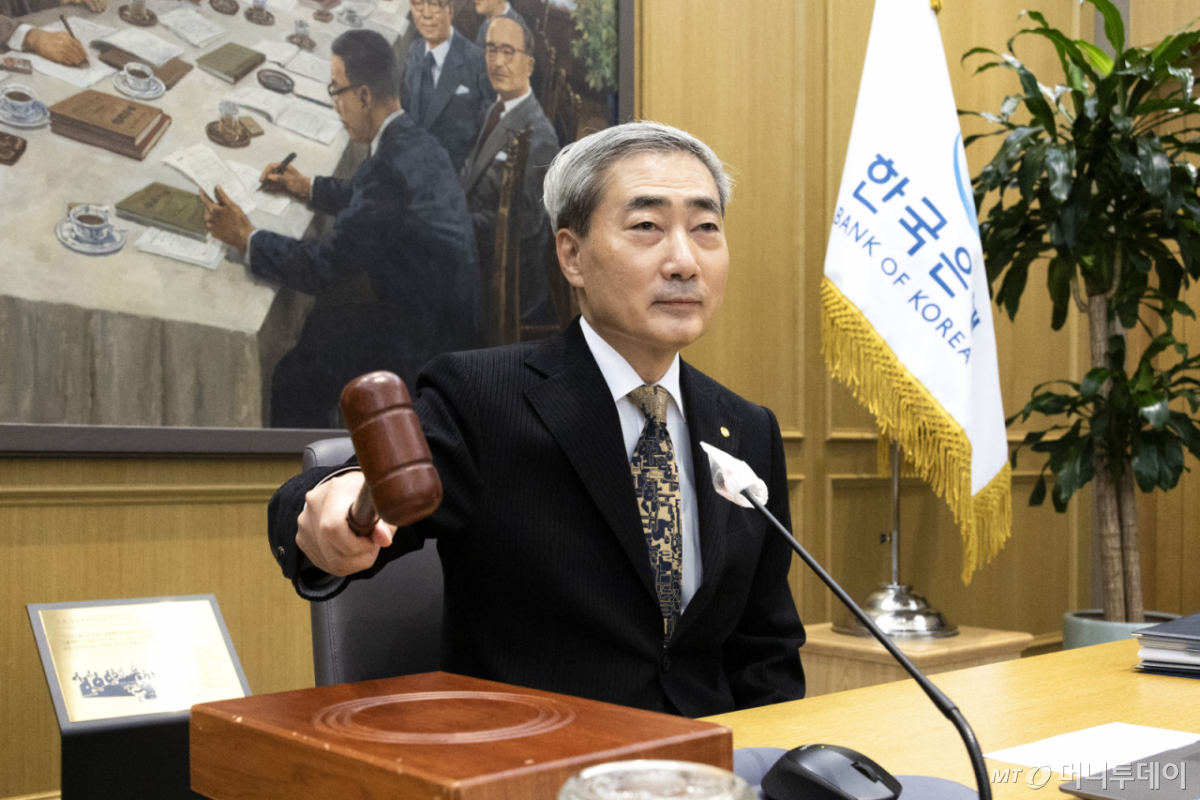
As the Bank of Korea kept the base rate at 3.0% on the 22nd, it projected that economic growth rates for this year and next would significantly exceed previous forecasts. This is due to the continued semiconductor boom driven by expanded artificial intelligence (AI) investment, along with the spillover effects of this momentum into other industries. However, the Bank also forecasted that inflation rates would remain above the 2nd% target for a considerable period, citing economic recovery and accumulated cost burdens.
In its "Assessment of Economic Conditions in October 2026" released on the same day, the Bank of Korea stated, "The domestic economy is expected to show high growth significantly exceeding the previous forecast path, as the semiconductor cycle continues a strong boom despite expanding uncertainty in the Middle East region, and spillovers into other sectors are also spreading."
In particular, it projected that economic growth rates for this year and next would significantly exceed the August forecasts of 3.3% and 2.9%, respectively. This suggests the possibility that the Bank of Korea will simultaneously raise its growth rate forecasts for both years by a large margin.
For the third quarter of this year, although instability in the Middle East region flared up again, exports and investment showed strong performance centered on the information technology (IT) sector, resulting in high growth rates following the first half. The Bank projected that solid growth would continue into the fourth quarter as favorable domestic demand trends persist and non-IT business conditions gradually improve.
The expansion of the semiconductor cycle is also expected to continue next year. Analysts noted that this will support growth, given the increasing share of the semiconductor industry in the domestic economy and the expanding spillover effects into other sectors.
Along with strong economic performance, inflationary pressure is also expected to intensify. The Bank of Korea stated, "The consumer price inflation rate will exceed the target level for a considerable period as accumulated cost pressures are transmitted and demand pressures gradually expand."
The consumer price inflation rate for the third quarter of this year was 2.9% year-on-year, slightly lower than the previous quarter (3.0%), but it remained at a high level. In contrast, the core inflation rate, excluding food and energy, rose significantly from 2.4% to 2.9% over the same period. This indicates that not only temporary supply shocks but also underlying inflationary pressures are growing.
The Bank of Korea projected that this year's consumer price and core inflation rates would largely align with the August forecasts of 2.7% and 2.5%, respectively, but expected them to exceed the previous forecasts of 2.3% and 2.5% for next year.
Driven by strong exports, the current account balance surplus is also expected to exceed previous forecasts. Analysts noted that the goods trade balance will record a large surplus due to the sharp rise in semiconductor prices resulting from expanded global AI investment. However, the services trade deficit is expected to widen slightly due to increased overseas travel driven by a stronger won.
Employment is projected to continue its recovery trend as the decline in manufacturing employment narrows and the increase in service industry employment expands. The scale of employment growth and the employment rate for this year and next are expected to largely align with previous forecasts.
However, uncertainty surrounding growth and inflation forecasts remains high. The Bank of Korea identified the development of the Middle East situation, AI investment and the semiconductor cycle, and changes in domestic and international financial conditions as key growth risk factors. On the inflation front, it analyzed that increased volatility in international oil prices and spreading demand pressures pose upside risks, while a decline in the won/dollar exchange rate and government price stabilization measures could act as downside factors.
Meanwhile, the Bank of Korea's Monetary Policy Board unanimously decided to keep the base rate at 3.00% on this day. The monetary policy direction document explained, "Given heightened uncertainty regarding monetary and fiscal policies in major countries, it was judged necessary to maintain the base rate at its current level while monitoring the development of domestic and external risk factors and the spillover effects of two previous rate hikes."

 in ECONOMY
