

Heljoseon disappears, giving way to "Jeongbyeong" and "Menhera"... "All failures are my fault"

The frustration and anger of Korean youth manifest not through street protests, but by abandoning major life milestones. The story of the so-called "N-po generation," who give up on romance, marriage, childbirth, and even buying their own homes, is nothing new. While previous generations chanted "Let's live well" while harboring expectations for the future, today's young people have even coined the self-deprecating expression that they "were born against their will," resenting the very fact of their existence.
Experts diagnose that excessive competition in Korean society, asset inequality, and a culture that places responsibility on individuals are exacerbating this phenomenon. They note that the "N-po generation" is one form of "extreme adaptation" chosen by young people to cope with an uncertain future.
A considerable number of young people do not plan to get married or have children. According to the "2024 Survey on the Living Conditions of Youth" conducted by the Office of the Prime Minister, the proportion of unmarried youth who responded that they had plans to marry fell by 11.9 percentage points (p), from 75% in 2022 to 63.1% in 2024. During the same period, the intention to have children also declined from 63.3% to 59.3%.
Kim Yun-tae, a professor of sociology at Korea University, stated, "Young people in South Korea find it difficult to perceive the hardships of their lives as social structural issues and to demand institutional changes." He added that such sentiments are expressed through passive resistance in quiet forms, such as among young people who are not working or those engaging in birth strikes, as well as through extreme resignation.
The gap in innate circumstances, such as parents' financial standing, is also a factor that fuels the sense of powerlessness among young people. Kim Heon-sik, a cultural critic, stated, "In our society, conditions that individuals cannot change, such as their parents' wealth or region of origin, have an excessively large impact on life." He added, "When public policies fail to guarantee a minimum standard of living, it is easy for people to fall into a sense of relative deprivation, perceiving the situation not as a social issue but rather as having been born to the wrong parents."
Frustration and anger tend to be directed inward, toward the individual's psyche, rather than manifesting as collective resistance. A prevailing attitude also emerges in which structural problems are internalized as personal incompetence or failure. This is exemplified by the phenomenon of young people using self-deprecating terms such as "jeongbyeong" (a shortened form of "mental illness") and "menheura" (a Japanese neologism referring to individuals with poor mental health).
Yoon In-jin, a professor of sociology at Korea University, pointed out, "While the term 'Hell Joseon' in the past criticized flawed social systems, recent expressions such as 'jeongbyeong' (a colloquial term for mental illness) and 'menhera' (a portmanteau of 'mental' and 'hera,' referring to a cute or attractive appearance associated with mental health issues) reflect a tendency to attribute the responsibility for problems to oneself."

The societal emphasis on a uniform life path is also cited as a factor narrowing the options available to young people. While the traditional life trajectory of "college enrollment, employment at a large corporation, and marriage" no longer guarantees a stable future, choices that deviate from this path are still easily viewed negatively.
Commentator Kim Heon-sik stated, "Our society tends to create a sense of fear as if something terrible will happen when individuals make choices that deviate from so-called 'normalcy,' such as working holidays, remaining unmarried, or taking on part-time or non-regular jobs." He added, "In some European countries, part-time employment is an everyday option, but in Korea, even people who proactively shape their own futures can become targets of disparagement." He further noted, "It is necessary to respect the decisions of individuals who have chosen different life paths and to highlight them positively within society."
Experts emphasize the need to establish a social foundation that allows young people to have diverse life choices. This is because, unlike the era when student movements were active, community culture and public forums have shrunk in recent years. It is also pointed out that an environment is needed where individual difficulties can be recognized as social issues and collective solutions can be sought.
Cultural critic Kim Seong-soo stated, "While many young people continue to pursue their individual challenges, these efforts remain fragmented and fail to translate into empathy and support across the entire generation." He added, "After traditional communities such as families and local neighborhoods have collapsed, there is a lack of healthy communities for young people to rely on, making it easy for them to feel lonely." He further emphasized, "There is an urgent need for communities where young people can seek alternative lifestyles together and care for one another, as well as policy support to back such initiatives."
Professor Yoon stated, "While young people are divided into groups such as progressives and conservatives, or men and women, making it difficult to form common agendas, there is ample potential to discuss issues that young people collectively experience across political camps and develop them into political agendas." He further emphasized, "This is a time when what is called 'sociological imagination'—the ability to view individual hardships as problems of social structure—is needed."
"200-to-1" Odds: A World That Hires Only Experienced Workers... Young People Also Face AI
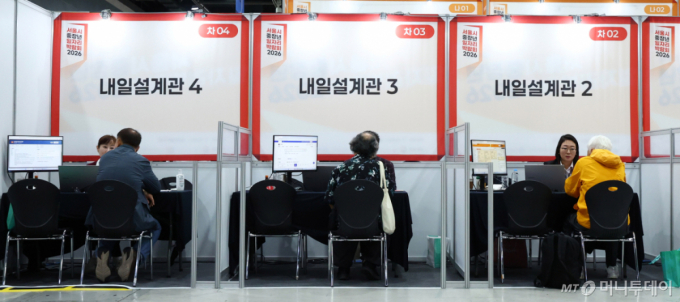
# Typically, Company A in the IT (information technology) industry hires around 100 new employees each year, but this year it has cut its new graduate recruitment by more than 20%. The preference for experienced candidates who can be immediately deployed to the field is not a new phenomenon, but it has intensified recently. As AI (artificial intelligence) sweeps through industrial sites, concerns are emerging that so-called AX (AI transformation) is further squeezing youth employment.
According to business circles on the 23rd, as companies’ preference for experienced hires coincides with the spread of artificial intelligence, opportunities for young job seekers in entry-level hiring are narrowing.
With new-graduate recruitment at major groups other than Samsung having all but disappeared, companies are shifting their focus toward hiring experienced workers. According to an analysis by the Korea Chamber of Commerce and Industry (KCCI) of job postings on private-sector recruitment platforms in the first half of last year, 82% of the more than 144,000 listings sought only candidates with prior work experience. Companies looking exclusively for new-graduate hires accounted for just 2.6%.
As the AI era has gained momentum this year, this trend has become even more pronounced. A human resources executive at a major domestic conglomerate stated, "The more advanced AX becomes, the more individuals with strong planning skills will use AI as a tool to perform their work, which can lead to an immediate reduction in the need for new hires." This means that one experienced worker can replace the tasks previously handled by multiple new employees.
As such, existential anxiety grows. In a survey conducted by The Korea Economic Daily (Hankyung) Association at the end of July this year targeting 1,000 young people aged 19 to 34 nationwide, 53.9% of respondents said it is highly likely that their "current or desired job" will be replaced or reduced by AI within the next five years. More than half, 53.6%, also agreed with the anxiety that they could fall behind in competition due to disparities in AI utilization skills.
The financial burden on young people who are unable to find employment continues to grow. According to a survey titled "Survey on Job Preparation Costs Among Job-Seeking Youth," conducted by Monoresearch at the request of The Korea Economic Daily (Hankyung) this month, the average monthly job preparation cost over the past three months was approximately 580,000 won among 1,000 young people aged 19 to 34 nationwide who are currently seeking employment. The results indicated a general trend in which the longer the job search period, the greater the financial burden. Young people who had been preparing for employment for more than three years reported an average monthly preparation cost of approximately 800,000 won, significantly higher than those who had been preparing for less than six months (560,000 won) or between six months and one year (520,000 won).

The solution lies in creating practical points of contact that take into account the demands of industrial sites. An industry association official stated, "Given the rapid changes in the industrial environment driven by AI and other factors, it is inevitable that companies prefer experienced professionals who can be immediately deployed to practical work as well as mid-career new hires." The official added, "To lower employment barriers for young job seekers, the government should expand work experience programs and strengthen corporate incentives, while companies must significantly increase internship and on-the-job training opportunities."
At the individual company level, efforts are also being made to resolve such mismatches. These initiatives aim to provide young people with work experience while allowing companies to secure talent that can be deployed in the field relatively quickly.
This is so-called "recruitment-linked internship." It is a system that goes beyond mere experiential learning by operating internships with the premise of conversion to regular employment, thereby providing young people with practical job opportunities. Several companies are also introducing or considering R&D (research and development) industry-academic scholarship programs. Under this scheme, graduate students in master's and doctoral programs in key fields across major science and engineering majors are selected as industry-academic scholars and granted eligibility for employment upon graduation. In many cases, scholarships and welfare benefits are provided even before the start of employment.
Companies are increasingly looking to expand employment programs based on on-site experience in response to these environmental changes. For example, LS Cable & System is considering expanding its "internship linked to recruitment" program beyond its current once-a-year schedule, as the competition ratio for each selection round has approached 200 to 1.
Institutional support and the establishment of a national ecosystem are also needed. Another business community official stated, "Educational institutions such as universities must also restructure their curricula to focus on job-based practical training, building an ecosystem in which the government, businesses, and academia collectively help young people accumulate real-world experience."
Above all, there is widespread criticism that the government should provide support to enable companies to create jobs. The argument is that imposing anti-business laws and regulations that strangle enterprises will result in an equivalent loss of youth employment opportunities. Business leaders are raising their voices, stating that "conditions must be created for the continuous creation of high-quality youth jobs through regulatory improvements and investment promotion."
Retirement age extension is also an issue. A business community official stated, “The statutory retirement age extension currently under discussion by the government and the ruling party could shrink employment opportunities for young people, so careful deliberation is needed.”
"I'm sorry, Mom": Job hunting for five years, part-time work has become my main income of 0.2 billion won a month
Ms. A, a 31-year-old woman who has entered her 30s, has been working part-time at a cafe for five years. She started the job after spending more than a year preparing to enter a public enterprise, thinking she should earn at least some living expenses rather than asking her parents for financial support. What began as a side gig has now become her primary livelihood. As her working hours increased, her exam preparation receded into the distance. Instead, the cafe work experience she accumulated served as a foundation for changing jobs to another cafe. She even considered using this experience to start her own cafe, but her part-time wages were barely enough to cover her living expenses. With part-time pay of around 0.2 billion won, she could not afford the deposit of several tens of millions of won, nor the costs for interior design and equipment. Ms. A lamented, "I don't have enough money to start a business, but if I try to prepare for employment again, I don't know where to begin."
The number of young "Freeters" (a portmanteau of "free" and the German word for worker, "Arbeiter") who initially took on part-time jobs as a temporary stopgap before securing full-time employment but have effectively come to rely on them as their primary means of livelihood is on the rise. This phenomenon occurs because these individuals, unable to find their desired positions, first take part-time work to cover living expenses, yet rarely develop the capacity to advance to the next stage of their careers.
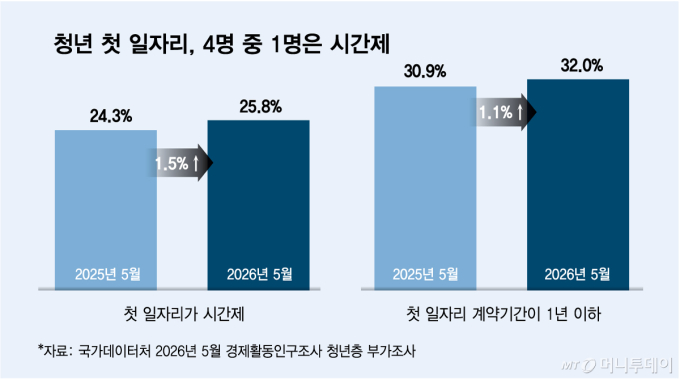
According to the "May 2026 Economic Activity Survey Supplementary Survey on Youth," released by the National Data Agency in July, among young people aged 15 to 29 who have gained employment experience after graduating or dropping out, the proportion whose first job was part-time rose by 1.5 percentage points year-on-year to 25.8%. The share of contracts with a duration of one year or less also increased from 30.9% to 32.0%. This means that one in four young people starts working on a part-time basis, while one in three begins with a contract of one year or less. Conversely, the proportion of jobs without a fixed contract period, allowing for continuous employment, decreased from 52.8% to 52.2%.
The food service and retail sectors are the primary industries where young people enter the workforce for the first time. In the same survey, accommodation and food services accounted for the largest share of first jobs at 15.9%, followed by wholesale and retail trade at 12.4%. Combined, these two sectors make up 28.3%. Additionally, when asked about wages and income at the time of their first job across all industries, 42.1% reported earnings between 2 million and 3 million won, while 23.3% reported earnings between 1.5 million and 0.2 billion won.
Many young people do not stay long in their first jobs, which are often difficult to secure. Among young workers who left their first job, 44.4% cited dissatisfaction with working conditions, such as wages and working hours, as the reason. The share of those who quit because temporary or seasonal work ended or their contract period expired was 18.0%, an increase of 2.5 percentage points from the previous year. The average tenure for wage earners who left their first job was one year and 2.3 months. The period of unemployment after graduation is also trending longer. Among unemployed youth after graduation, 48.6% had been unemployed for more than a year, the highest share since 2009 (51.7%).
Noh Ye-eun, a senior labor attorney and representative of the labor law firm Changgong, stated, "Part-time work periods unrelated to the job being applied for tend to be evaluated as close to gaps in one's resume in the hiring market." She added, "Given the domestic characteristic that dismissals are difficult, companies raise the bar for regular employment by favoring contract or probationary hires. Young people who cannot give up part-time jobs due to financial pressures end up losing even the time needed for preparation."
He further emphasized, "As part-time work periods lengthen, it becomes difficult to lower one's expectations due to the regret over the time already invested." He added, "Since freeter youth are statistically classified as employed individuals, they fall into a policy blind spot, and support that allows them to pursue employment preparation while working is needed."
"You're going to end up the only one left in a flash of lightning's poverty": Young people aiming for a big win... all that remains is debt
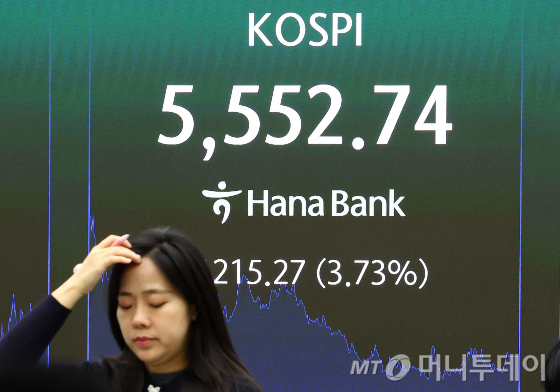
For young people who have relatively few opportunities to accumulate assets, the stock market is seen as a breakthrough that allows them to grow their wealth with a small initial investment. However, recent sharp declines in stock prices have shaken these expectations as well. In particular, many young investors with limited accumulated assets use leverage to expand the scale of their investments. Concerns are being raised that investing, chosen in an effort to narrow the asset gap, may instead become a factor delaying economic independence among the younger generation.
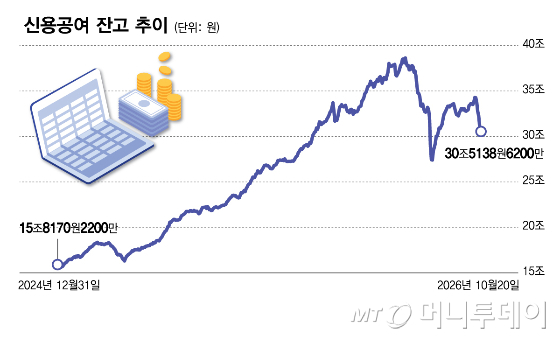
◇Margin investing (investing with debt) indicator: Credit financing balance remains in the 30th trillion won range… Losses among young investors also significant = According to the Korea Financial Investment Association on the 24th, as of the 20th, the outstanding balance of credit trading financing stood at 30.5139 trillion won, remaining above the 30th trillion won mark despite recent sharp stock price declines and credit trading restriction measures by the financial investment industry.
Margin financing balances, which represent the outstanding amounts investors have borrowed from securities firms to purchase stocks, are a key indicator of so-called "margin investing (investing with debt)"—that is, investing using borrowed funds. As of the end of 2024, margin financing balances stood at approximately 16 trillion won. By the end of June last year, however, they had surged to as much as 38 trillion won. This represents an increase of roughly 2.3 times in a period of less than two years.
What deserves attention is the pace at which young investors are increasing their margin investing (investing with debt). As of the end of June, approximately 4.2 trillion won of the total outstanding credit trading balance was recorded as borrowings by investors in their 20s and 30s. This represents a 2.5-fold increase compared to approximately 1.7 trillion won at the end of 2024. It exceeds the 2.1-fold growth rate of the credit trading balance among investors in their 40s and 50s, who are considered the core economically active demographic, over the same period.
The expansion of margin investing (investing with debt) among young people is a cause for concern because actual investment losses are also significantly higher among users of credit financing. According to an analysis by financial authorities in early March of the accounts of retail investors at some major domestic securities firms, the loss rate for credit financing users aged 20s and 30s was approximately 18%, which is substantially higher than the loss rate of about 7% for investors in the same age group who did not use credit financing.
At the time, the domestic stock market experienced extreme volatility due to geopolitical shocks from the Middle East. Following the outbreak of war between the United States and Iran, the KOSPI index, which had risen to the 6,300 level, plunged by approximately 17% over two trading days before rebounding by about 10% in a single day, exhibiting a highly erratic market trend. Recently, as the KOSPI has fallen for seven consecutive trading days, analysts warn that the risk of losses among young investors utilizing margin trading is once again on the rise.
◇Investment losses 'devastating' for young people with limited financial assets… Short-selling risks also expanding = This type of margin investing (investing with debt) risk places a heavier burden on the younger demographic, which has a relatively fragile asset base. Young adults in their 20s and 30s who have only recently entered the workforce have accumulated fewer financial assets than middle-aged and older generations, leaving them with relatively limited capacity to recover from investment losses. Furthermore, if the burden of repaying borrowed funds is added on top, it could also disrupt long-term asset formation plans.
In fact, as volatility in the KOSPI has recently widened, forced liquidations have also surged sharply. On the 14th, the ratio of actual forced liquidation amounts to unsettled brokerage funds stood at 7.2%, marking the third-highest level since the second half of this year. The forced liquidation amount on that day was 122 billion won, the second-highest for the same period. Since the 13th, the proportion of forced liquidations has exceeded 4% for five consecutive trading days, with cases of investors' holdings being forcibly disposed of occurring one after another.
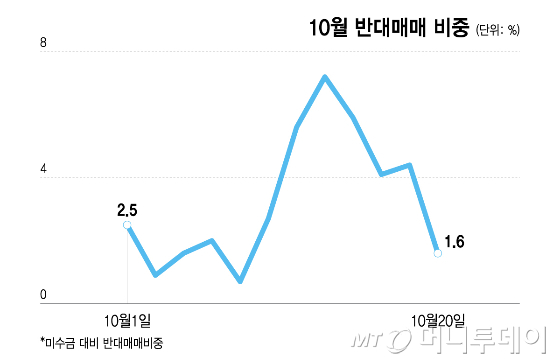
Short selling is a cause for concern not only because it can result in individual investors' losses, but also because it has the potential to amplify volatility across the entire stock market. If falling share prices reduce the value of collateral, securities firms may be forced to sell shares, and the resulting surge in sell orders could further drive down prices, creating a vicious cycle.
A source in the financial investment industry said, "In a situation where stock prices are plummeting, the shock from forced liquidations may have a greater impact on young people." The source added, "Early-career professionals often lack the relative financial capacity to secure additional funds or mitigate losses, making them more likely to bear the full brunt of investment risks."
◇The debt burden of young people in securing housing is also expanding… concerns over delayed economic independence= The debt burden on the younger generation is not limited to stock investments. As the scale of loans for securing housing increases, the financial burden that young people must bear has reached a considerable level.
According to the Bank of Korea's household debt statistics by borrower for the second quarter of this year, the average new household loan amount per borrower across all age groups was 34.13 million won, a decrease of 1.28 million won from the previous quarter. In contrast, borrowers in their 20s saw an increase of 203.94 million won compared to the previous quarter. This indicates that while the overall scale of new loans decreased, the amount of new borrowing by borrowers in their 20s actually expanded.
The expansion of debt burdens among young adults was also evident in mortgage loans. As of the end of the second quarter this year, the average outstanding balance for mortgage borrowers in their 20s reached 239 million won, an increase of 5.75 million won from the previous quarter. This marked the first time the figure surpassed 2 million won since the compilation of related statistics began, and the amount of increase was also the largest among all age groups.
The average outstanding balance for home mortgage borrowers in their 30s also rose to 234.19 million won, an increase of 4.09 million won from the previous quarter. In contrast, the increases for borrowers in their 40s and 50s were only 1.86 million won and 440,000 won, respectively. This indicates that the debt burden among young adults seeking to purchase homes is expanding more rapidly than in other age groups.
While loans for housing and borrowing for stock investment differ in nature, they should be examined together as part of the overall financial burden borne by young people. In particular, if investors who already carry existing debts, such as mortgage loans, expand their investments using margin financing, shocks from market volatility can spread to affect their entire household financial situation.
The issue is that young people who already carry substantial debt may face even greater difficulties in building wealth in the future if they take on additional borrowing and losses during stock investment. When the burden of repaying loans for housing and living expenses is compounded by investment losses, their capacity to save diminishes, potentially delaying the accumulation of assets necessary for economic independence. This means that the risks taken in an effort to narrow the asset gap could instead lead to a widening of that gap.
Lee Hyo-seop, head of the Financial Industry Division at the Korea Capital Market Institute, emphasized the need for institutional improvements to foster a culture of long-term investing among retail investors. "We need to design a structure in which tax benefits increase with the length of stock holding periods, thereby reducing incentives for short-term trading and encouraging long-term holding," Lee said. He added that financial education must be strengthened throughout all stages of life, from adolescence to old age.

 in ECONOMY


