

[For more diverse corporate information on the startups mentioned in this article, visit Unicorn Factory's big data platform 'DataLab'.]
Robot automation is rapidly spreading across industries. Global manufacturing companies are intensifying their automation competition by deploying humanoid robots on production lines and building "robot factories." However, the reality on the ground is more complex than expected. Factories and logistics centers operate with robots from different manufacturers mixed together, and even minor process changes force engineers to repeatedly rewrite program code. While automated equipment has increased, experts point out that technology to integrate these systems into a single platform for efficient operation remains insufficient.
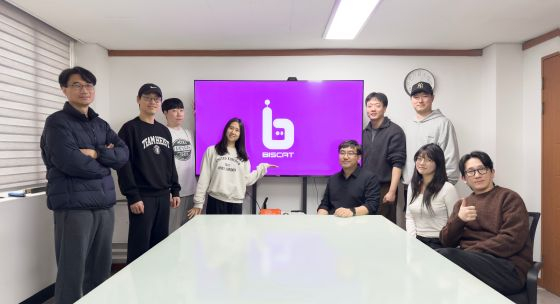
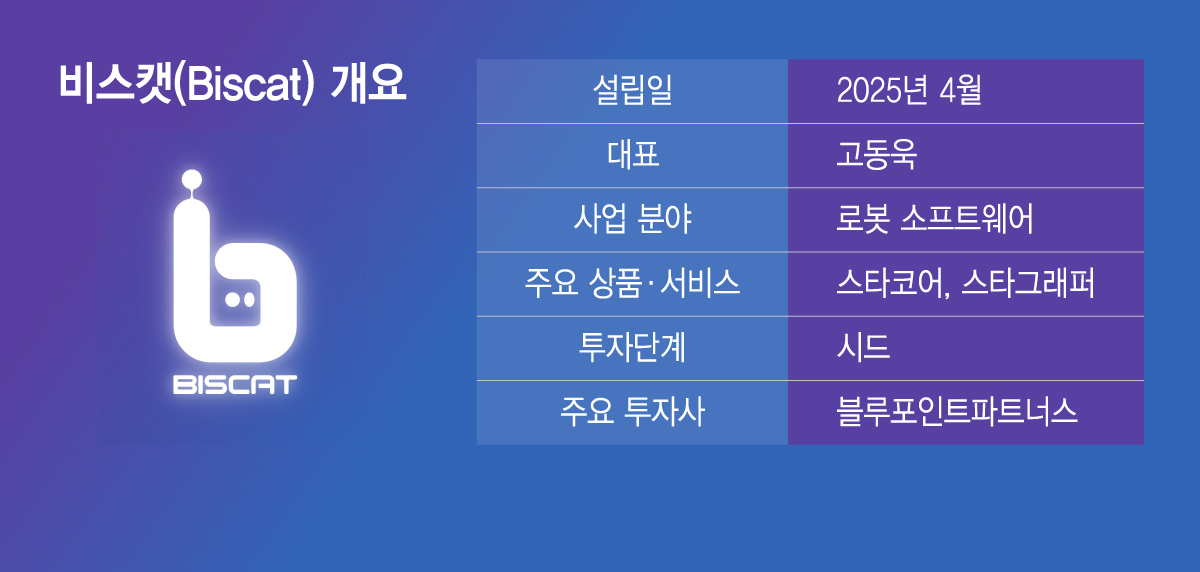
A startup has emerged to address this structural inefficiency: Biscat, which develops robot operation intelligence platforms. The company recently secured seed investment from deep-tech accelerator Blue Point Partners.
Biscat is developing an integrated robot operation platform. Its core function connects and manages robots and equipment from different manufacturers within a single system while automatically adjusting workflow processes. Simply put, it serves as the "robot operation brain" that coordinates overall tasks when multiple types of robots operate simultaneously in a factory and identifies optimal task sequences.
Lee Seong-ho, Senior Reviewer at Blue Point Partners, stated, "Although the robot market is growing rapidly, no fully integrated platform capable of operating robots from different manufacturers within a single system has yet emerged. We determined that Biscat's team aligns perfectly with market timing, technological direction, and team capabilities."
Beyond rule-based systems: 'Autonomous operation'
While some robot integration systems currently exist, most operate using "rule-based" methods. This requires humans to create rules for specific scenarios and input them into the system. Lee noted, "In existing systems, developers must intervene to modify code whenever problems arise. However, Biscat's system is designed to independently understand and judge situations."
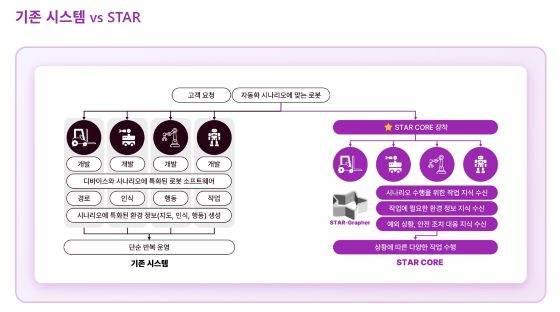
Biscat's core technology consists of two main components. First, 'STAR-Core' functions as a "common driving program" enabling robots from different manufacturers to operate in the same manner. Previously, even minor differences in robot motors or movement patterns required developing new software. With STAR-Core, these differences are automatically reconciled, allowing new robots to be integrated into the system and become operational within just 1–2 weeks.
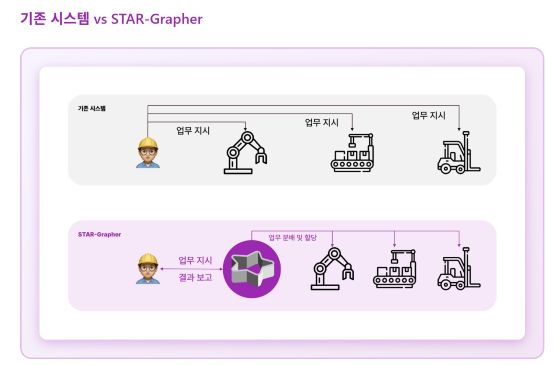
Second, 'STAR-Grapher' acts as an operation brain that connects factory robots, equipment, and task sequences like a single "map." For instance, if a robot stops or a process changes, the system automatically recalculates other robots' work paths without requiring manual instructions. In essence, it serves as a conductor coordinating all tasks in factories where multiple robots operate simultaneously.
Blue Point Partners focused on Biscat not only for its technology but also due to clear market demand. Lee explained that he confirmed common requirements raised across various robot manufacturers during field visits. He stated, "Most robot manufacturers design systems centered around their own robots. However, actual customers want to use robots from multiple manufacturers together." He added, "The demand for platforms enabling heterogeneous robots to communicate and operate in an integrated manner has been a persistent issue raised on the ground."
Biscat founder Ko Dong-uk (CEO) understood this problem better than anyone. He is a robotics intelligence expert who previously founded and operated the serving robot company Koro Robotics. Lee remarked, "Ko (CEO) directly experienced the structural problems of the robot market through prior entrepreneurial ventures. Consequently, his problem definition was extremely clear, and his approach to solutions was highly practical."
Currently, Biscat is conducting Proof-of-Concept (PoC) projects with select large corporations. This phase involves applying technology in actual industrial settings to verify performance and usability potential. Lee noted, "Companies that have reviewed the product are considering rapid adoption, indicating a positive market response. Although still in early stages, the clear confirmation of on-the-ground demand is encouraging."
Chinese hardware offensive… Software opportunities emerge
The robot industry faces intensifying competition due to recent aggressive moves by Chinese manufacturers. Lee observed that this environment could actually create new opportunities for software companies. He stated, "Manufacturing robot hardware domestically is challenging given Chinese firms' strong price competitiveness. Consequently, entrepreneurs are increasingly considering business models centered on platforms or software rather than hardware." Biscat emerged within this trend.
The robot operation software market is also substantial. According to Lee, the current AI-based robot operation system market in Korea is estimated at approximately 1.4 trillion won. Including manufacturing automation and robotics sectors, the total expands to around 4.6 trillion won. He added, "Factory automation will continue expanding. As the number of robots increases, the importance of operation software for efficiently managing and coordinating them will grow accordingly."

Blue Point Partners believes this investment positions Biscat to potentially secure a meaningful global market presence. Lee evaluated, "No fully integrated platform for operating robots from different manufacturers has yet emerged in the global market either. This is a team with immense potential where market timing, technological direction, and team capabilities consistently align."
[MoneyToday startup media platform Unicorn Factory]

 in FUTURE


