

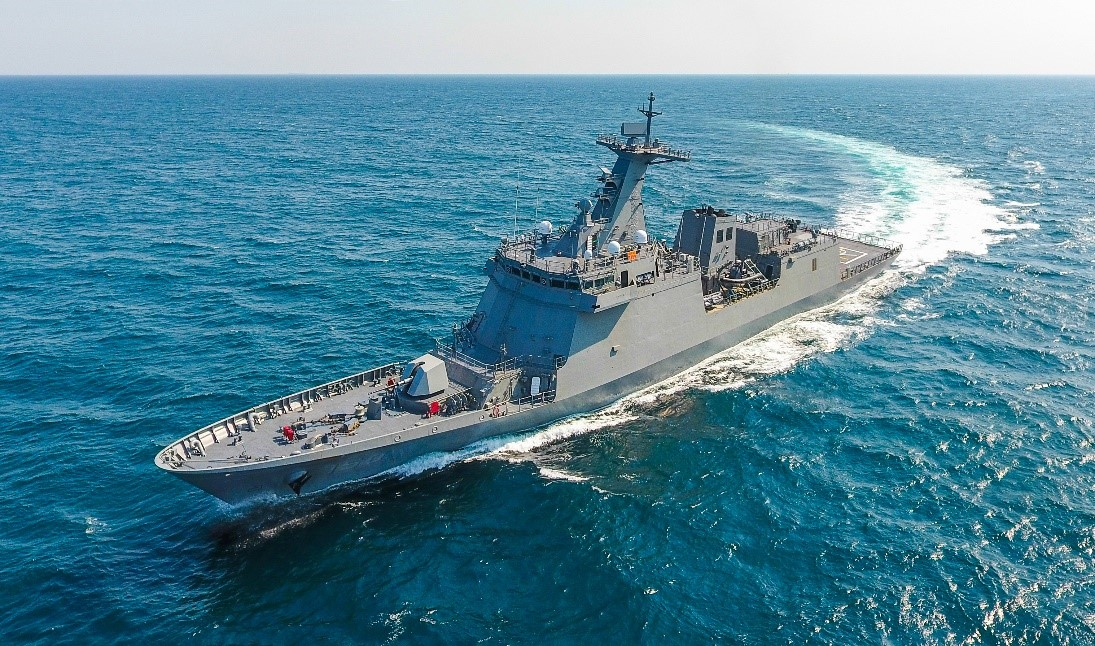
A 3,200-ton frigate cutting through the waters of the Philippines. As the massive warship plows through the waves, its 'brain' that reads the situation and commands combat operations is none other than a Korean-made system. This is the 'Combat Management System (CMS),' which gathers information captured by various sensors such as radar to assess threats, links with weapon and communication systems, and exchanges tactical data and operational information with other ships in real time.
On warships at sea, split-second decisions determine the success or failure of operations, making the Combat Management System critically important. In human terms, it functions like eyes and ears that gather information, make judgments, and immediately command limbs to act when necessary. This is why the Combat Management System is called the 'brain of a warship.'
Developed with a sense of mission… Highest precision in gun control technology
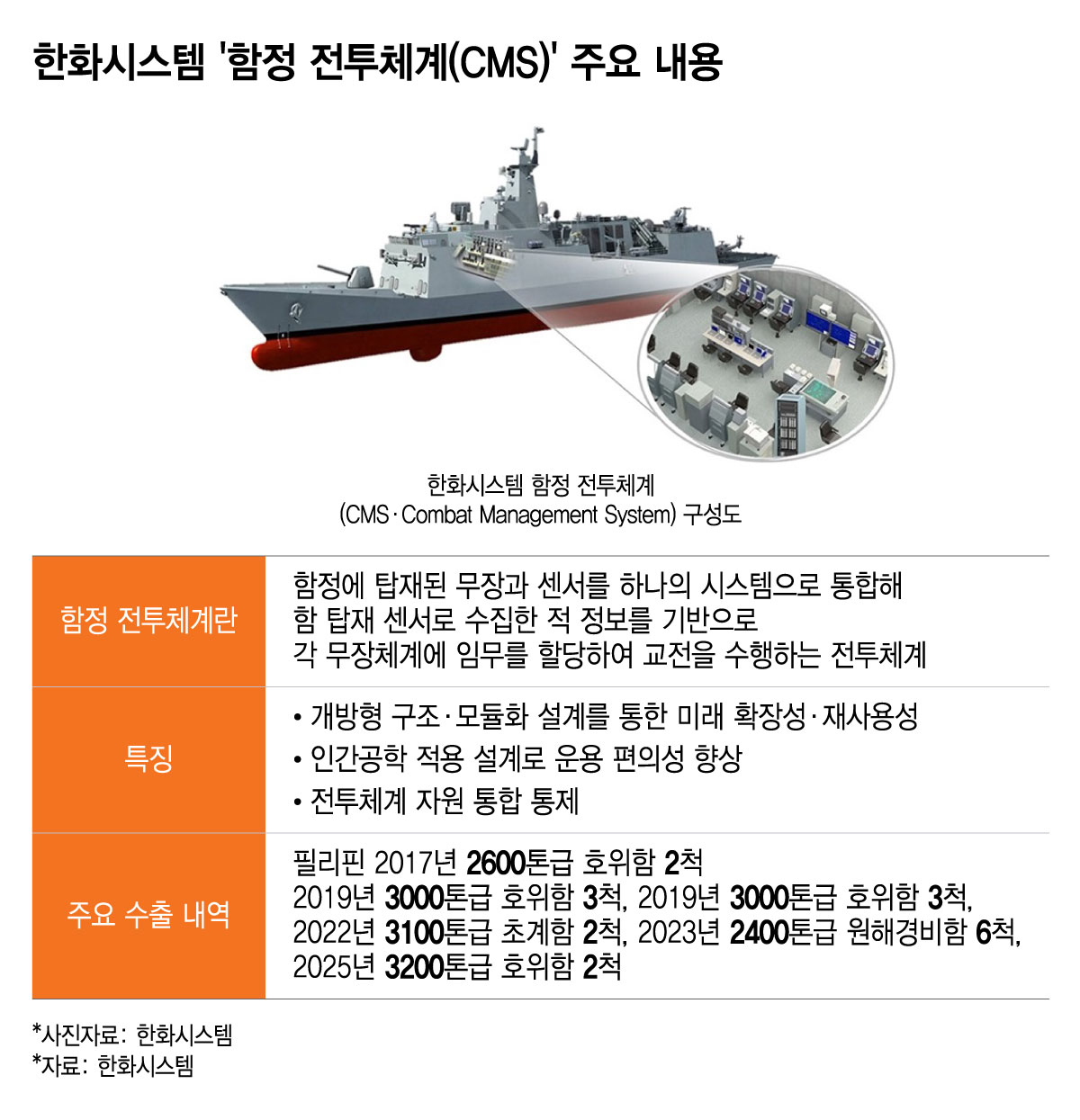
In Korea, there is essentially only one company developing Combat Management Systems. Hanwha Systems is the sole domestic provider that has supplied domestically developed Combat Management Systems for various surface and underwater vessels operated by the Republic of Korea Navy, including fast combat ships, large amphibious assault ships, destroyers, frigates, and submarines. It can be said that over the past 40-plus years, Hanwha Systems has delivered combat systems to almost all warships operated by the Navy.
Hanwha Systems entered the field of Combat Management System technology development in the 1980s. During the period when combat systems were imported from abroad, it was difficult to immediately reflect the Navy's requirements, and changing onboard equipment required requesting software modifications from overseas manufacturers, resulting in significant constraints due to technological dependence. A Hanwha Systems official stated, "For the development of naval combat power, domestic production of Combat Management Systems was essential," adding, "A sense of mission was the starting point of development."
The development process was not easy. The Combat Management System is a highly complex system that must integrate various weapons and sensors mounted on warships and unify the entire process from detection to engagement. Therefore, understanding individual equipment was necessary, along with establishing the Navy's operational concepts and gaining comprehensive understanding of all combat operations. High-level technical capability was also required to integrate these elements and achieve final performance.
In particular, to secure one of the core technologies of the Combat Management System—precision gun control technology—the team repeatedly went out to sea even on days with poor weather conditions, conducted live-fire exercises, and iteratively corrected data countless times. As a result, Hanwha Systems succeeded in developing gun control technology with the highest level of accuracy.
Expanding into Southeast Asia, the Middle East, and Europe… Supplying customized systems
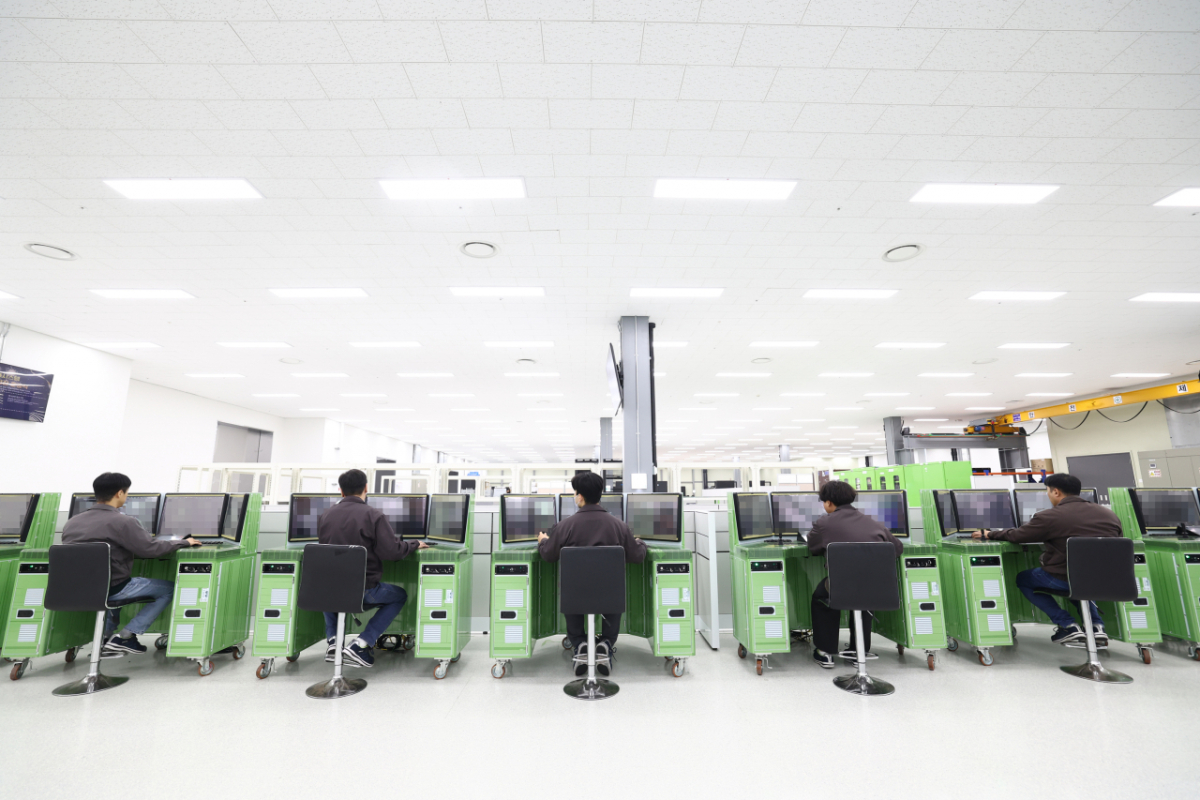
The strength of Hanwha Systems' Combat Management System lies in its extensive accumulation of diverse operational experiences and the Navy's operational concepts. Its competitiveness also stems from its expandable design, which can accommodate not only new weapons and sensors but also future unmanned systems. A Hanwha Systems official explained, "Above all, we can progress development and Yangsan faster compared to other countries," adding, "This allows us to minimize power gaps."
Such technological capabilities are recognized on the global stage. Starting with two 2,600-ton frigates in 2017, Hanwha Systems exported combat systems to the Philippines for the performance upgrade of three 3,000-ton frigates in 2019, two 3,100-ton patrol vessels in 2022, and six 2,400-ton offshore patrol vessels in 2023. Last year, it also supplied combat systems for two 3,200-ton next-generation frigates.
Hanwha Systems aims to expand its market beyond the Philippines to Southeast Asia, the Middle East, Europe, and South America. Its core strategy is to develop and supply combat systems tailored to each country's Navy requirements and operational environments. In the case of the Philippines, it was explained that supplying a combat system considering the complex operational environment of over 7,600 islands and special maritime security conditions was instrumental in securing the export deal.
The company is also keeping future capabilities in mind. A Hanwha Systems official emphasized, "Recently, we have been incorporating relevant technologies into our designs to enable expansion to future unmanned systems, including combined manned-unmanned operations," adding, "We differentiate ourselves by addressing not only the current needs of the importing country's Navy but also its future power development direction."
Success in developing ECS and CBMS… Securing global-level unmanned warship technology
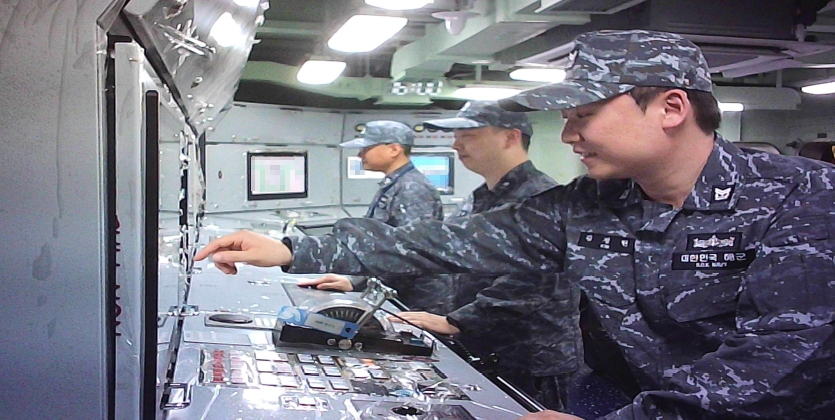
Hanwha Systems has also succeeded in developing the Integrated Institutional Investor Control System (ECS) and Condition-Based Maintenance System (CBMS), which were previously held only by a few advanced countries such as the United States, Italy, and Norway. The Integrated Institutional Investor Control System is an advanced control equipment that integrates propulsion, power, auxiliary equipment, and damage control systems into a single network-based system to enable warships to perform missions stably and efficiently, functioning like the 'heart' of a warship.
The Condition-Based Maintenance System for Warship Propulsion Systems monitors and diagnoses in real time the operational status of approximately 50 pieces of equipment constituting the warship's propulsion system, including engines, reduction gears, seawater pumps, and refrigerators, and recommends maintenance to crew members when necessary. Applying advanced machine learning technology, it can perform not only simple monitoring but also trend analysis through performance evaluation, fault diagnosis, and remaining life prediction.

 in INDUSTRY


