

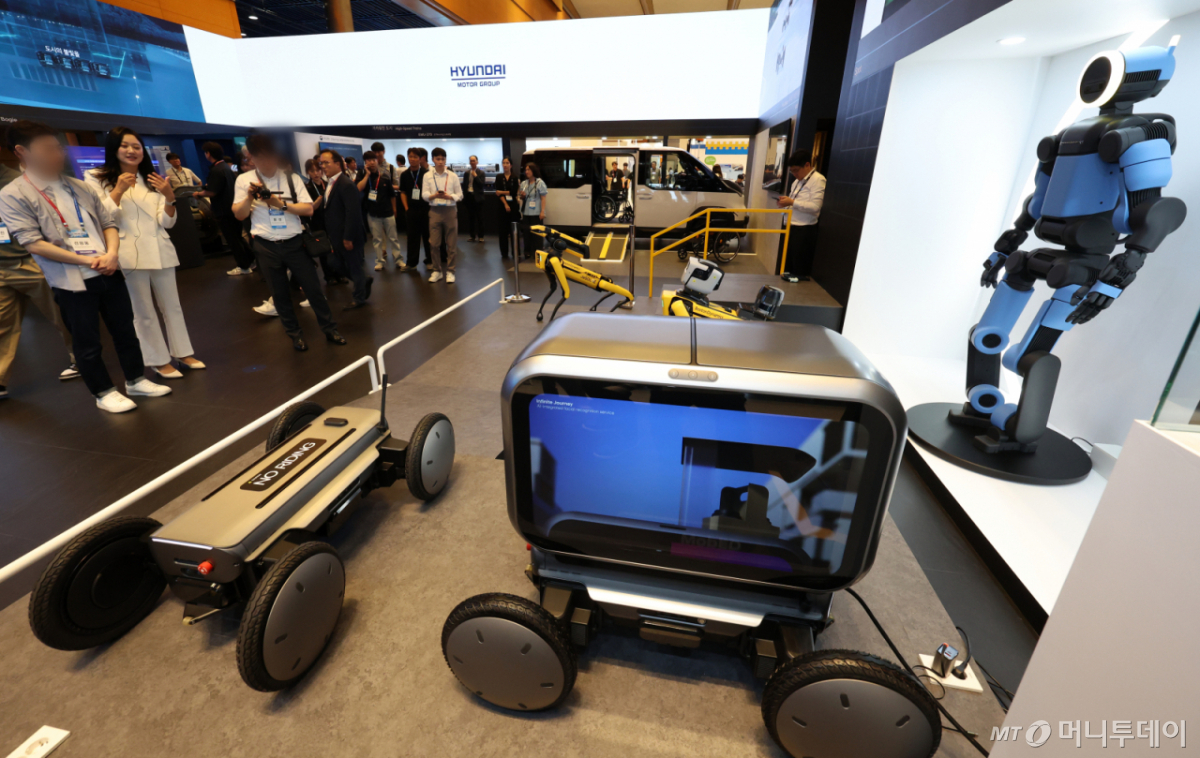
“When applying robots to real-world sites, power efficiency determines how long a single unit can be operated, depending on how efficient it is and how long charging takes.”
Kim Young-hoon, head of the Robotics Business Division at Hyundai Motor’s Robotics Lab, recently told MoneyToday that energy efficiency is crucial in deploying robots to actual work environments.
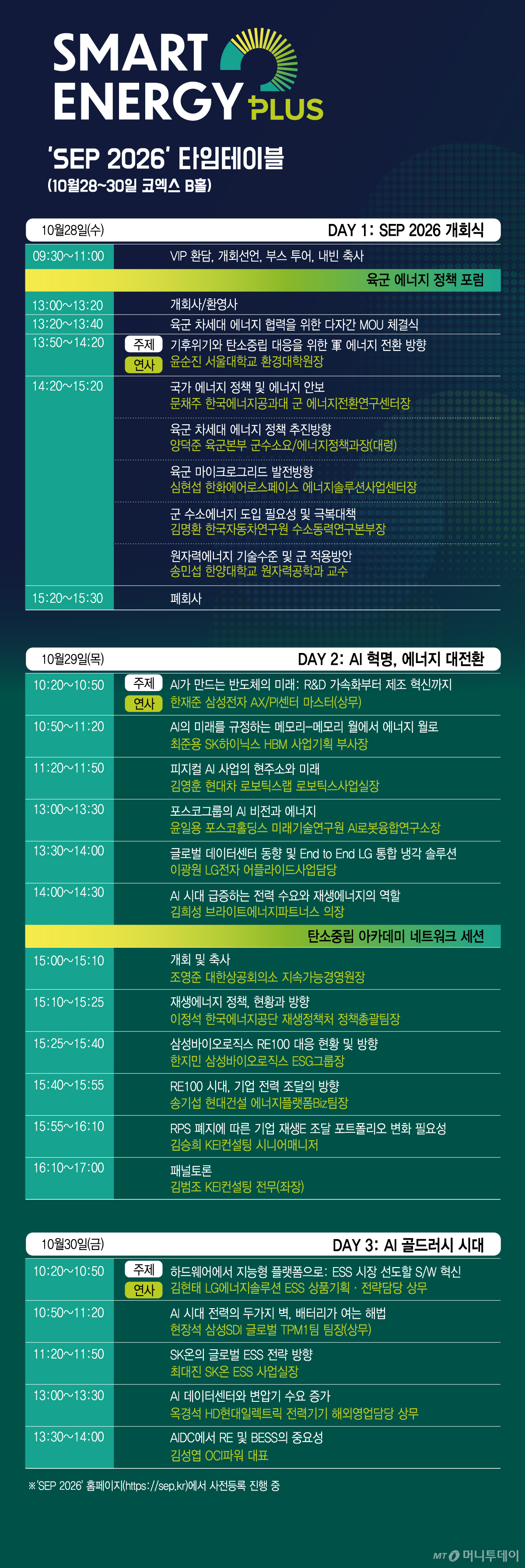
He explained that for robots to be utilized in real industrial settings, considerations must extend beyond operational performance to include charging time, battery life, and even instantaneous power requirements. Kim is scheduled to deliver a presentation titled “The Current State and Future of the Physical AI Business” at “Smart Energy Plus (SMART ENERGY PLUS·SEP) 2026.”
Kim leads the robotics business at Hyundai Motor’s Robotics Lab and has also been involved in the development of the mobile robot platform “MobED.” MobED is a small robot platform equipped with four independently driven wheels that move individually according to ground height variations to maintain levelness.
Its primary feature is “scalability,” as the “Top Module” mounted on top can be freely swapped out. Modules tailored to the requirements of each site are being developed in 10 types, including logistics delivery, patrol drone stations, and advertising signs.
According to Kim, robots and automobiles consume energy differently. He explained that while an automobile may only need charging once or twice a week, a robot can undergo multiple cycles of charging and discharging within a single day.
“An automobile needs to be charged once and then recharged one or two times a week, but a robot goes through three to four full charge-and-discharge cycles in a day,” Kim said. “Even if the battery appears small, considering usage volume and replacement frequency, the related market can turn over rapidly.”
Securing high instantaneous output is also a critical challenge for robot batteries. Robots may be required to deliver high torque during operations such as driving multiple motors or lifting heavy objects. In such cases, it is important not only how long the battery lasts but also whether it can produce sufficient output when needed.
“Robots frequently face situations requiring high torque,” Kim said. “While output, battery life, and capacity must all be considered, when weighing multiple conditions comprehensively, more weight is placed on output.”
Safety is as essential a condition for real-world deployment as output and lifespan. This is because batteries operated through repeated charging and discharging cycles must be verified to ensure that any anomaly does not spread to adjacent cells.
Regarding battery safety verification, Kim explained, “Originally, we evaluate whether an intentionally detonated single cell propagates to neighboring cells, but we take a more rigorous approach by checking whether propagation occurs when two cells are detonated simultaneously.” The aim is to ensure safety even in scenarios where an anomaly originating from one point spreads to surrounding areas.
Meanwhile, “SEP 2026,” hosted by the National Assembly Hydrogen Economy Forum and co-organized by Money Today and COEX, will be held from October 28 to 30 at Hall B of COEX in Seoul Samsung-dong. This year’s event will discuss changes in the energy industry and response strategies under the themes of “Energy Daejeon in the AI Era” and “Energy Security Amid Rapidly Shifting International Conditions.”

 in INDUSTRY

