

Next-generation energy technologies designed to meet the rapidly growing power demand in the era of artificial intelligence (AI) will gather in one place. From heat pumps that electrify heating and cooling, to ultra-high-voltage power equipment and energy storage systems (ESS), as well as generation facilities such as nuclear power plants, gas turbines, and wind power, visitors can encounter new technologies across the entire energy industry at a single venue.
The 'Smart Energy Plus (SMART ENERGY PLUS·SEP) 2026,' hosted by the National Assembly Hydrogen Economy Forum and co-organized by Money Today and COEX, will be held from the 28th to the 30th in Hall B of COEX in Seoul Samsung-dong. This year's event themes are 'The Energy Cycle in the AI Era' and 'Energy Security Amidst a Rapidly Changing International Landscape.'
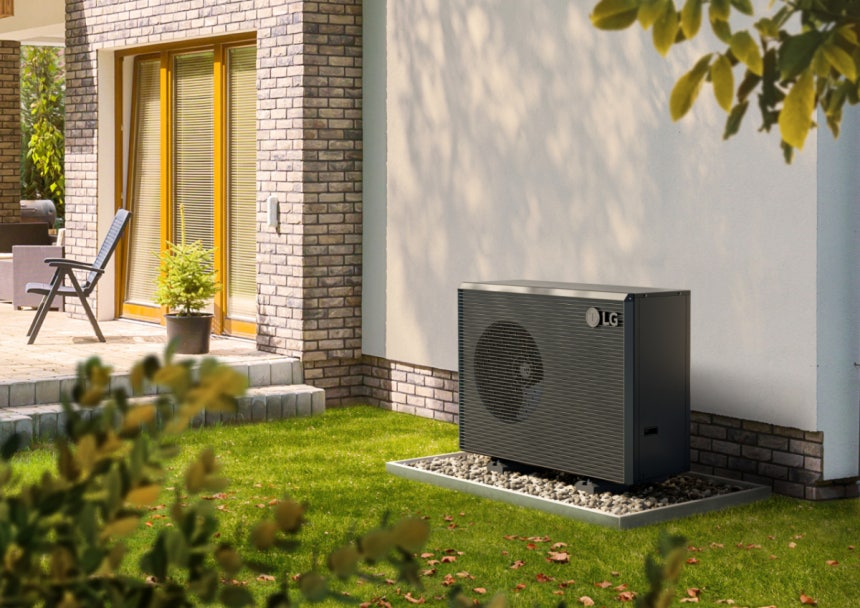
LG Group will showcase heat pump technology that replaces fossil fuel-based heating and cooling. LG Electronics will exhibit its high-efficiency integrated 'LG Therma V Heat Pump Boiler,' which utilizes heat from the air to supply heating and hot water. According to the company, the boiler produces approximately 4 to 5 times more thermal energy than the input power and can reduce energy costs by roughly 40% to 60% compared to existing fossil fuel-based boilers.
Domestic deployment and demonstration cases will also be revealed. LG Electronics is responsible for 877 out of a total of 2,460 households in the '2026 Jeju Heat Pump Deployment Project in Daily Life.' The company has installed heat pump systems in 12 units at Seohyo Apartment in Seogwipo City to verify performance in actual residential environments.
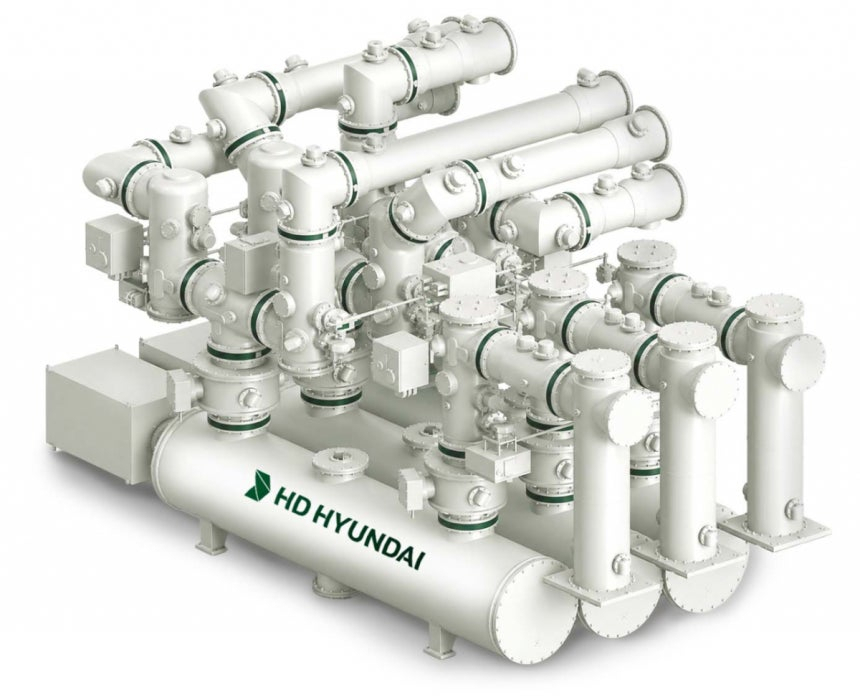
HD Hyundai Electric will present future power grid solutions ranging from eco-friendly ultra-high-voltage power equipment to direct current (DC) distribution and ESS. Exhibits include the 420kV-class sulfur hexafluoride (SF6)-free gas-insulated switchgear (GIS), which is the first developed in Korea and the third in the world, as well as phase-shifting transformers (PST) and explosion-proof transformers (DPRS). The company will also unveil DC distribution solutions, whose utilization is increasing in the data center and renewable energy sectors.
In the ESS field, it will introduce power conversion systems (PCS), system integration (SI) technology, and a case study of the battery energy storage system (BESS) project in Sinan, South Jeonnam Province. It will also highlight the distribution campus, a production hub for distribution equipment in Cheongju, North Chungcheong Province, which began operations last year.
Doosan Enerbility is highlighting its generation portfolio, which includes large nuclear power plants, small modular reactors (SMRs), gas turbines, and offshore wind power. The exhibition space will feature a 380MW-class gas turbine, the Korean APR1400 large nuclear reactor, and an SMR model from NuScale Power. Doosan Enerbility developed Korea's first large-scale generation gas turbine and exported it to the United States for the first time last year. In the SMR sector, it is collaborating with NuScale Power, X-energy, and TerraPower. It will also exhibit a 10MW-class offshore wind turbine, which obtained international certification in Korea for the first time last year.
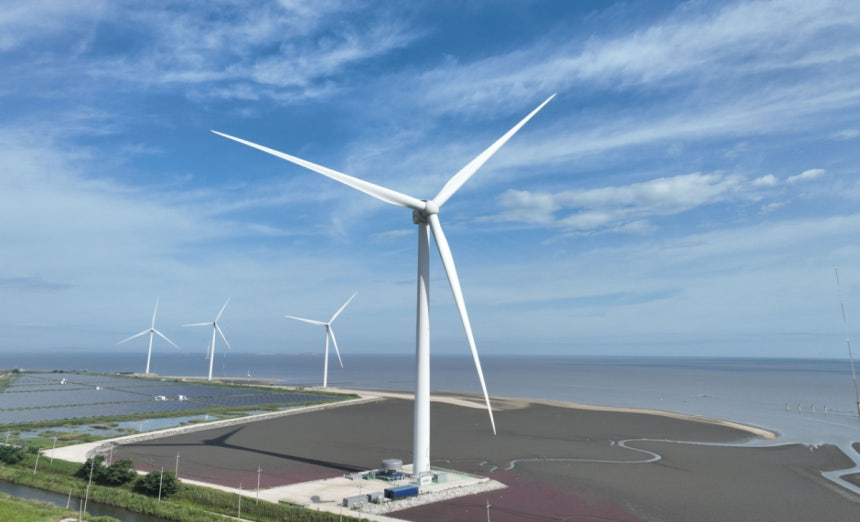
Wind turbine manufacturer Unison will showcase its onshore and offshore wind power businesses. According to company data, its cumulative onshore wind power supply record stands at 660MW, and it is demonstrating a 10MW-class offshore wind turbine. The company is also pushing forward with the construction of an offshore wind production plant with an annual capacity of 1GW (gigawatt).
Technologies related to energy security are also drawing attention. The Army will operate an 'Army Mobile Microgrid' exhibition pavilion. Exhibits include mobile microgrids, solar power generation (PV), ESS, mobile distribution systems, hydrogen fuel cells, and 30kW (kilowatt) hydrogen power vehicles. A mobile microgrid is a system that mounts solar and diesel generators along with ESS on vehicles to supply power independently even when the external power grid is disconnected. It can deploy the power grid within 100 minutes to operate critical facilities for more than 72 hours.
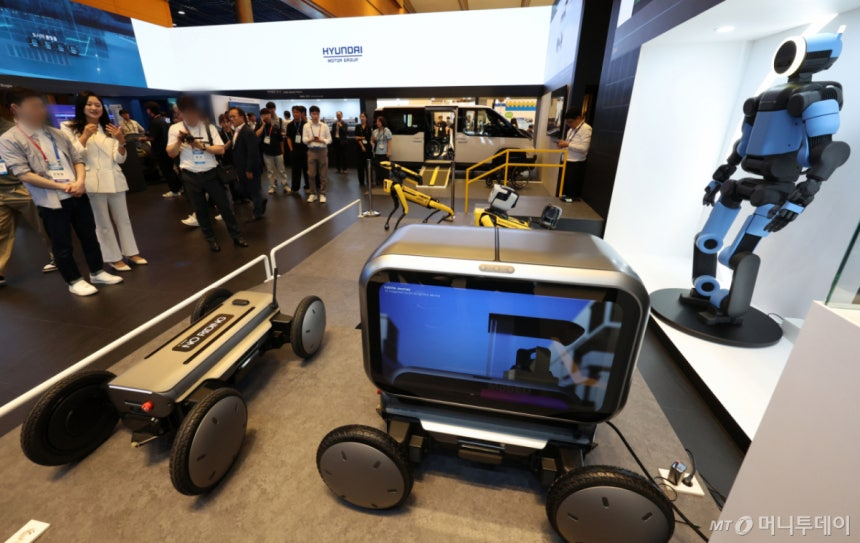
In a separately designated Mobility Zone, visitors can encounter electric and hydrogen vehicles from domestic and international automakers. The lineup includes the Hyundai Motor Group's hydrogen fuel cell vehicle Nexo and Kia PV5, as well as the BMW iX3, Mercedes-Benz G580·CLA, Porsche Taycan GTS, Audi A6 e-tron, and Polestar 4. Including the Lexus All New ES 350h and GM Buick, a total of 11 vehicles are scheduled to be exhibited.
At the Hyundai Rotem booth, visitors can experience the hydrogen fuel cell tram, a future mode of transportation, through virtual reality (VR). VR allows users to view the passenger cabin and driver's seat. The hydrogen fuel cell tram generates power independently by combining a hydrogen fuel cell with a battery, eliminating the need for overhead catenary lines on the road surface.

 in INDUSTRY


