

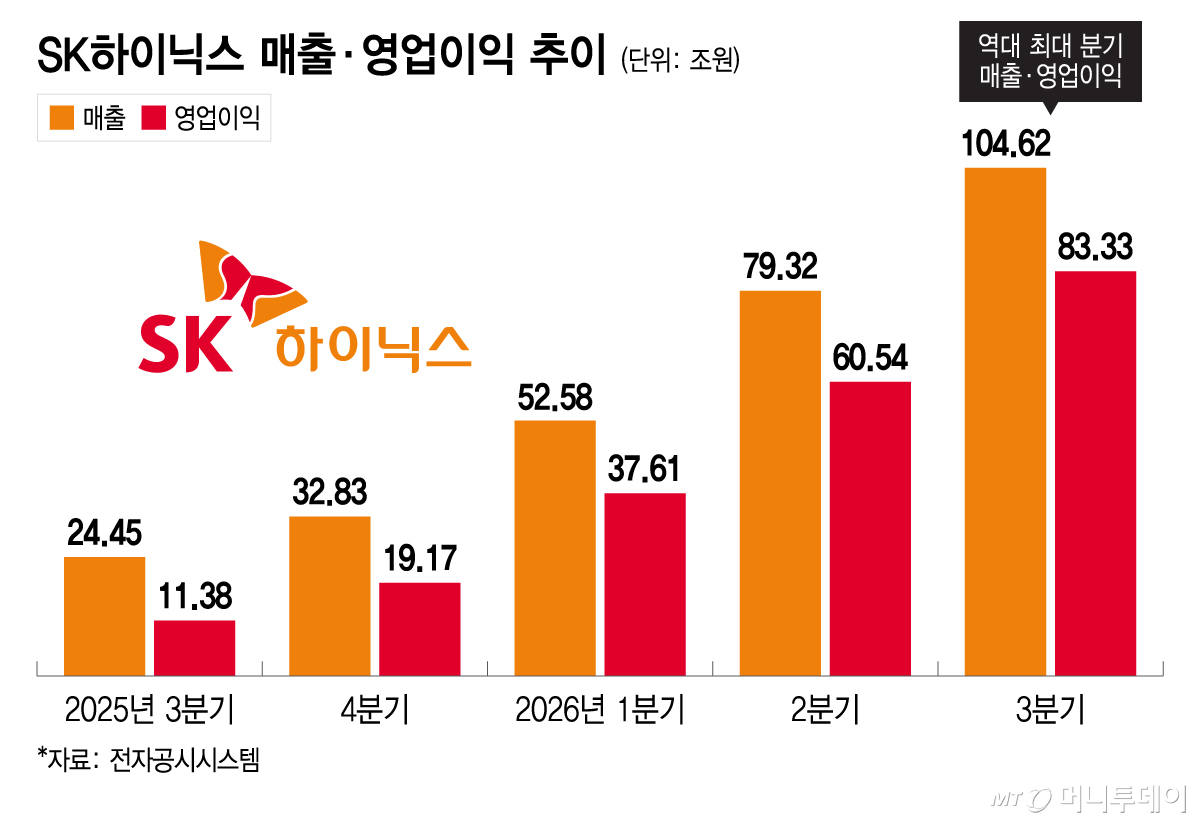
SK Hynix forecast that the memory supply shortage driven by expanding AI investment will continue until 2030. The company explained that, when combining secured long-term supply contracts with demand currently under negotiation, virtually all of its DRAM and HBM (high-bandwidth memory) production volume for the next three years has been sold out.
SK Hynix plans to expand its production capacity based on medium- to long-term demand and share investment returns with shareholders.
At its Q3 2026 earnings announcement held on the 28th, SK Hynix stated, "Considering factors such as the rising technical difficulty of advanced process technologies and the time required to build new production facilities, it appears that an environment in which memory supply falls short of demand will persist for a certain period," adding, "We expect this trend to continue until 2030."
SK Hynix expects AI investment to remain robust, based on actual business performance and the diversification of investment entities. Conversely, it assessed that expanding production facilities and transitioning technologies require time, making it difficult for supply to catch up with demand. In particular, the company emphasized, "Current customer requests for HBM exceed twice the amount we can supply, indicating that strong demand is being sustained."
Medium- to long-term sales visibility has also improved. The company stated, "Combining the volume already secured through LTAs (long-term supply agreements) with demand currently under specific negotiation with customers, DRAM and HBM volumes for the next three years, up to 2029, are effectively all sold out."
The company has signed LTAs with 14 major customers, including large global cloud service providers (CSPs). The volume secured through these LTAs accounts for more than 50% of total production capacity in 2027 and 2028. Discussions are underway to extend contract periods beyond the typical five years with some customers. Pricing is adjusted to reflect market conditions within a range agreed upon with customers.
The company has also concluded negotiations on next year's HBM trading terms. It stated, "We have finalized negotiations on trading terms for next year, including HBM volumes and prices, with major customers, faithfully reflecting the increased product value of HBM4," adding, "We expect HBM revenue and profit to grow significantly compared to this year, with profitability also improving meaningfully."
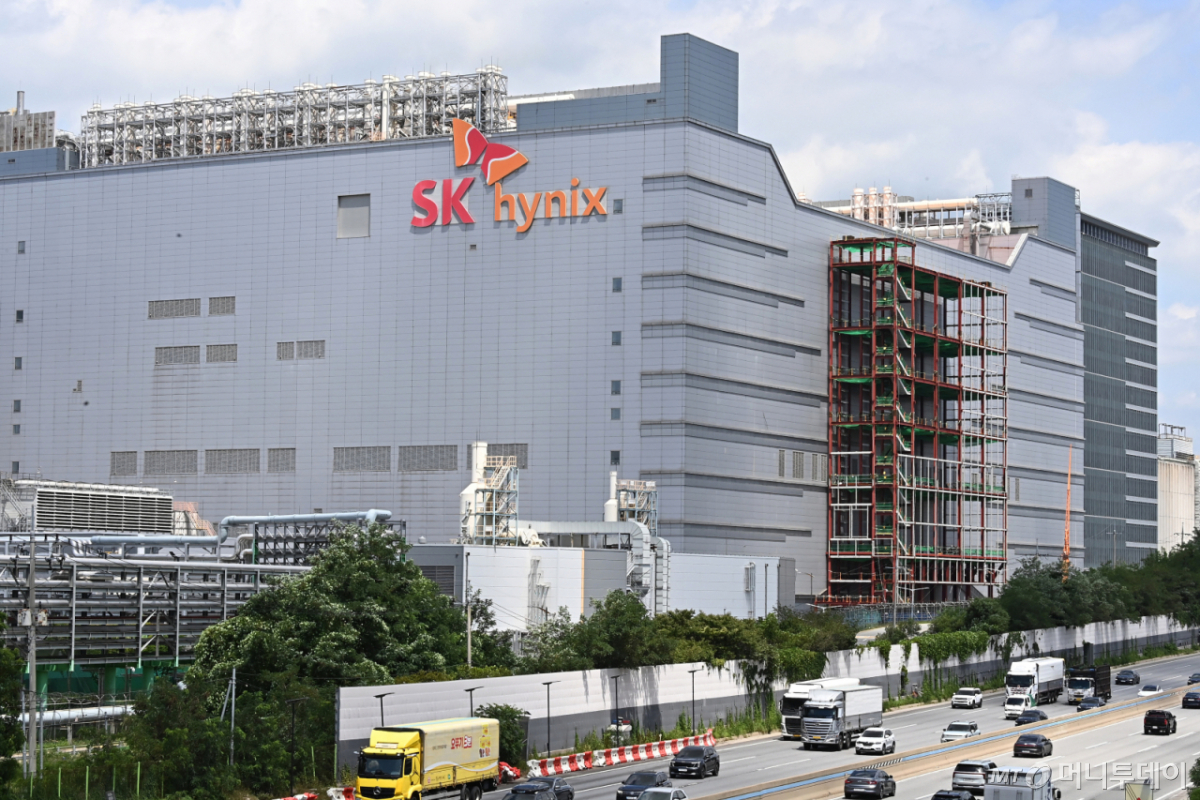
Based on secured demand, the company will also expand investment. Investment scale is expected to increase substantially from this year due to infrastructure expansion both domestically and abroad, including the full-scale operation of the Yongin Phase 1 fab next year. However, the company plans to flexibly adjust the scale and timing of investments by considering customer demand, product competitiveness, profitability, and investment efficiency.
Kwak No-jeong, President and CEO of SK Hynix, stated, "We have set a new all-time high in performance for six consecutive quarters," adding, "However, what we are paying closer attention to is that the business environment supporting these results is changing." He continued, "Growth potential different from the past is manifesting as concrete changes in business structure," and said, "The challenge ahead is to turn this change into a sustainable competitive advantage."
Regarding the suspension of plans to list its grand-subsidiary Solidigm, President Kwak stated, "We will pursue financing options for the Solidigm investment in a direction that aligns with enhancing the corporate value and shareholder value of both Solidigm and SK Hynix."
He added, "In accordance with this principle, we aim to return the Kioxia investment gains realized this year to our shareholders as a special dividend," emphasizing, "We will uphold this principle without change going forward, so that our shareholders can directly feel the results of strategic investments."
Meanwhile, on the same day, SK Hynix announced that it is pursuing approximately 100 trillion won in total shareholder returns for fiscal year 2026, including cash dividends of over 30 trillion won and share buybacks and cancellations totaling more than 60 trillion won (including the existing 40 trillion won).

 in INDUSTRY

