

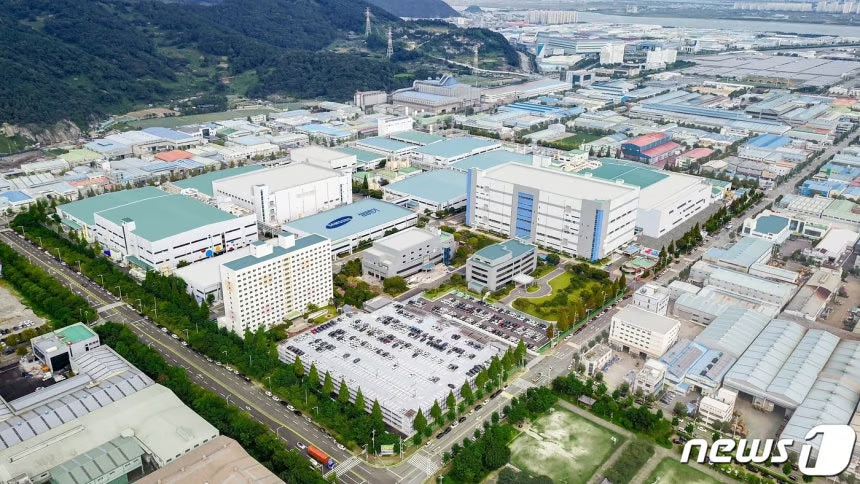
Samsung Electro-Mechanics achieved its highest-ever quarterly performance this third quarter, driven by increased sales of multilayer ceramic capacitors (MLCCs) for AI servers and semiconductor package substrates.
As global big tech companies expanded their investments in AI data centers, demand for high-value electronic components rose, leading to simultaneous growth in revenue and operating profit.
Samsung Electro-Mechanics disclosed on Wednesday that it recorded consolidated revenue of 3.7633 trillion won and an operating profit of 690.9 billion won for the third quarter this year.
Revenue increased by 30.3% and operating profit by 165.5% compared to the same period last year. Compared to the previous quarter, they rose by 8.9% and 56.9%, respectively.
The operating profit also exceeded market forecasts. The consensus estimate for third-quarter operating profit (average of securities firm projections) compiled by financial information firms was 642.3 billion won, with actual results surpassing this figure by 48.6 billion won (7.6%). However, revenue fell short of the market forecast (3.8247 trillion won) by 1.6%.
By business segment, the Component Solutions division, which handles MLCCs, recorded revenue of 1.8830 trillion won, a 36% increase from the same period last year.
Sales grew primarily driven by products for AI data centers, including servers, networks, and power systems. In particular, the expansion of demand for high-capacity, ultra-small MLCCs due to the high-performance evolution of GPUs (graphics processing units) for AI servers supported the improvement in performance.
Revenue for the Package Solutions division, which produces semiconductor package substrates, was 939 billion won, a 58% increase from the same period last year. This is the highest growth rate among the three business segments.
The expansion of supply for high-value package substrates for data centers, including server CPUs (central processing units), AI accelerators, and networking, contributed to this, along with increased sales of high-performance substrates for advanced driver assistance systems (ADAS) and autonomous driving.
The Optical Solutions division, which handles camera modules among other products, recorded revenue of 941.3 billion won, a 3% increase from the same period last year.
The launch of new 200-megapixel folded-zoom camera modules in Yangsan, expanded supply of products for foldable smartphones, and increased supply of camera modules for next-generation platforms to global electric vehicle (EV) customers contributed to the performance improvement.
However, revenue decreased by 9% compared to the previous quarter. The company forecast that demand for high-specification products for AI data centers and automotive components driven by the advancement of autonomous driving technology will continue in the fourth quarter as well.
The company plans to respond to long-term supply contracts for MLCCs for AI, centered on major global big tech customers, and to expand the supply of new high-value flip-chip ball grid array (FC-BGA) products for server CPUs and AI accelerators.
Additionally, it will proceed with the launch of high-resolution, slim camera modules for next-generation flagship smartphones in Yangsan, while also increasing the supply of camera modules for next-generation platforms to global electric vehicle customers.

 in INDUSTRY
