

"I wish I had this during my military service; it would have made things much easier."
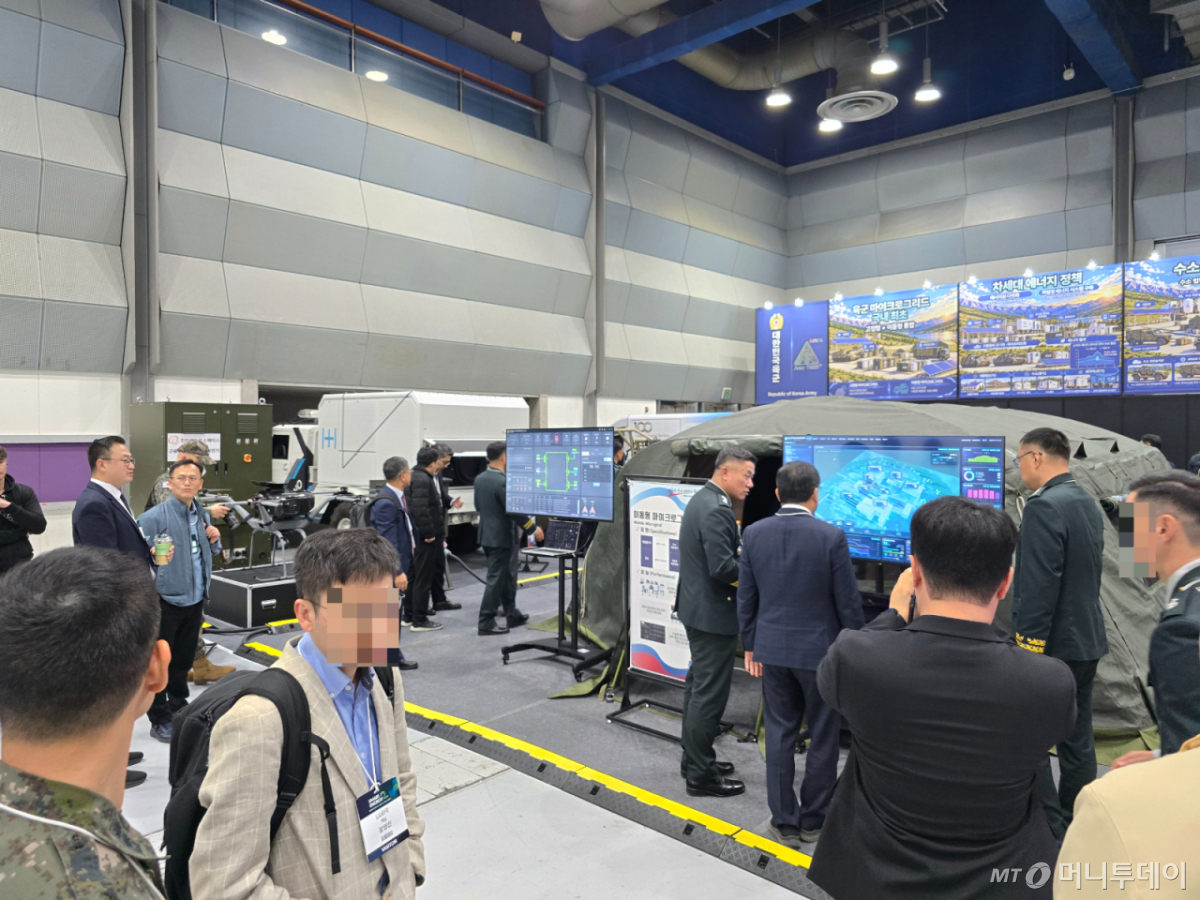
Kim Min-woo (25), a student at Daejin University who visited the Army exhibition hall at the 'Smart Energy Plus (SMART ENERGY PLUS·SEP) 2026' event held on the 28th in Hall B of COEX, Samsung-dong, Seoul, said this while inspecting the exhibited equipment. A veteran who completed his military service two years ago, he expressed interest in the Army's next-generation energy system, which supplies power using solar energy, energy storage systems (ESS), and hydrogen fuel cells.
The Army showcased a 'microgrid' at SEP 2026—a small-scale power grid capable of generating, storing, and independently supplying electricity. In addition to solar photovoltaic (PV) facilities, ESS, and mobile distribution systems, the exhibition featured hydrogen-based equipment such as hydrogen drones, 30-kilowatt-class hydrogen power generation vehicles, and hydrogen-powered light tactical vehicles.
In particular, a mobile microgrid configuration featuring installed solar panels, diesel generators, and an ESS drew attention at the booth. This equipment system normally receives power from the external grid but can immediately switch to independent operation if external power is cut off in an emergency. It is capable of maneuvering in rough terrain and can establish a power grid within 100 minutes.
The Army introduced the concept of a microgrid that integrates fixed and mobile systems. This approach involves using fixed facilities at garrisons and utilizing mobile facilities to reconfigure the power grid in operational areas. The Army is currently building the country's first pilot project for a microgrid integrating fixed and mobile systems in the area around the Changseong Military Academy in South Jeonnam Province.
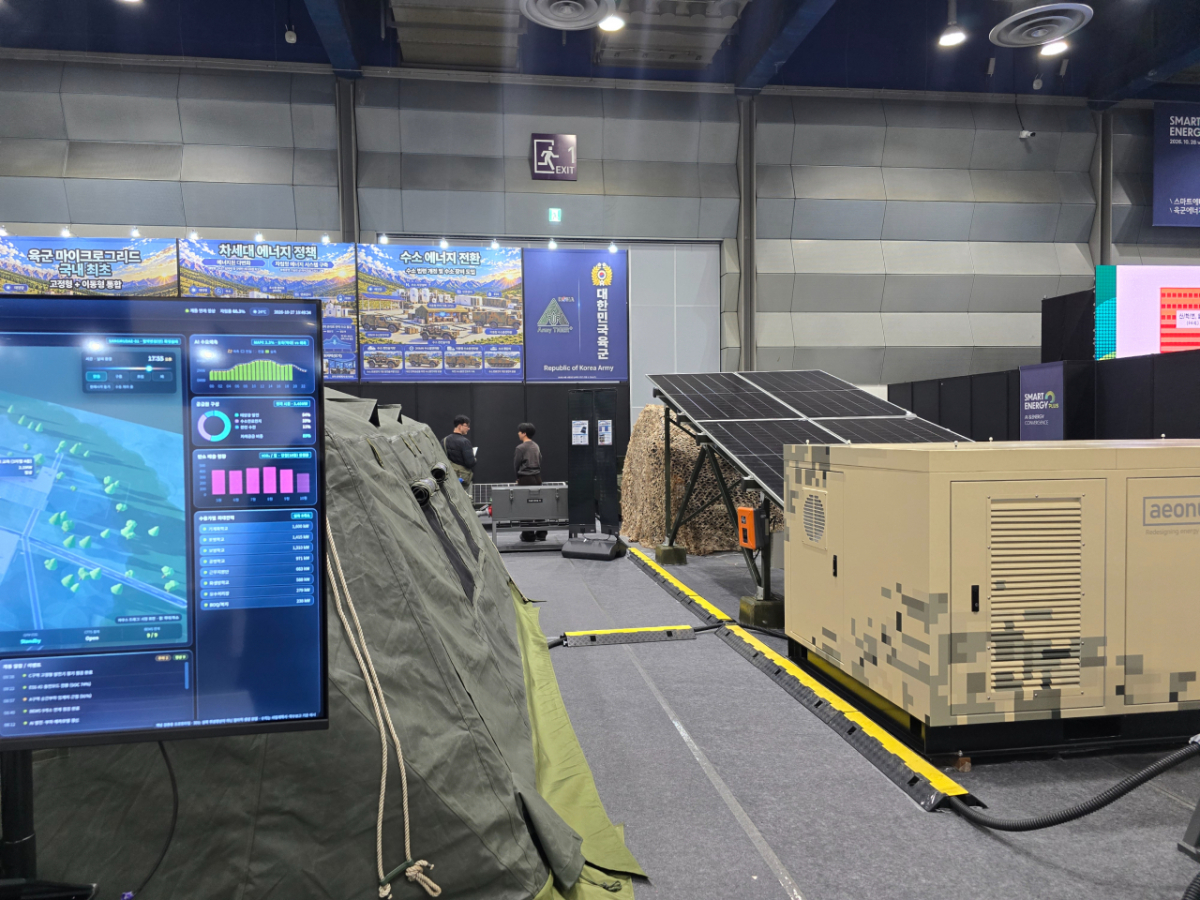
An Army official explained, "Because missions must be carried out anywhere during exhibitions, it is necessary to equip the power supply system itself with the capability to be mobile."
Equipment utilizing hydrogen energy also caught the eye of visitors. The hydrogen drone presented by the Army uses hydrogen as an energy source and can operate for approximately 90 minutes. It can be used to observe key points along military supply routes. Additionally, it performs surveillance missions through a camera mounted on its underside.
A 30-kilowatt-class vehicle equipped with hydrogen power generation also stood out. This is a mobile power generation facility that produces electricity using hydrogen. It can move by vehicle to supply power at necessary locations and, when linked with a mobile distribution system, can deliver power to key facilities such as command posts. In addition, a light tactical vehicle using hydrogen as its power source and a mobile hydrogen refueling tactical vehicle for supplying hydrogen to said vehicle were also exhibited.

 in INDUSTRY

