

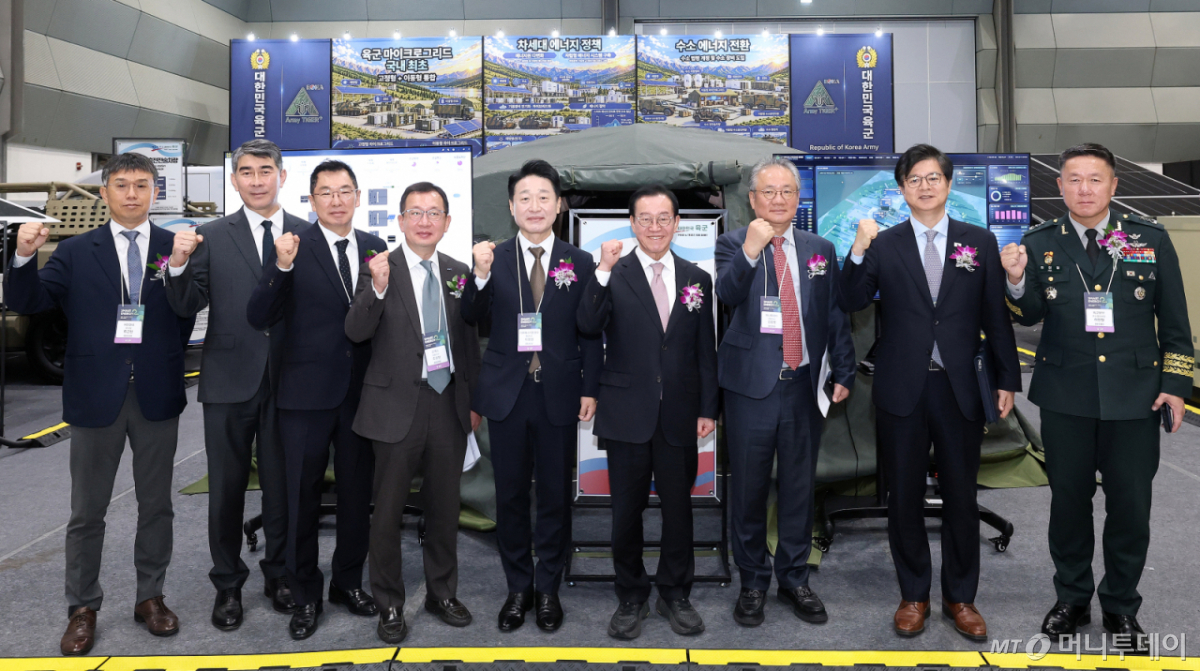
"The core agenda of the AI (artificial intelligence) era is energy transformation and security."
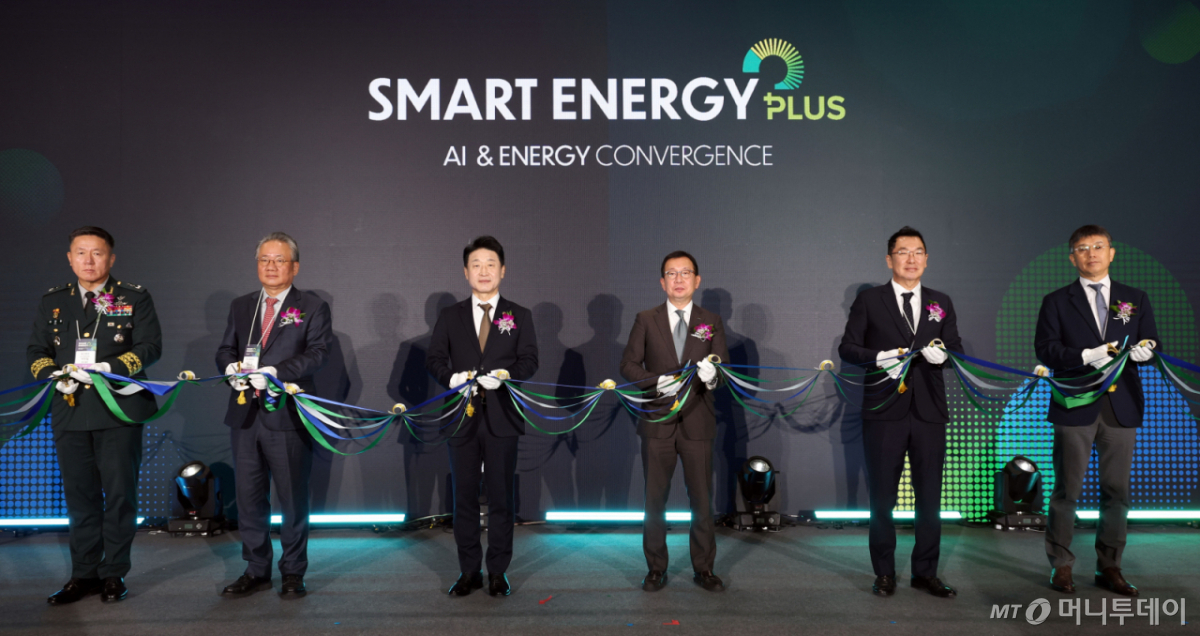
Key figures attending "Smart Energy Plus (SEP) 2026," which opened on the 28th in Hall B at COEX in Samsung-dong, Seoul, agreed on this agenda and pooled their expertise to find a path forward. Co-hosted by MoneyToday and COEX, and organized by the National Assembly Hydrogen Economy Forum, the event will run through the 30th.
At the opening ceremony, President Lee Jae-myung, in a congratulatory message read aloud by Cheong Wa Dae Senior Secretary for Public Relations and Communication Sung Ki-hong, stated that "stable clean energy supply and infrastructure development are paramount to leading the AI industry and securing a first-mover advantage in green markets," adding that "the green transition is not an option but a national survival strategy." Citing the "Korean-style Green Transformation Strategy" prepared jointly by the government and private sector on the 7th, he emphasized that "to make the green transition a new growth opportunity for our economy beyond simple carbon reduction, the government is cooperating with the private sector as one team and concentrating all its resources."
Lee Jong-bae, a People Power Party lawmaker and co-chair of the National Assembly Hydrogen Economy Forum, said, "The importance of energy self-reliance will grow increasingly in the AI era," explaining that "the production and storage technologies for eco-friendly power, including hydrogen, renewable energy, nuclear power, and ESS (energy storage systems) to store it, are crucial."
Second Minister Lee Ho-hyun of the Ministry of Climate, Energy and Environment pledged measures to address "AI energy," including expanding renewable energy and utilizing nuclear power, securing next-generation power grids, and building an ecosystem for new energy industries, while stating that "the government will soon present its policy direction for the hydrogen economy."
MoneyToday CEO Kang Ho-byung noted the Army's first-ever participation in SEP this year, diagnosing that "we must pursue diverse energy sources beyond traditional fuels," while COEX Representative Director Jo Sang-hyun expressed expectations that "AI development will create new energy demand and open possibilities for new industries."
Accordingly, Hyundai Motor, LG Group, HD Hyundai Electric, Doosan Enerbility, Hyundai Rotem, Unison, and the Seoul Metropolitan Government also participated in related exhibitions. The Army operated a mobile microgrid exhibition pavilion and held an "Army Energy Policy Forum." Ha Heon-cheol, Head of the Logistics Staff Department at Army Headquarters, introduced that "in the short term, we are introducing solar power, and in the medium to long term, hydrogen and nuclear energy, to promote diversification of energy sources and build a self-reliant energy system."
In addition, audiences flocked to a special session exploring the potential of SMRs (small modular reactors) as a power source for AI data centers, and the "2nd K-Space Forum," which featured domestic and international venture capitalists, space companies, academia, and military officials. Kim Sun, Vice President and Head of Space Business at Hanwha Group, emphasized that "for space sovereignty, the private sector must lead technology and business development, while the government should step in as a service purchaser."

 in INDUSTRY

