

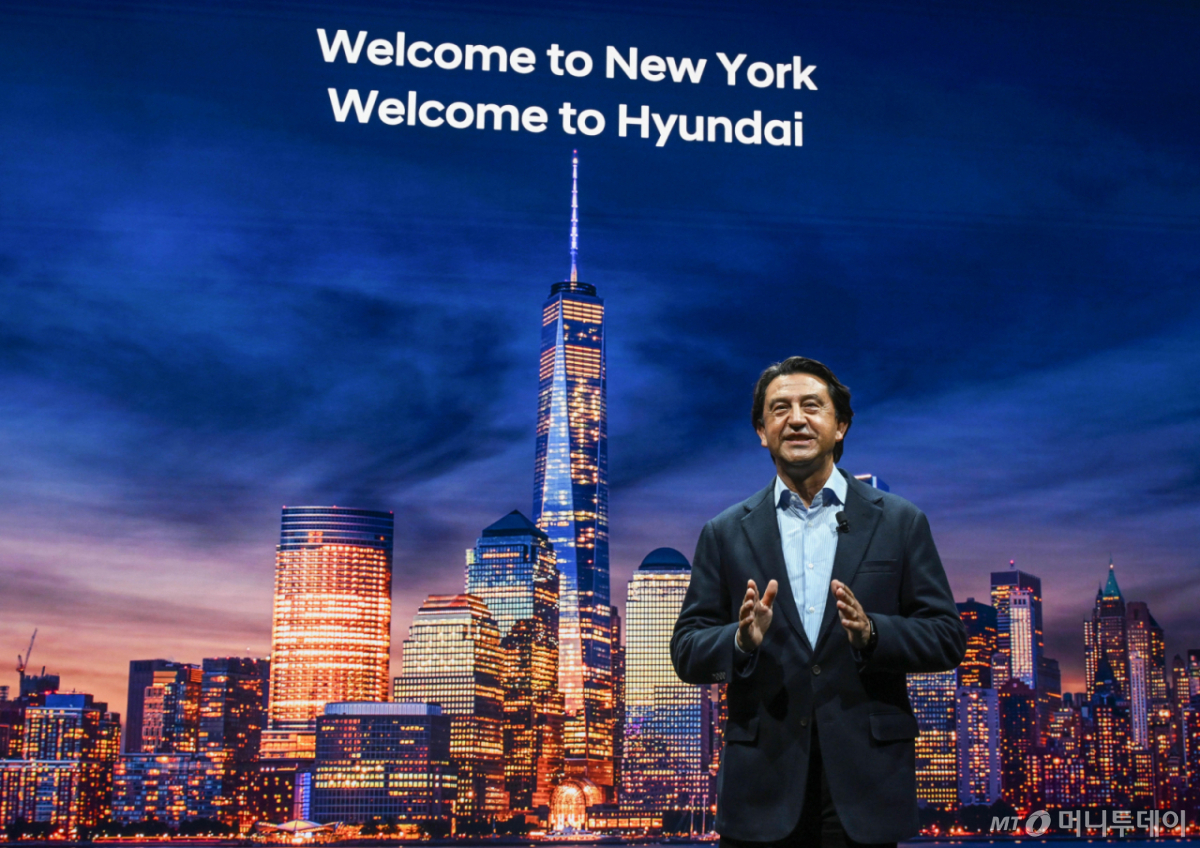
In a recent email to employees, Jose Munoz, President of Hyundai Motor, candidly described this year's situation as "one of the most difficult periods I have experienced in my career in the automotive industry."
He further diagnosed that "supply chain constraints stemming from the Middle East conflict, rising raw material prices throughout the year, intensifying competition in the European and South American markets, and production disruptions are all compounding the challenges."
The issue is that management conditions are likely to deteriorate further next year. This is because most of the problems mentioned by President Munoz remain unresolved, while a slowdown in Hyundai Motor and Kia's major export markets and the domestic economy is expected next year, compounded by various adverse factors.
This year, management conditions were dire enough that the global finished vehicle market is projected to contract compared to last year. In this situation, Hyundai Motor Group maintained its pride as a "global top 3" company thanks to its performance in the United States, its largest export market.
As recently as last month, Hyundai Motor saw sales decline by 8.9% domestically and 5.9% overseas compared to the same period last year, resulting in an overall sales decrease of 6.3%, but U.S. sales (80,075 units) increased by 3.8%.
Kia achieved even higher growth in the U.S. last month, at 16%. Consequently, combined October sales for Hyundai Motor and Kia rose by 9.5% to 160,083 units, setting a record high for the same month.
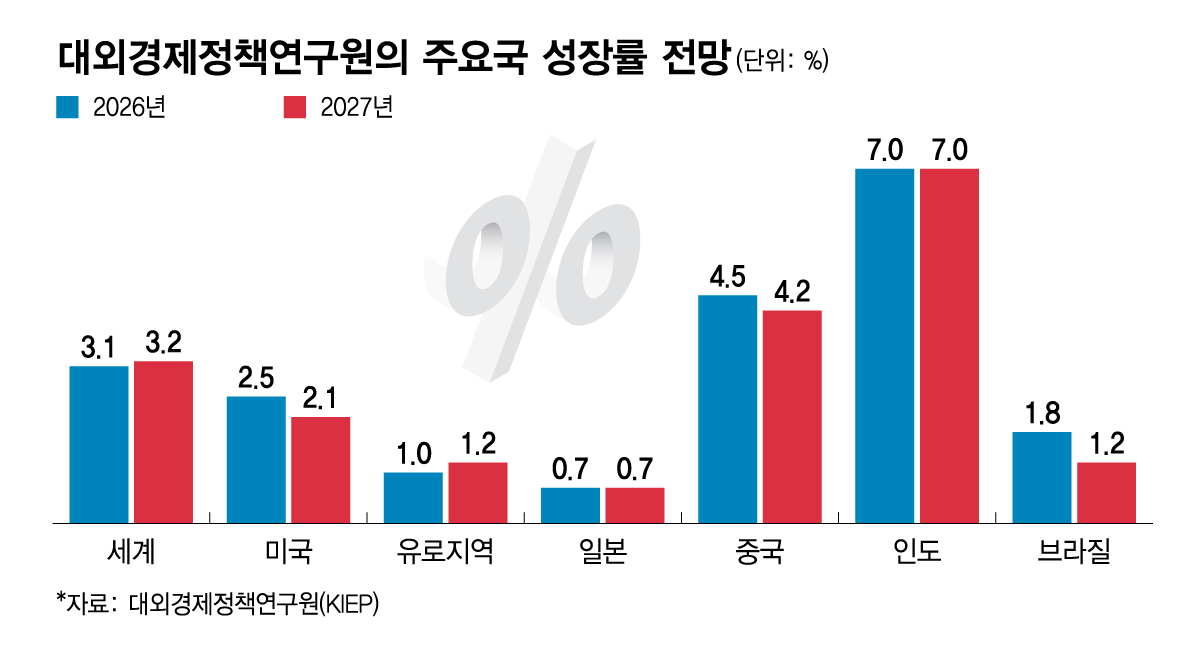
However, such growth cannot be guaranteed next year. First, a slowdown in the U.S. economy poses a risk factor. The Institute of Foreign Trade Policy recently forecasted that the U.S. growth rate next year would be 2.1%, lower than this year's projection (2.5%), in its "2027 World Economic Outlook."
This figure is still an upward revision of 0.3 percentage points from the forecast issued six months ago (1.8%). It is no exaggeration to say that the recent U.S. economy has been driven by infrastructure investment in AI, such as data centers, but if growth in this sector falls short of expectations next year, there is a possibility it could drop into the 1% range.
Concerns are also emerging that the cost burden from the U.S.'s 15% automobile tariff will continue and that changes to the United States-Mexico-Canada Agreement (USMCA) could undermine Hyundai Motor Group's profitability.
In July, the U.S. Donald Trump administration agreed not to extend the USMCA as is, but to maintain its validity for 10 years with annual reviews. According to the agreement terms, analysts say the cost burden could increase for Kia, which owns a factory in Mexico, as well as Hyundai Motor Group affiliates Hyundai Mobis, Hyundai Wia, and Hyundai Transys.
Efforts to capture the European Union (EU) market are also expected to become more difficult than this year. The EU is already a market where sales pressure on Hyundai Motor and Kia has increased due to the rapid penetration of Chinese brands.
In this situation, as the EU decided to implement a safeguard measure (emergency import restriction) on HEV/LPV vehicles to limit imports of Chinese-made cars, the fire spread to Korean-made automobiles. Korea exported a total of 107,104 HEV/LPV vehicles to the EU last year, but from the 1st of next month until June 18 next year, the exportable volume of Korean-made vehicles will be restricted to a much smaller figure of 67,924 units.
While the government views the short-term impact of this measure as limited, it is concerned that opportunities for future new export expansion may be partially restricted.
Hyundai Motor and Kia are expected to face fierce challenges in the domestic market next year as well. This year in Korea, while sales growth of Chinese-made Teslas continued, China's BYD and Zeekr rapidly increased their market share. Xpeng, Chery, and others, having confirmed the growth potential of Chinese brands in the Korean market, are set to fully launch their domestic entry next year. Xpeng, known as the "Chinese version of Tesla," recently appointed a new Korea representative, and Chery also identified Korea as a key entry country for next year. If successful entry cases continue, it is expected that entries by other Chinese brands will follow in succession.
An industry official said, "Compared to other countries, Korea does not have a large volume of electric vehicle demand itself, but consumers are highly interested in advanced technology, so there is a tendency to view it as having great significance as a testbed before entering global markets," adding, "Since successful settlement cases such as BYD have already emerged, additional entries by other Chinese brands will continue."

 in INDUSTRY

