

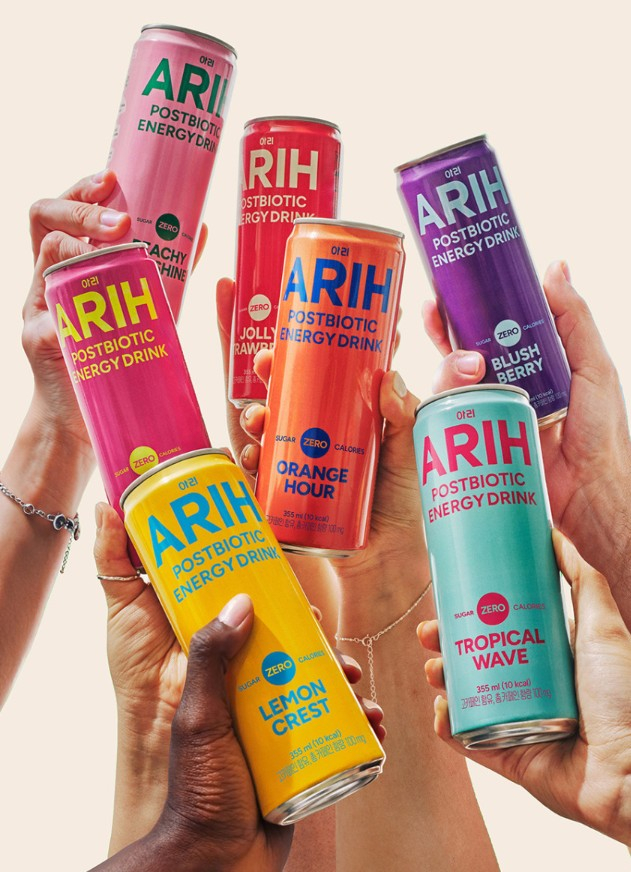
"Let's make the drink we want to drink ourselves"
ARIH, a health drink reportedly in which BTS (BTS) participated directly from brand concept to product development. Born out of a partnership between hy (Korea Yakult) and Paldo, this product transcends generations and borders just as much as 'ARMY,' the fans of BTS. The goal was to create a taste that preserves Korean sensibility while harmonizing Eastern and Western palates, allowing both Koreans and global fans to enjoy it together, and it worked.
According to industry sources on the 16th, ARIH, which has gained popularity in South Korea, the United States, Canada, and elsewhere—including selling over 3.6 million cans within 20 days of its launch in Japan last August—is drawing attention in line with the 'Clean Label' trend in the distribution industry. Clean Label refers to using raw materials that are easy for consumers to understand, transparently providing information on raw ingredients and components, minimizing processing so they can be easily identified, and displaying this on the product's outer label.
ARIH is designed as zero sugar and zero calories without using artificial colorants, artificial flavorings, or artificial sweeteners, emphasizing related content (natural caffeine, 1000mg of taurine, vitamins B1, B2, and B6, use of probiotic fermented raw materials) on the outer label so that general consumers can easily recognize it. In particular, it highlights that it is a low-sugar, low-calorie carbonated drink that achieves sweetness with licorice extract instead of synthetic high-intensity sweeteners.
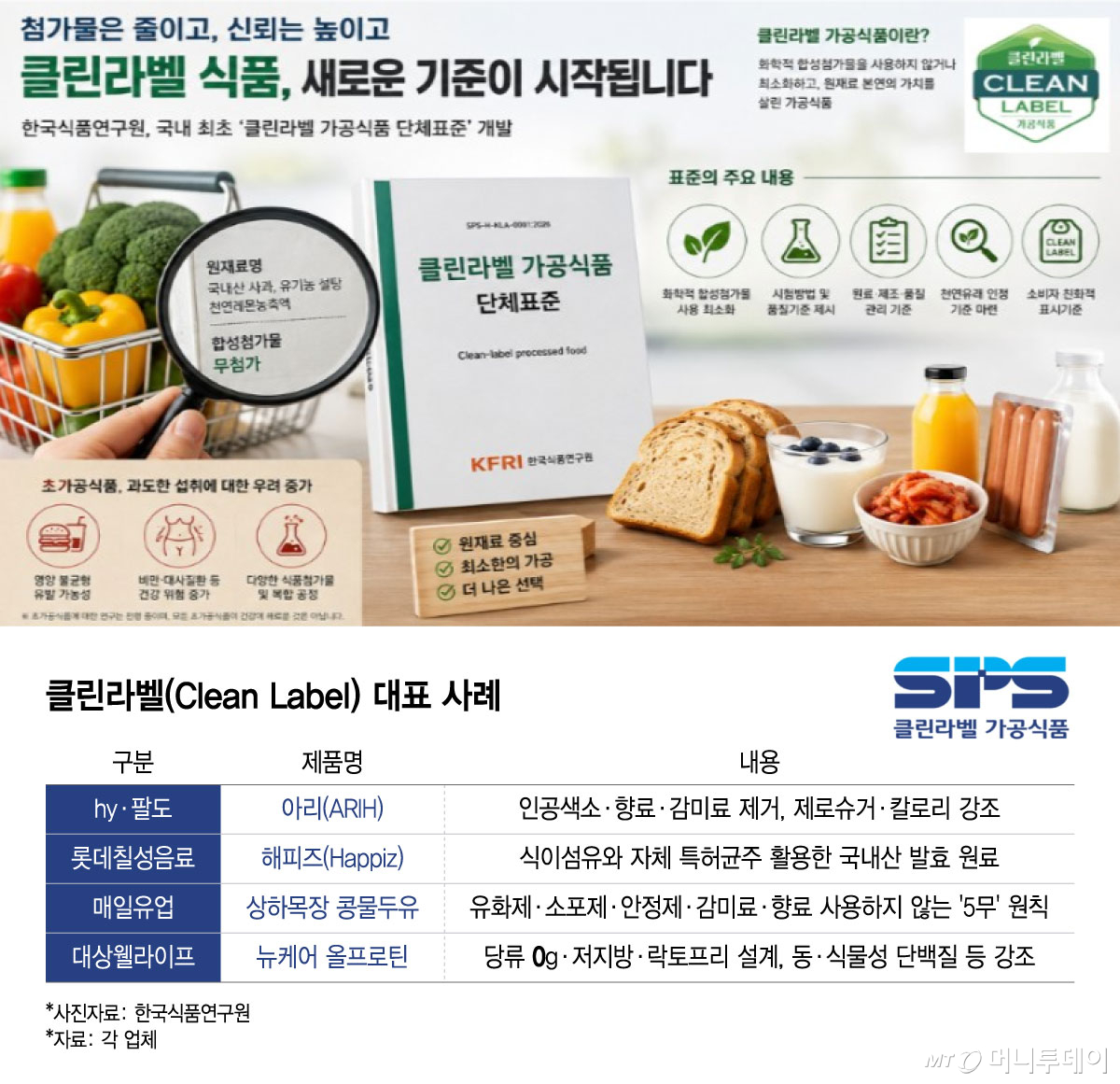
Lotte Chilsung Beverage's wellness carbonated drink 'Happyz,' launched in April this year, is similar. The label includes information stating that it is zero sugar and zero calories, containing 2.5g of dietary fiber per 355mL can and five types of domestic fermented raw materials utilizing the company's patented bacterial strains.
In the soy milk sector, emphasis on the characteristics of raw ingredients stands out. The three varieties of 'Sangha Mookjang Kongmul Soy Milk' launched by Maeil Dairies last August applied the '5 No' principle of not using emulsifiers, foaming agents, stabilizers, sweeteners, or flavorings. The product's outer surface includes details such as using domestic special-grade black soybeans 'Cheongja No. 5' harvested within one year and adopting a millstone method that grinds the beans with their skins on.
Similarly, Daesang Well Life's 'Newcare All Protein 25g' in almond and black sesame flavors, introduced around the same time, emphasized the product story on the label of containing 25g of animal and plant-based protein and 11 types of vitamins per 245mL pack. It highlights a product composition that considers sugar, fat, and lactose alongside protein supplementation by applying a design with 0g of sugars, low fat, and lactose-free.
The industry's active adoption of the Clean Label strategy is due to consumers' strict 'purchasing criteria.' According to a survey conducted by the Korea Food Research Institute in 2023 targeting 2,000 domestic adults, 68.9% of respondents answered that they were willing to purchase processed foods that exclude unnecessary additives and use only the minimum synthetic additives necessary for distribution and storage safety. 68.9% also responded that food labeling information influences their purchasing decisions.
In South Korea, movements to concretize criteria for judging Clean Label have also begun. The Food Research Institute developed the 'Clean Label Processed Food Group Standard' last August, enabling the application of testing methods and labeling standards to beverages based on manufacturing principles centered on raw materials.
An industry official said, "In the past, emphasis was placed on stating that there is 'nothing harmful to the body' through the product's outer surface, but nowadays it has become important to specifically convey what raw ingredients were used so that consumers can compare products," adding, "Clearly explaining the product to consumers will help increase brand trust."

 in LIVING

