

Starting from the 19th, new investors in single-stock leverage ETFs (exchange-traded funds) must complete at least five days of mock trading before they can make purchases. Although this is a supplementary measure following last month's increase in basic deposit requirements, criticism persists that the reshoring effect has been minimal and only brokerage commission revenues have increased, leaving the 'government responsibility' debate unresolved. In the upcoming September regular National Assembly session, intense questioning and accountability debates targeting the authorities are expected to continue, primarily within the Political Affairs Committee.
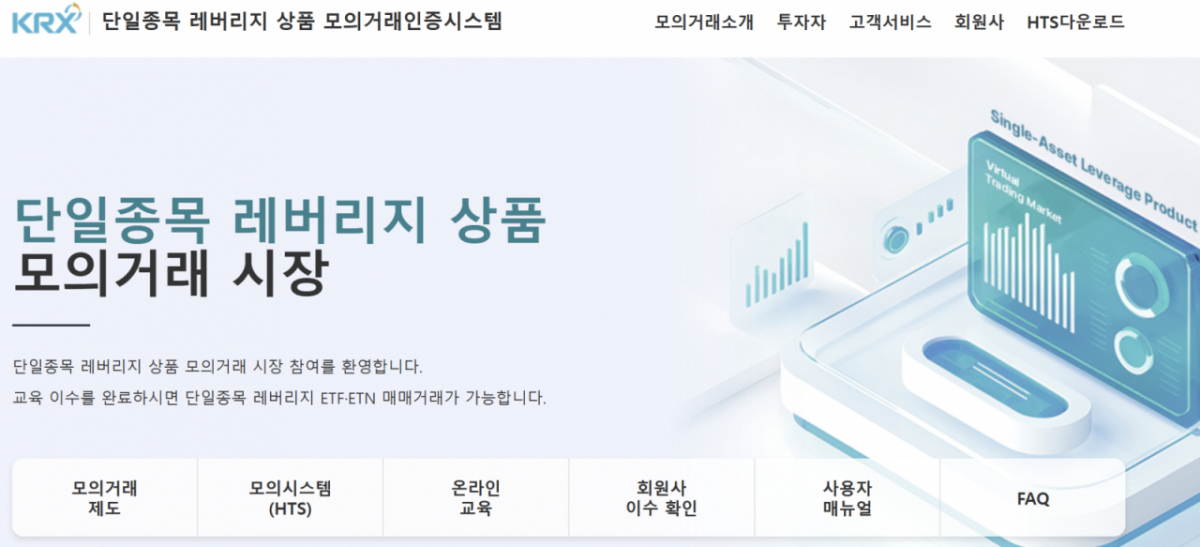
According to financial authorities and the securities industry on this day, investors purchasing Samsung Electronics or SK Hynix leverage ETFs for the first time must complete at least five days of mock trading via the Korea Exchange's mock trading website starting today. This serves as a type of entry barrier for domestic individual investors newly investing in single-stock leverage or inverse products listed both domestically and abroad; existing investors can trade without completing mock trading.
New investors must access the mock trading system during regular market hours or through replay (replay) sessions for at least five trading days, spending one hour or more each day. On days when markets are closed, such as weekends, accessing and trading via the system's replay function for at least one hour suffices. Once these total requirements of five days and five hours of mock trading are met, investors can obtain a certificate of completion. This certificate must be submitted to each securities firm before new purchases of ETFs can be made.
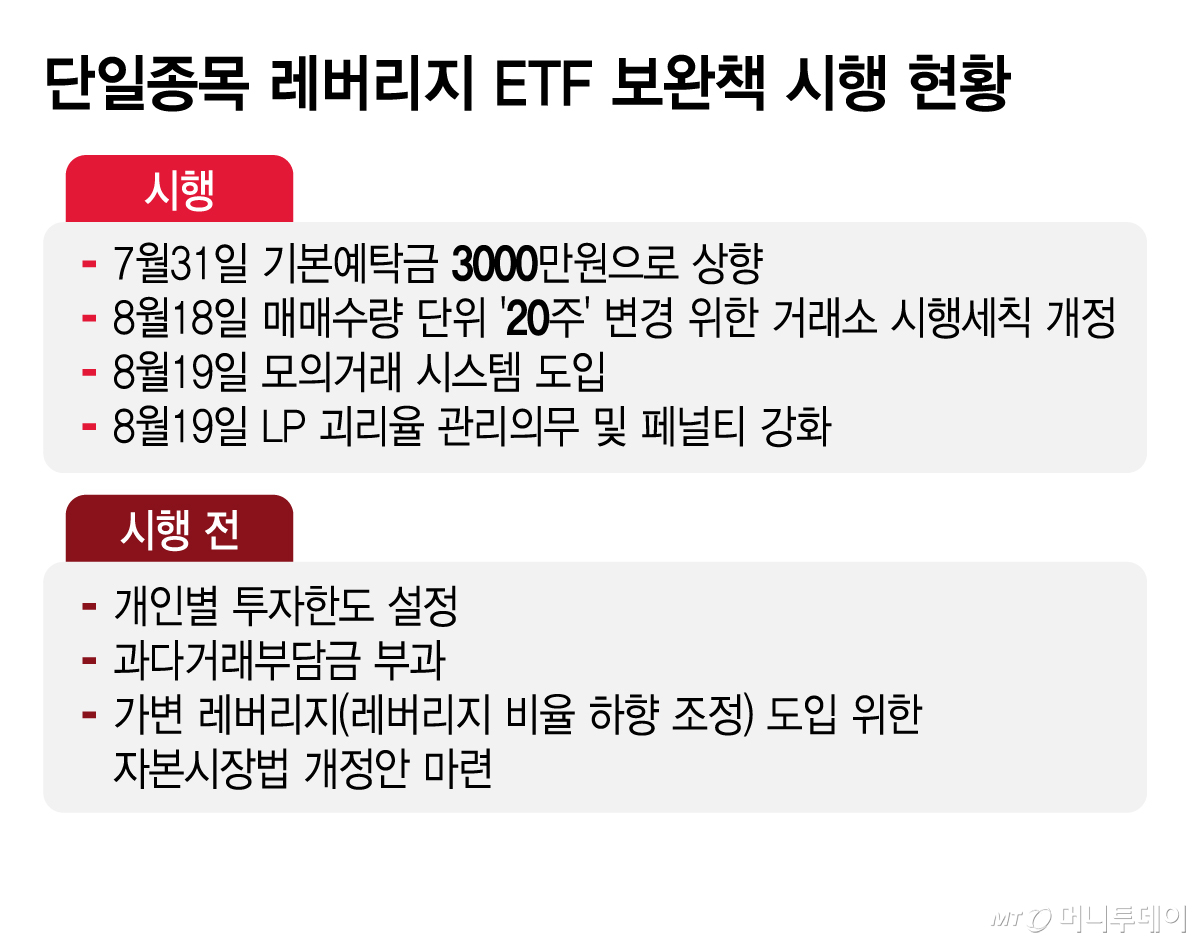
This is one of the additional security measures announced by financial authorities on the 29th of last month regarding single-stock leverage ETFs. In addition to introducing the mock trading system, revised exchange operational rules strengthening LP (liquidity provider) obligations for spread management and imposing penalties for violations also took effect today. Another revised rule changing the trade unit to 20 shares is expected to be implemented as soon as securities firms complete their IT system development following its revision the previous day.
Other follow-up measures remain pending. Specific implementation plans and schedules have not yet been announced for setting individual investment limits or imposing excess trading fees. Measures such as flexibly adjusting leverage multipliers like in Hong Kong will require amendments to the Capital Markets Act, so actual implementation is expected to take considerable time.
Although transaction volumes have significantly decreased following the financial authorities' supplementary measures, the debate over government responsibility continues. In the upcoming September regular National Assembly session, fierce debates are anticipated regarding the background and consultation process of introducing single-stock leverage ETFs, as well as whether policy objectives were achieved.
Opinions particularly diverge on whether the policy goal of preventing capital outflows abroad has been achieved. A securities industry official stated, "Rather than individual investors who traded in Hong Kong returning to the domestic market, it appears that pent-up demand from individuals willing to invest has exploded." The official added, "Speculative investment demand seeking profits through ultra-short-term trading coincided with the authorities' policies, leading to the formation of a 'single-stock leverage' market."
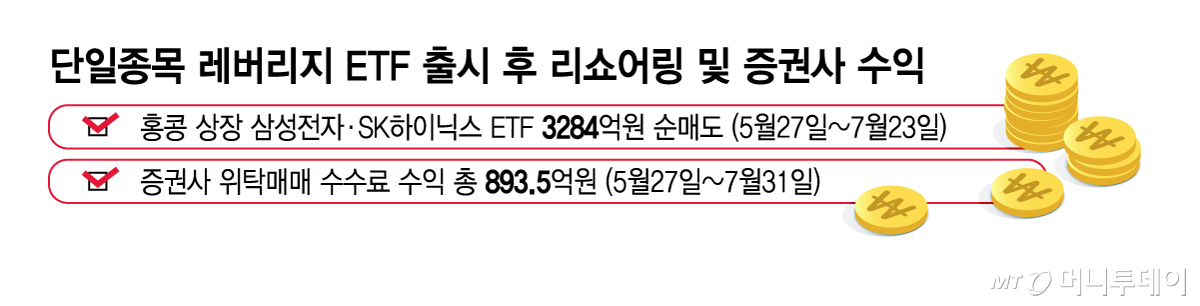
In fact, reshoring funds are not large compared to the scale of the single-stock leverage ETF market. According to data submitted by the Financial Services Commission to Kang Jun-hyun, a Democratic Party of Korea lawmaker on the National Assembly's Political Affairs Committee, domestic investors sold 328.4 billion won worth of Samsung Electronics and SK Hynix ETFs listed in Hong Kong net between the launch of single-stock leverage ETFs and July 23. Considering that daily AUM (assets under management) for Korean asset-based single-stock leverage products listed in Hong Kong was approximately 6 trillion won at the end of April, the scale of reshoring is not substantial.
Criticism also arises, particularly within political circles, that only brokerage firms' revenues have increased through this measure. According to data submitted by the Financial Supervisory Service to Kang Jun-hyeon (Rep.), total entrusted trading commission revenue for securities firms through single-stock leverage ETFs was recorded at 89.35 billion won as of the end of July.
In the National Assembly, accountability debates over single-stock leverage ETFs are expected to continue during the October government audit, starting with next month's economic sector interpellations. The National Assembly Legislative Research Service also highlighted the need to improve regulatory frameworks. Kang Eun-pyung, a legislative researcher at the National Assembly Legislative Research Service, stated, "Although average daily transaction volume dropped by approximately 89% to 1.3 trillion won between July 31 and August 10 following the deposit increase, it is difficult to equate the reduction in trading volume itself with achievements in investor protection." Kang added, "Adjusting the leverage level of products according to market conditions could also be considered as one risk management measure."
Kang Jun-hyeon (Rep.) stated, "While partial effects such as reshoring of overseas funds have been confirmed since the launch of single-stock leverage products, both sides of the duality—high volatility and market instability—have emerged." The official continued, "The political sphere and government must unite to establish policies controlling the market impact of leverage products while fundamentally enhancing the value of our capital market."

 in STOCK


