

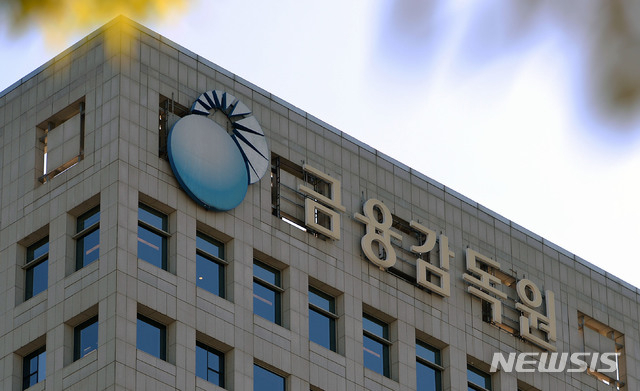
The Financial Supervisory Service will launch inspections of Korea Investment & Securities' hub and sales branches. This is a measure following the regulator's prior announcement that it would expand inspections to the hub and sales branches of securities firms, which interact with investors at the front line.
According to financial investment industry sources on the 15th, the Financial Supervisory Service plans to begin inspecting Korea Investment & Securities' hub and sales branches next week. The regulator conducted inspections of Samsung Securities and Meritz Securities last year, followed by Hana Securities and Mirae Asset Securities this year. Korea Investment & Securities had originally planned an inspection for the first half of this year, but the schedule was delayed.
The Financial Supervisory Service plans to focus its checks on whether private bankers (PBs) engaged in illegal excessive trading to meet performance targets or generate fee income, whether there was any illegal discretionary or entrusted trading involving the operation of customer funds without clear instructions or formal contracts from customers, and whether high-risk products were sold without properly explaining investment risks. The regulator also intends to conduct inspections linked to internal controls at headquarters.
The Financial Supervisory Service believes that illegal activities are recurring as the number of elderly investors visiting hub branches has increased due to the stock market boom in the first half of the year. Illegal cases, including unauthorized access to customer credit information, illegal excessive trading, and illegal discretionary or entrusted trading, have already been identified at some securities firms' hub branches
As Korea Investment & Securities is a mega investment bank (IB) handling Integrated Margin Accounts (IMA), with a high proportion of sales for high-risk, complex products targeting high-net-worth individuals, the need for inspections related to unsound business practices and incomplete sales has been raised.
The Financial Supervisory Service plans to closely examine whether private bankers (PBs) engaged in illegal excessive trading to meet performance targets or generate fee income, whether illegal discretionary or entrusted trading occurred, such as PBs operating customer funds without clear instructions or formal contracts from customers, and whether high-risk products were sold without properly explaining investment risks.
The Financial Supervisory Service believes that illegal activities are recurring as the number of elderly investors visiting hub branches has increased due to the stock market boom in the first half of the year. Illegal cases, including unauthorized access to customer credit information, illegal excessive trading, and illegal discretionary or entrusted trading, have already been identified at some securities firms' hub branches.
Until now, the Financial Supervisory Service had focused on inspecting securities firm headquarters, judging that investor protection at hub and sales branches had reached a certain level. However, upon re-examining these branches for the first time in over 10 years, several issues were discovered. In particular, hub branches are concentrated with PBs whose annual salaries can reach hundreds of millions of won. It is analyzed that because PB compensation is determined based on performance, there is a high possibility of aggressive sales practices. There have also been criticisms that some securities firm headquarters neglect audits and internal controls because certain sales branches or PBs generate profits.
The Financial Supervisory Service recently pointed out in a meeting with securities firm auditors that chronic illegal activities continue. Seo Jae-wan, Deputy Commissioner of the Financial Supervisory Service, criticized at a meeting on the 7th, stating, "Chronic illegal acts where 'basics are not even followed' continue to be repeated, such as recording false or inadequate information in product descriptions provided to customers, or using personal mobile phones during sales without leaving any record of recommending products (to customers)."
The Financial Supervisory Service has decided to swiftly switch to rapid and mobile inspections and respond strictly if illegal or unfair acts and internal control failures are discovered.

 in STOCK
