

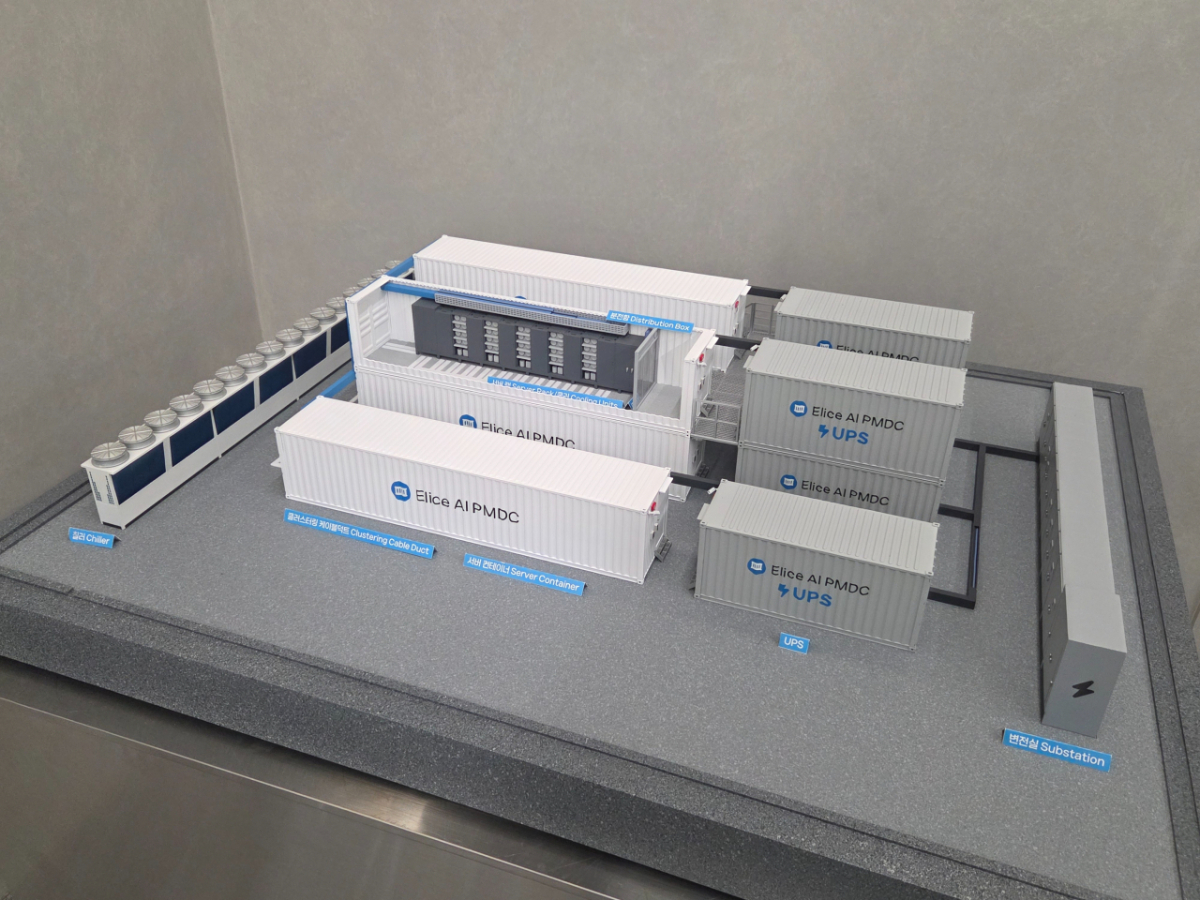
"Existing neocloud companies build or lease data centers to establish GPU (Graphics Processing Unit) clouds, whereas Elice embeds neoclouds into its container-based AI PMDC (Artificial Intelligence Modular Data Center). What takes 24 to 36 months to build a traditional data center can be completed in just three to six months with Elice's AI PMDC. Additionally, the company has the capability to operate clouds efficiently by integrating its self-developed technologies for power, cooling, and network efficiency, as well as AX (AI Transformation) solutions."
An IR representative from Elice Group, met at the headquarters, described the company's flagship product, the AI PMDC, in this manner. At the headquarters, one could see a model of the AI PMDC consisting of four 40-foot containers housing server racks and four 20-foot containers containing UPS (Uninterruptible Power Supply) units, connected together. A substation and cooling facilities were also located on either side.
Neoclouds are GPU-specialized operators… No competition with general-purpose clouds like Google, MS, or Amazon
A neocloud is a GPU-based cloud specialized for AI model training and inference. It refers to an AI and GPU-specialized cloud, distinct from general-purpose clouds that offer a mix of CPUs (Central Processing Units) and GPUs, such as Amazon's AWS, Microsoft's Azure, and Google's GCP. It has become a highly regarded industry globally as the shortage of GPU supply intensifies.
An Elice official explained, "Those who need general-purpose clouds will use AWS or Azure, but customers who only need GPUs will utilize neoclouds." The official added, "If using the same GPU, basic computing performance is identical, so customers seek specialized operators that can provide their desired GPU models cheaply, quickly, and stably."
Elice not only purchases GPUs directly from NVIDIA but also secures NVIDIA GPUs through server manufacturers such as Dell, HPE (Hewlett Packard Enterprise), Supermicro, and Gigabyte. Having completed on-site inspections with multiple server manufacturers, the company receives GPU supplies from various sources. Thanks to maintaining multiple supply chains, Elice can flexibly respond to GPU shortages. Elice has already secured a large number of existing NVIDIA GPUs, including H100, B200, and B300 models, and plans to introduce next-generation GPUs such as Vera Rubin and Feynman, as well as AMD's Helios.
Responding to global GPU computing demand… Providing GPUs cheaply and quickly with proprietary technology
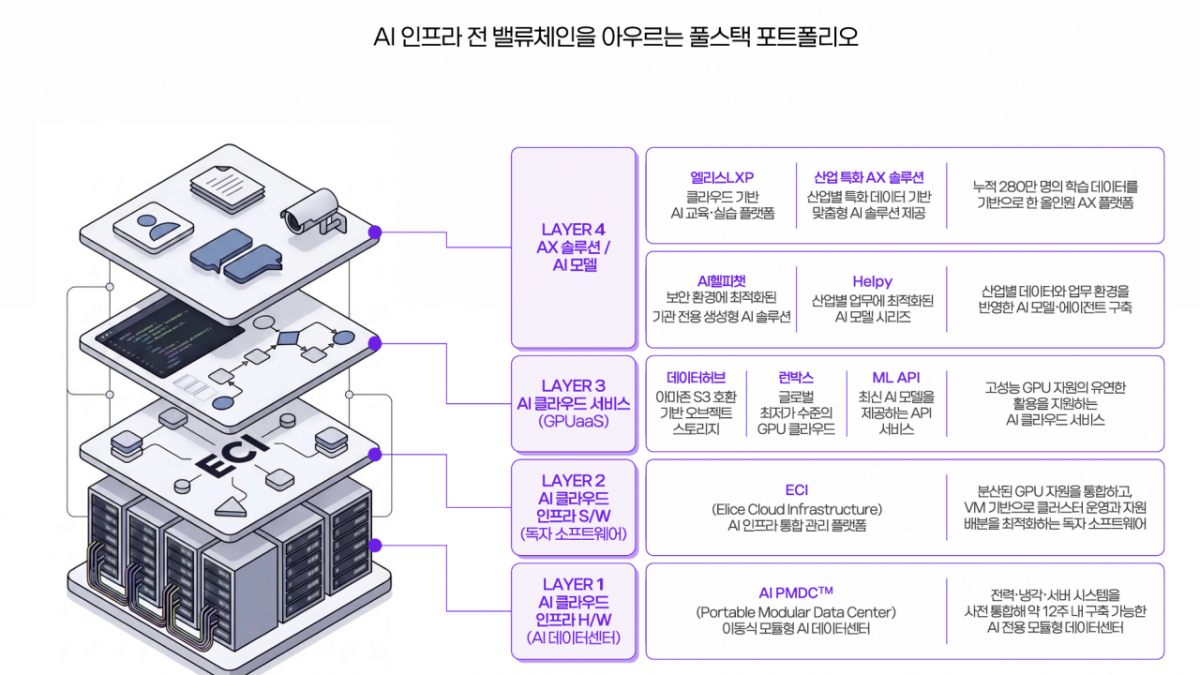
Elice is an AI full-stack operator providing everything from AX solutions to hardware. Thanks to its self-developed cloud operating capabilities, the PUE (Power Usage Effectiveness) of its AI PMDC is approximately 1.1, on par with Google, Meta, and Microsoft. The company also possesses its own cloud software, ECI (Elice Cloud Infrastructure), eliminating the burden of licensing costs for foreign virtualization software. ECI was developed based on experience accumulated since the company's founding in 2015 while providing online coding education.
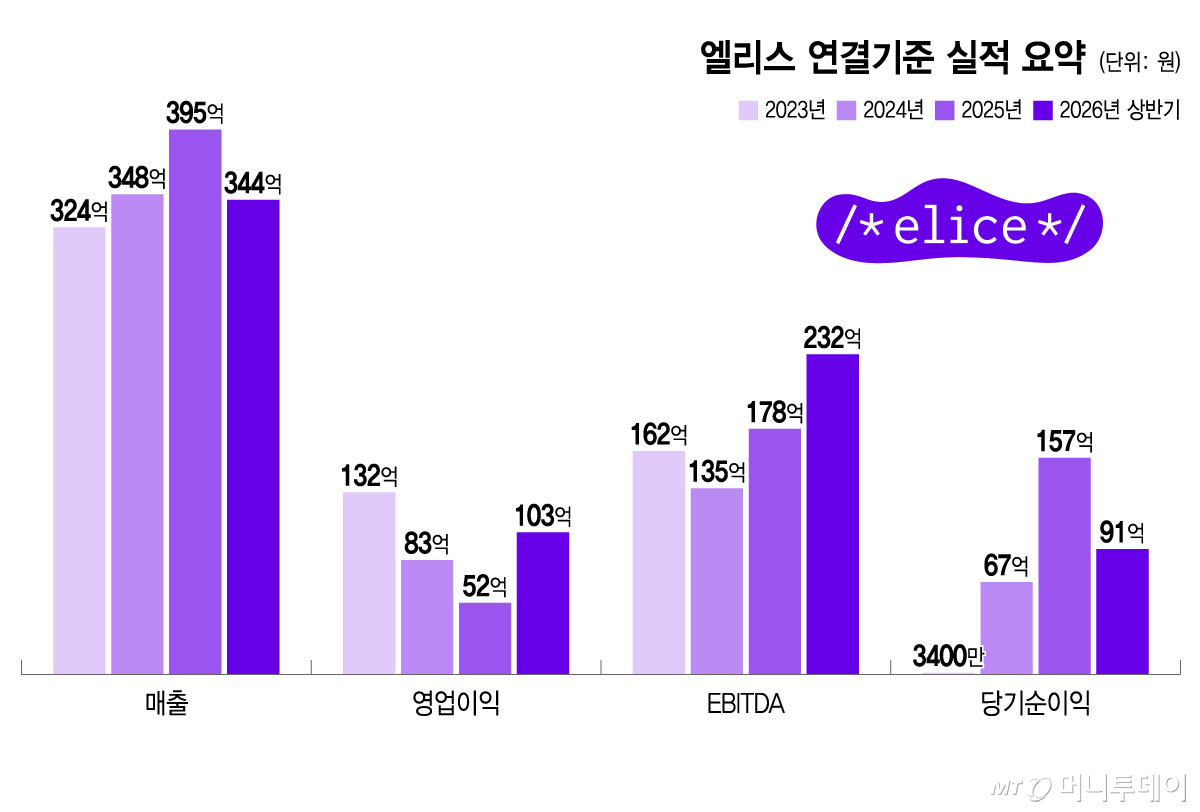
Based on this foundation, Elice began generating revenue from its cloud division in 2023, and the proportion of related revenue has been increasing year by year. Elice's cloud revenue grew from 2.1 billion won in 2023 to 3 billion won in 2024, and then to 17.4 billion won in 2025. In the first half of this year, it recorded revenue of 26.1 billion won. The EBITDA (Earnings Before Interest, Taxes, Depreciation, and Amortization) margin also jumped from 39% in 2024 and 45% in 2025 to 68% in the first half of this year.
Elice is planning a new form of export business that sells "GPU computing resources" overseas. This involves building data centers in a short period using AI PMDCs, operating clouds with cheap and high-quality power generated domestically, and supplying them to overseas customers. Elice is currently discussing contracts with several countries in the United States, Asia, and the Middle East.
An Elice official explained, "GPUs have minimal data latency issues, so they can be supplied anywhere in the world as long as the country has stable power." The official added, "As GPU supply shortages persist and AI computing resources become scarce, possessing them alone can enhance national competitiveness." He further noted, "This is also why the government is trying to secure 260,000 GPUs at the national level."
Elice is responding to GPU price volatility through long-term contracts and a high-margin structure. As extreme supply shortages have led to an increase in customers seeking to secure GPU computing resources for extended periods, neocloud contract terms have recently trended toward lengthening from one to two years to three to five years. Furthermore, Elice maintains a high EBITDA margin of around 70%, allowing it to withstand periods where recovering investment in existing equipment is difficult due to falling GPU prices.
An Elice official stated, "The shift toward long-term contracts has been underway since the second half of last year." The official explained, "Elice has increased its proportion of long-term sales, maintaining GPU utilization rates at nearly 100%." Typically, in the data center industry, a utilization rate exceeding 70% is considered successful sales. He added, "NVIDIA, Dell, Gigabyte, and others guarantee the usage period of GPUs; most models are guaranteed for up to five years and can be used for seven to eight years." The official stated, "NVIDIA, Dell, Gigabyte, and others guarantee the usage period of GPUs; most models are guaranteed for up to five years and can be used for seven to eight years."
Stock price 'plunges' on listing day due to neocloud bad news… "CoreWeave is in the red, Elice is in the black; the situations are different"
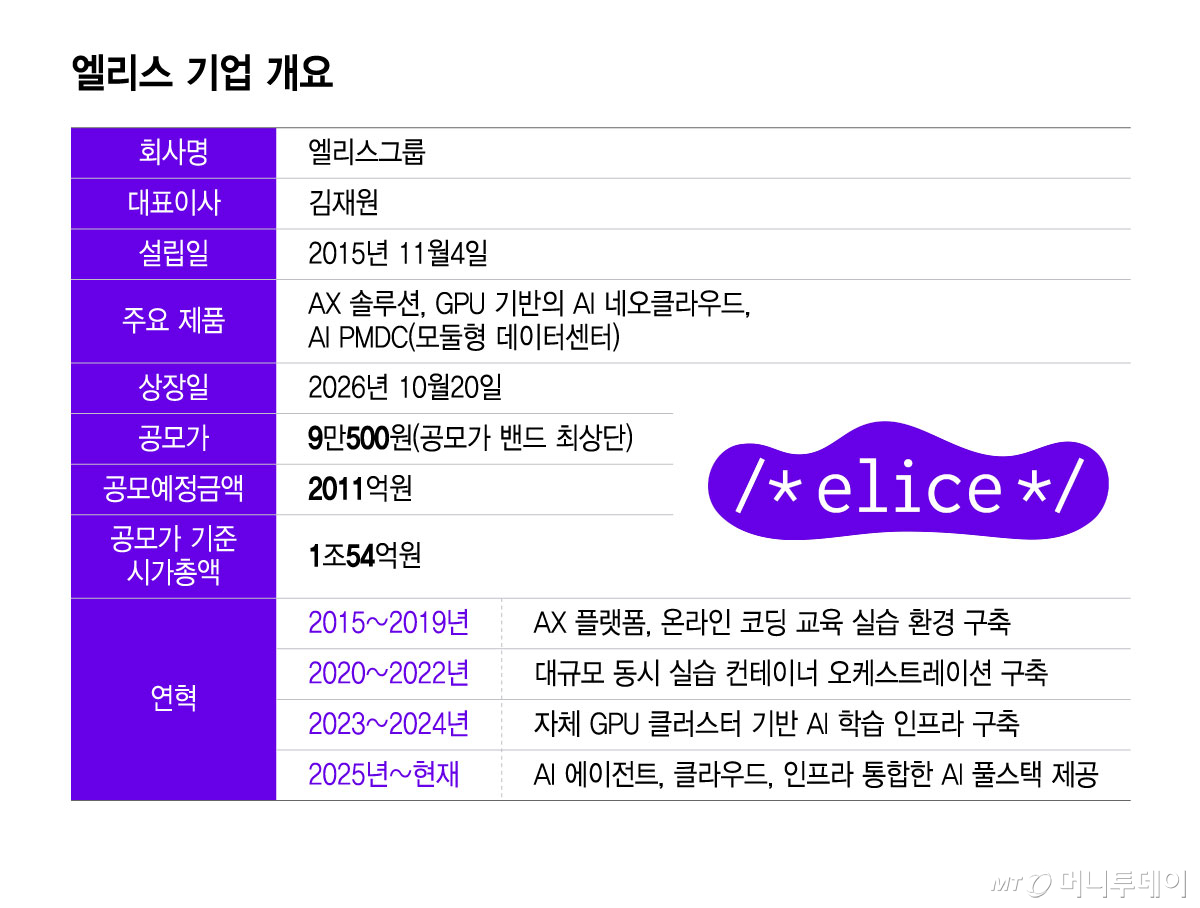
Elice, which listed on the KOSDAQ market on the 20th, finalized its IPO price at 90,500 won, the top of the band. Based on the IPO price, Elice's corporate valuation was approximately 1 trillion won. Although a corporate valuation of up to 1.5 trillion won had been mentioned prior to listing, it was explained that the figure was realistically adjusted to around 1 trillion won by applying an average EV/EBITDA (Enterprise Value divided by EBITDA, an indicator of investment payback period) multiple of 27x from eight comparable companies, including CoreWeave, Vertiv, and Equinix.
However, Elice's performance on its listing day was not good. The opening price on the listing day was 75,700 won, falling about 16% below the IPO price of 90,500 won, and it dropped more than 38% intraday to reach as low as 56,500 won. On that day, Elice closed trading at 61,500 won, a decrease of 29,000 won (32.04%) from the IPO price.
The sharp drop in stock price was due to negative opinions regarding neocloud profitability emerging in the United States on the 14th (local time), ahead of the listing. Gartner pointed out issues with CoreWeave's debt and cash flow, stating that "80% of neocloud companies will be unable to survive independently by 2030." On that day, CoreWeave's stock price plunged as much as 25%, dampening investor sentiment across the entire neocloud industry.
Elice expressed confidence in a stock price rebound, arguing that its situation differs from the problems with CoreWeave pointed out by Gartner. Despite surging revenue, CoreWeave suffered losses and financial burdens due to massive debt and infrastructure investment costs, recording a net loss of approximately 831.2 billion won in the second quarter. In contrast, Elice recorded a net profit of 10 billion won in the first half of this year alone.
The Elice side said, "While many major overseas GPU infrastructure companies are projected to post net losses, please note that Elice is already generating net profits." They added, "Please examine more closely the profitability of neocloud companies, including growth rates, GPU acquisition scale, depreciation, and financial costs."

 in STOCK


