

Global smartphone prices are rising one after another due to the surge in memory prices. While Samsung Electronics and Xiaomi have already raised their smartphone prices, speculation is growing that Apple may also adjust iPhone 17 prices, indicating that cost burdens from increased demand for AI (artificial intelligence) memory are beginning to be fully passed on to consumers.
According to overseas IT media MacRumors and others on the 10th, Chinese IT tipster Ding Xiaoshu reported that Apple may adjust iPhone 17 prices starting today. Apple had previously raised prices for major products such as Macs and iPads in June citing rising memory and storage costs but excluded iPhones from the hike.
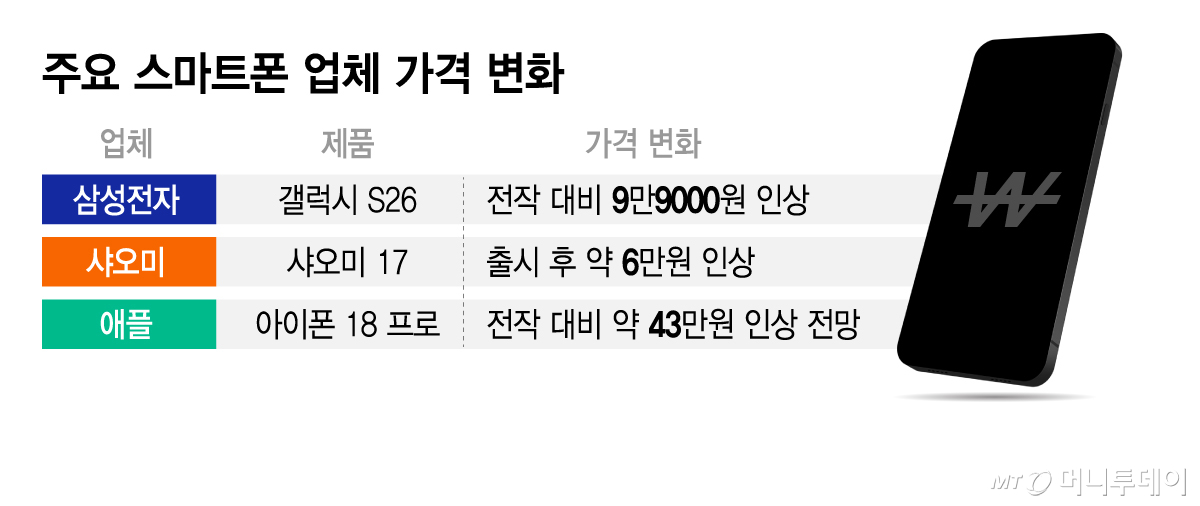
There are also indications that next-generation iPhone prices could rise. It is reported that the iPhone 18 Pro, expected to be unveiled next month, may start at $1,399 (approximately 1.98 million won), which would be $300 (about 430,000 won) more expensive than its predecessor. The "iPhone Ultra," anticipated as Apple's first foldable phone, is also being discussed as potentially reaching up to $2,499 (about 3.54 million won) for top-tier specifications.
Chinese companies are already accelerating price hikes. Xiaomi recently increased prices for the Xiaomi 17 series by 400–500 yuan (approximately 80,000–100,000 won) and for the Redmi K90 and Turbo 5 series by 300 yuan (about 60,000 won) each. This marks the third price adjustment this year. OPPO and Vivo have also raised prices for select products.
Samsung Electronics has also repeatedly raised smartphone prices this year. The Galaxy S26 series saw price increases of 99,000 won for the 256GB model and 209,000 won for the 512GB model compared to the previous generation. Recently released Galaxy Z Fold8 Ultra and Z Flip8 also rose by 198,000 won each for the 256GB models compared to their predecessors.
The core factor behind price increases is memory. As investments in AI data centers surge, major memory manufacturers are concentrating production capacity on high-value-added products such as HBM (high-bandwidth memory), leading to tight supply of consumer-grade DRAM and NAND. According to TrendForce, general-purpose DRAM contract prices rose 90–95% quarter-on-quarter in the first quarter of this year, while NAND prices increased by 55–60%.
Cost burdens are hitting mid-range and low-end phones with thinner margins harder. As manufacturers expand sales of premium products, the shift toward premiumization is accelerating. According to Counterpoint Research, the share of smartphone sales priced at $600 or higher in the first half of this year rose from 25% last year to a record high for any first half at 29%.
Price increases are becoming a burden on demand. According to IDC, China's smartphone shipments in the second quarter fell 4.3% year-on-year, marking five consecutive quarters of negative growth. Samsung Electronics, which is struggling in China, has also begun streamlining its operations. It was reported that Samsung Electronics is gradually closing local smartphone stores with monthly sales below 300,000 yuan (approximately 62.94 million won). Samsung Electronics' share of the Chinese smartphone market stood at just 0.1% in the second quarter.
An industry insider stated, "Given that memory price increases are expected to continue for some time, Apple is likely to face cost pressures as well. If Apple joins the price hikes, a full-scale domino effect of price increases across smartphone manufacturers could begin."

 in TECH
