

Trading cards featuring famous intellectual properties (IPs) such as Pokémon, game characters, and idol singers are in high demand, selling for astronomical prices. Naver's resale platform, Cream, has moved to secure a first-mover advantage in the domestic market, leveraging authentication and compensation as its key tools. The strategy is to dispel concerns about growth stagnation in the resale market through portfolio diversification.
One card sold for 48 million won on Cream… Men in their 20s and 30s are the main buyers
According to Cream on the 28th, trading card transaction volume on the platform last month increased by approximately 56 times compared to January this year, while transaction value rose by about 55 times over the same period, both setting all-time highs. Compared to the same month last year, transaction volume grew by roughly 281 times and transaction value by about 344 times.
Trading cards are used in trading card games (TCGs) and have gained popularity as collecting and trading cultures have developed. Hong Kong-based trading card exchange platform HKTCG posted on its official social network service (SNS) that it would purchase a limited-edition card bearing the autograph of BLACKPINK's Lisa for 1 million Hong Kong dollars (approximately 170 million won).
According to market research firm Grand View Research, the domestic TCG market is projected to grow at an annual average rate of 7.9%, expanding from $636 million (approximately 842.1 billion won) last year to $1.157 billion (approximately 1.5319 trillion won) by 2033. In particular, the secondary market, including used and resale items, is expected to account for 59.6% of the total.
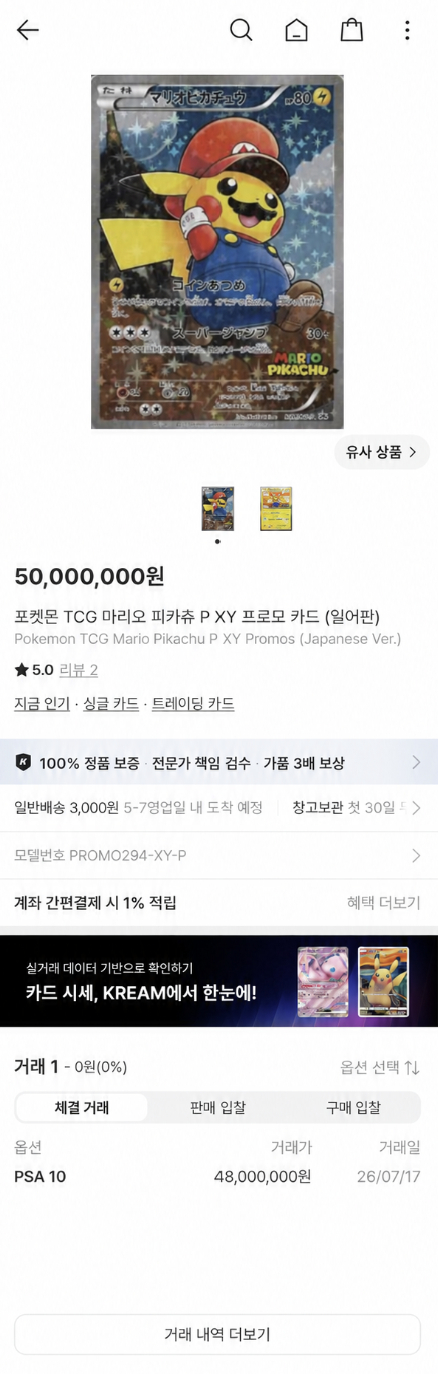
Recently, Pokémon trading cards have also been traded at high prices on Cream. On July 17, a "Mario Pikachu P XY Promo Card" sold for 48 million won, and on the 16th, a "Pikachu P XY Promo Card" was sold for 41 million won. Pokémon trading cards are an extremely popular genre, having taken up nine of the top 10 monthly trading card transactions on Cream as of the 8th.
The "Ari Kumiho Overnumber Card" from "Liftbound," a TCG based on the IP of the popular game "League of Legends," was also traded at a high price of 6.12 million won. Cream is exclusively selling the "2026 Tops Chrome x Jennie" card featuring BLACKPINK's Jennie. It also handles cards from various K-pop artists, including All Day Project and Miya-o.
The core demographic is men in their 20s and 30s. They accounted for approximately 62% of Cream's total trading card transactions by transaction value from January to September this year. If younger generations become locked into the platform, long-term revenue can be expected.
Authentication and guarantee as weapons… "300% Compensation Policy"
Cream demonstrates strengths in authentication and guarantees. It has added a specialized trading card authentication system from its Japanese subsidiary, Soda (SODA), to the authentication capabilities built up through sneaker resale. "Sneakerdunk," operated by Soda, possesses authentication know-how that includes verifying whether card boxes are sealed and checking for signs of repackaging, as well as inspecting the number and arrangement of internal packs using X-ray equipment.
In addition, Cream operates a "Total 300% Compensation Policy" that provides not only payment cancellation but also double compensation if an authenticated item is later determined to be counterfeit. A key advantage is that high-value card transactions are safe compared to consumer-to-consumer (C2C) platforms.
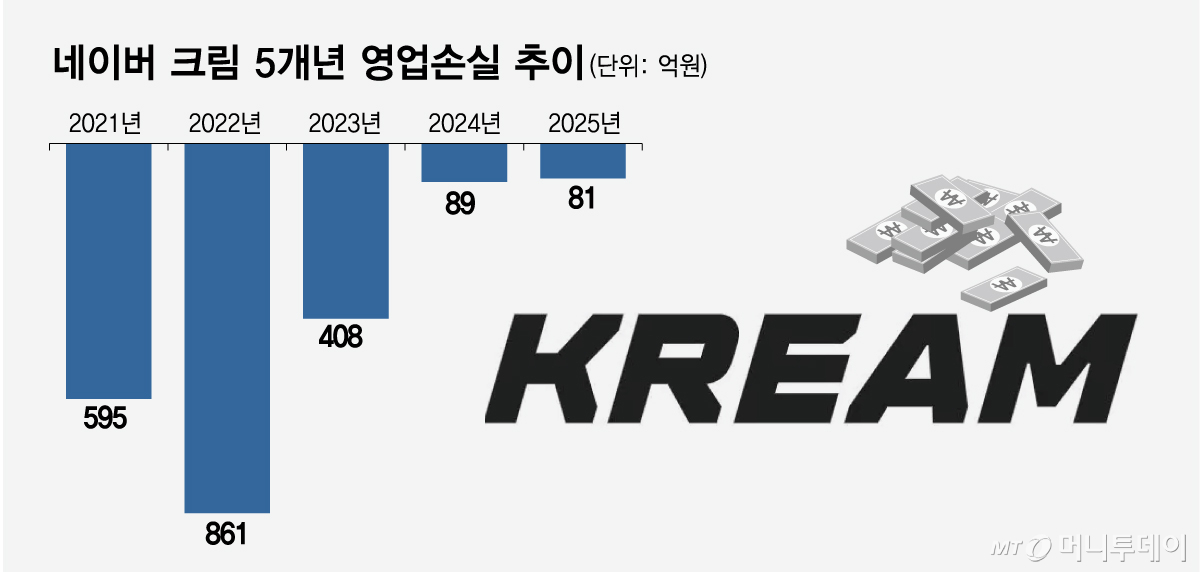
As Musinsa's resale platform "Sold Out" plans to terminate its service starting December 31, citing a slump in the resale market, Cream aims to overcome concerns about growth stagnation through category diversification. Cream's operating losses have gradually narrowed from 86.1 billion won in 2022 to 40.8 billion won in 2023, 8.9 billion won in 2024, and 8.1 billion won last year, but the company has not yet turned a profit.
A Cream official said, "We are enhancing transaction reliability by sharing authentication know-how with Soda," adding, "Going forward, we will expand the foundation of collecting culture in both Korea and Japan based on collaborations with various brands and IPs and our specialized authentication capabilities."

 in TECH

