

Headaches are an extremely common symptom, experienced by 7 to 8 out of every 10 people. As a result, many people reach for painkillers rather than visiting a hospital when they have a headache. Everyday headaches are often unrelated to serious brain diseases. However, the situation changes if the headache presents in a pattern different from usual.
Headaches are broadly classified into "primary headaches" (idiopathic headaches) and "secondary headaches." Cases where the headache itself is the disease, such as △migraine △tension-type headache △cluster headache, are primary headaches. On the other hand, △headaches caused by other diseases (cerebral hemorrhage, brain tumor, encephalitis, etc.) △head or neck trauma △overmedication △headaches due to abrupt discontinuation of medication (withdrawal) are classified as secondary headaches.
Relying solely on painkillers without identifying the cause of a secondary headache amounts to neglecting the underlying disease. Lim Jin-hui (Director) in the Department of Neurology at SuwonSSeoul Hospital stated, "What is important with headaches is not just the intensity of the pain, but checking whether there are changes different from before and whether neurological abnormal symptoms are present," adding, "In particular, if a severe headache that was not previously experienced occurs suddenly, the cause must be identified."

Headaches endured with painkillers... Medical consultation needed if these changes appear
Even when visiting a medical institution for a headache, it is not necessary for everyone to undergo MRI (magnetic resonance imaging) or CT (computed tomography) examinations. However, if there are several warning signs, more active investigation may be required.
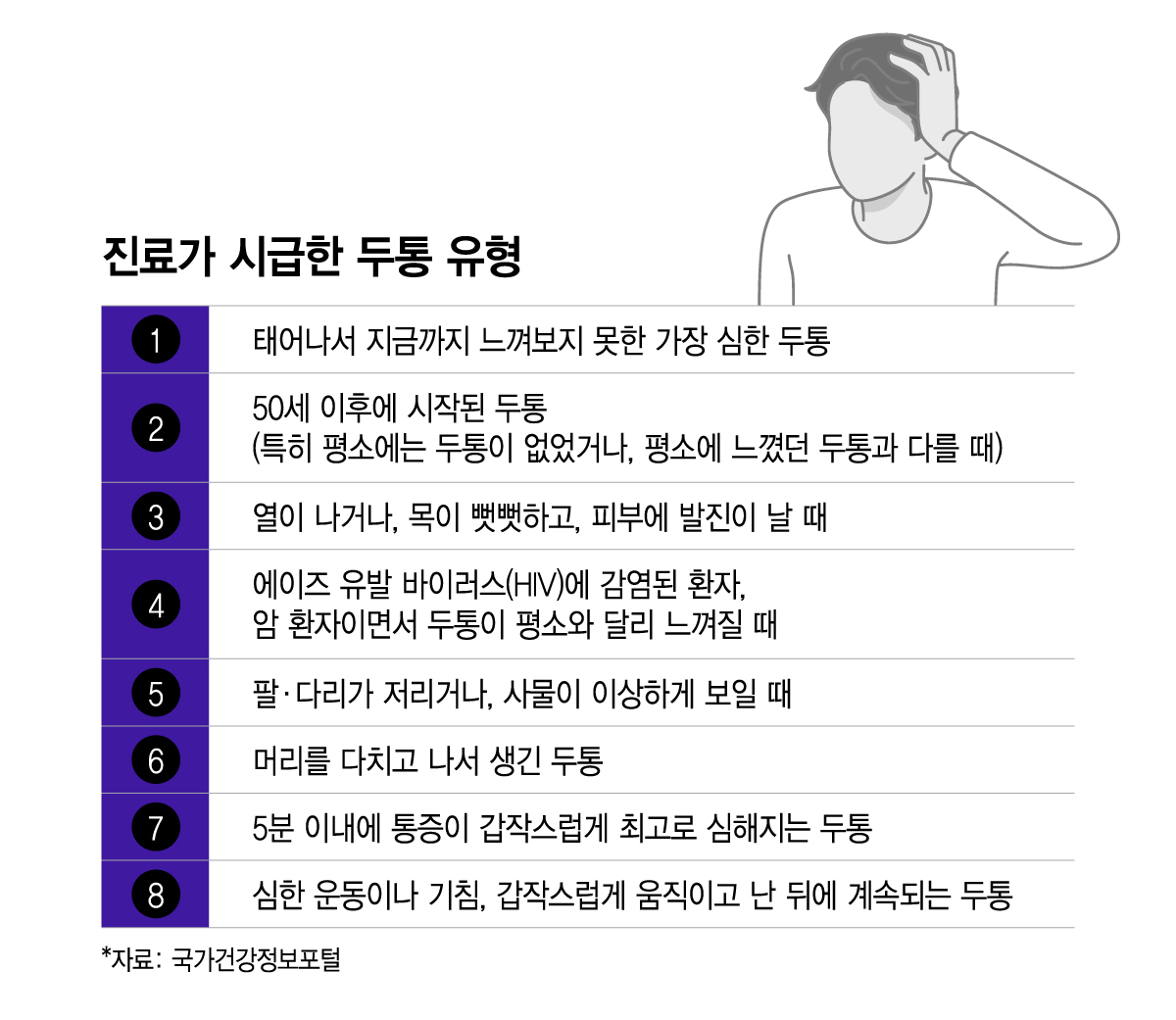
Representative signals indicating secondary headaches include △headaches newly starting after age 50 △very severe headaches occurring suddenly △cases where the pain pattern has changed from before. This includes situations where a sudden severe headache appears in conditions that increase intra-abdominal pressure, such as defecation or sexual intercourse, or when accompanied by neurological symptoms such as weakness in the limbs and dull sensation. It is also necessary to seek out the cause if a new headache develops in patients whose immunity has significantly dropped or who are undergoing cancer treatment.
For example, a common symptom of brain tumors is headache; if a previously absent headache appears newly, worsens in the morning, or deteriorates over time, secondary headaches caused by a brain tumor may be suspected. Shin Gyeong-oe-gwa (Prof.) at the Brain Tumor Center of Korea University Ansan Hospital stated, "If symptoms such as headaches and visual field disturbances continue without improvement despite treatment, it is necessary to check whether the problem originates in the brain," adding, "Depending on necessity, finding the cause through precise examinations such as MRI and CT is important for early diagnosis and timely treatment."
If tests are normal but headaches persist, track with a "headache diary"
The first step in headache consultation is "medical history taking." This involves examining when the headache started, where the pain begins, how long it lasts, along with accompanying symptoms such as nausea and hypersensitivity to light or sound.
A "headache diary" is helpful at this time. Recording the date and time of headache occurrence, pain location and intensity, duration, previous night's sleep hours and meals, and whether caffeine or alcohol was consumed helps in understanding individual headache patterns.
During consultation, neurological examinations are performed to check cranial nerves, reflexes, balance, etc., and imaging tests such as CT, MRI, and MRA (magnetic resonance angiography) are utilized as needed. Depending on the situation, cerebral vascular tests, cerebrospinal fluid tests, or electroencephalograms may be added.
There are also many cases where headaches persist even when no particular abnormalities are found in MRI examinations. This does not mean there is no pain, but rather that structural causes such as brain tumors or cerebral hemorrhage have not been detected. Subsequently, the direction of treatment can be determined according to the characteristics of primary headaches such as migraine and tension-type headache.
For chronic migraines, injections and oxygen therapy should also be considered
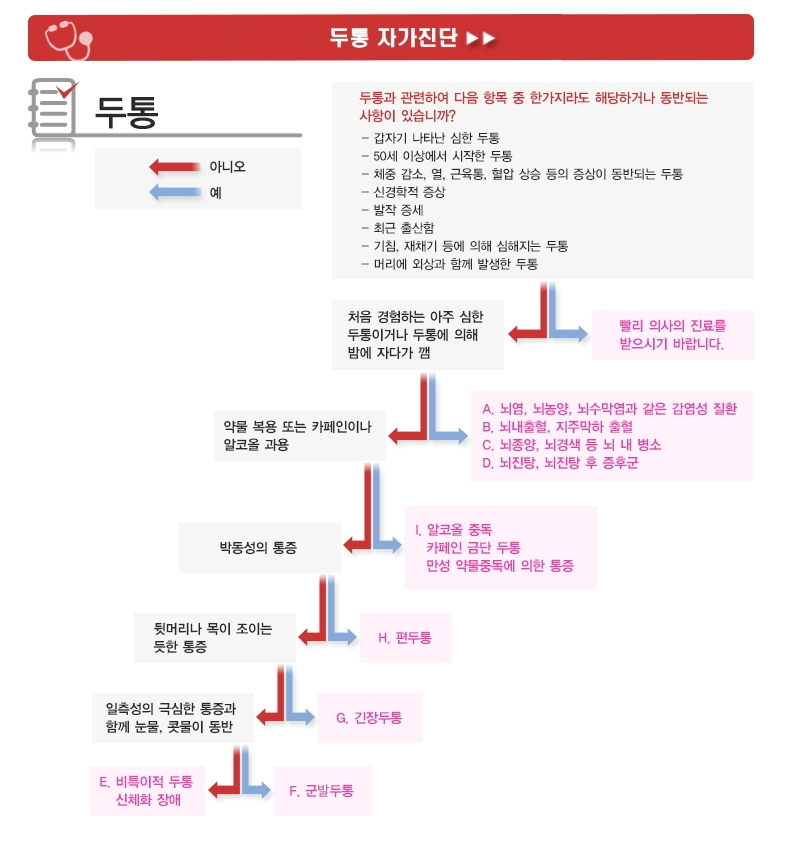
Headache treatments also vary depending on the cause and type. For migraines, acute-phase treatment agents and preventive treatment agents are used according to symptoms and frequency. In particular, botulinum toxin injection therapy can be utilized for patients with chronic migraine. Botulinum toxin therapy involves injecting medication into designated areas such as the head, temples, neck, and shoulders to reduce the frequency of chronic migraine attacks.
CGRP (calcitonin gene-related peptide) is a core neuropeptide involved in pain signal transmission and vasodilation during the process of migraine occurrence. For chronic migraines, CGRP-targeted therapy is also used to prevent attacks by inhibiting the CGRP pathway involved in the migraine development process.
For cluster headaches where extreme pain recurs repeatedly, an approach different from general painkillers is needed. In the acute phase, high-concentration oxygen therapy and migraine-class medications may be used. Nerve block surgery may also be considered depending on the patient's condition.
Lifestyle management is also a pillar of treatment. It is good to maintain regular sleep and meal times and drink sufficient fluids. If headaches recur after consuming coffee (caffeine) or alcohol, it is advisable to adjust intake amounts and record and avoid factors that trigger one's own headaches.

 in THEBIO


