

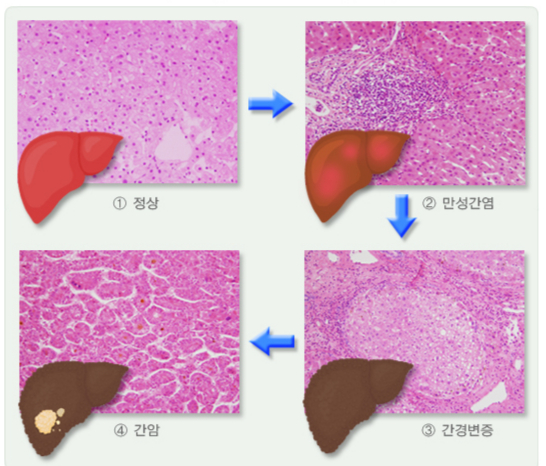
One of the major causes of liver cancer is "hepatitis B." Until now, it was standard practice to monitor the condition without initiating antiviral treatment if liver enzyme levels (ALT) were normal, even if there was a high level of hepatitis B virus (HBV) in the body. However, this treatment strategy has recently changed.
On the 22nd, Professor Yoo Jung-joo of the Department of Gastroenterology at Suncheon Health Science University Bucheon Hospital stated, "Liver enzyme levels have been one of the important criteria for determining antiviral treatment for hepatitis B patients," adding, "However, from this year on, antiviral therapy is recommended if there is a high level of hepatitis B virus in the body despite normal liver enzyme levels, based on research findings indicating a higher risk of liver damage and liver cancer."
Hepatitis B is a disease that occurs when liver cells are infected with the "hepatitis B virus." Most adults who acquire an acute infection recover naturally, but those infected during the neonatal or infant period, or those infected while immunocompromised, may develop "chronic hepatitis B," where the virus persists for more than six months. Once chronic, inflammation and fibrosis gradually progress in the liver, potentially leading to cirrhosis, liver failure, and hepatocellular carcinoma.
The number of domestic patients with chronic hepatitis B is estimated at 1.2 million. While the diagnosis rate is high at 83%, the actual treatment rate remains at only 22.2%, indicating a significant gap between diagnosis and treatment. It is known that approximately 60% of liver cancer deaths in Korea are caused by hepatitis B, making early diagnosis and management crucial.
Among hepatitis B cases, symptoms such as △fatigue △loss of appetite △low-grade fever △nausea △jaundice △and darkening urine may appear during "acute" infection. However, "chronic" hepatitis B often presents no symptoms until the liver is significantly damaged.

The most common route of infection is vertical transmission from a mother infected with hepatitis B at birth. Other routes include △blood transfusion △exposure to contaminated syringes △invasive procedures △sexual contact △and exposure to blood or body fluids among family members. It does not spread through casual contact such as eating together, hugging, or sneezing.
The clinical guidelines revised this year newly defined chronic hepatitis B as a "viral infection disease" rather than an "inflammatory liver disease." The criteria for treatment decisions have also shifted from being centered on liver enzyme levels (ALT) to being centered on viral load (HBV DNA). Accordingly, "moderate viremia," which previously often involved monitoring the condition rather than active treatment when liver enzymes were normal, has been included as a new target for treatment.
"Moderate viremia" refers to a state where the viral load in the blood falls within the range of 2,000 to 1 billion IU/mL. A recent large-scale domestic cohort study found that patients in this range had a higher risk of developing hepatocellular carcinoma than patients with high viremia (HBV DNA of 1 billion IU/mL or more). An interim analysis of a joint Korean-Taiwanese randomized clinical trial also confirmed that early antiviral treatment significantly reduces the risk of severe clinical events, including liver cancer, decompensated liver disease, and death.
Patients with a low viral load below 2,000 IU/mL, who have a lower risk of liver damage, are monitored through regular follow-up to check their condition. For patients with high viremia, aggressive antiviral treatment is recommended if they have risk factors such as △age △family history of liver cancer △and presence of liver fibrosis.
The standard treatment for chronic hepatitis B involves taking oral antivirals such as tenofovir and entecavir to suppress viral replication. It is rare for patients to reach the "cure stage" where the hepatitis B virus is completely eliminated. The realistic goal of treatment is to suppress hepatitis B virus DNA to undetectable levels over a long period, thereby preventing liver inflammation and fibrosis, and halting progression to cirrhosis, liver failure, and liver cancer.
However, even if the virus is well suppressed through antiviral treatment, patients who have already progressed to liver fibrosis or cirrhosis still face a risk of developing liver cancer. Therefore, it is standard practice for chronic hepatitis B patients to continue liver cancer screenings, such as liver ultrasounds and blood tests, at six-month intervals.
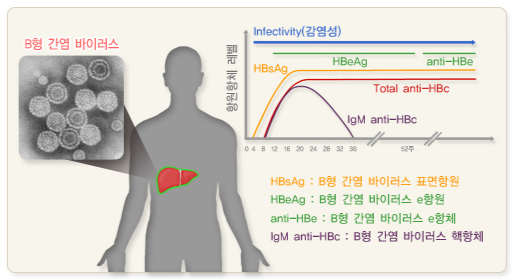
Family members and cohabitants of hepatitis B patients should undergo testing for hepatitis B surface antigen (HBsAg) and surface antibody (anti-HBs) to determine infection status and immunity. If infected, liver enzyme and liver fibrosis tests are conducted to assess the degree of liver damage, with liver ultrasound or biopsy performed if necessary. Those who are not infected but lack antibodies can receive vaccination.
Patients already diagnosed with chronic hepatitis B should avoid excessive alcohol consumption and be cautious about arbitrarily using health foods or folk remedies whose efficacy and safety have not been verified. In particular, stopping antivirals without a doctor's instruction can lead to rapid viral reactivation and worsening of hepatitis, making consistent medication adherence and regular medical visits essential.
Professor Yoo emphasized, "Hepatitis B is a disease where the risk of cirrhosis and liver cancer can be significantly reduced if detected early and properly treated and managed," adding, "If you have never received a hepatitis B test, check your infection status and antibody presence through health screenings. If you are a hepatitis B patient, you must not miss the timing for treatment through regular examinations."

 in THEBIO


