

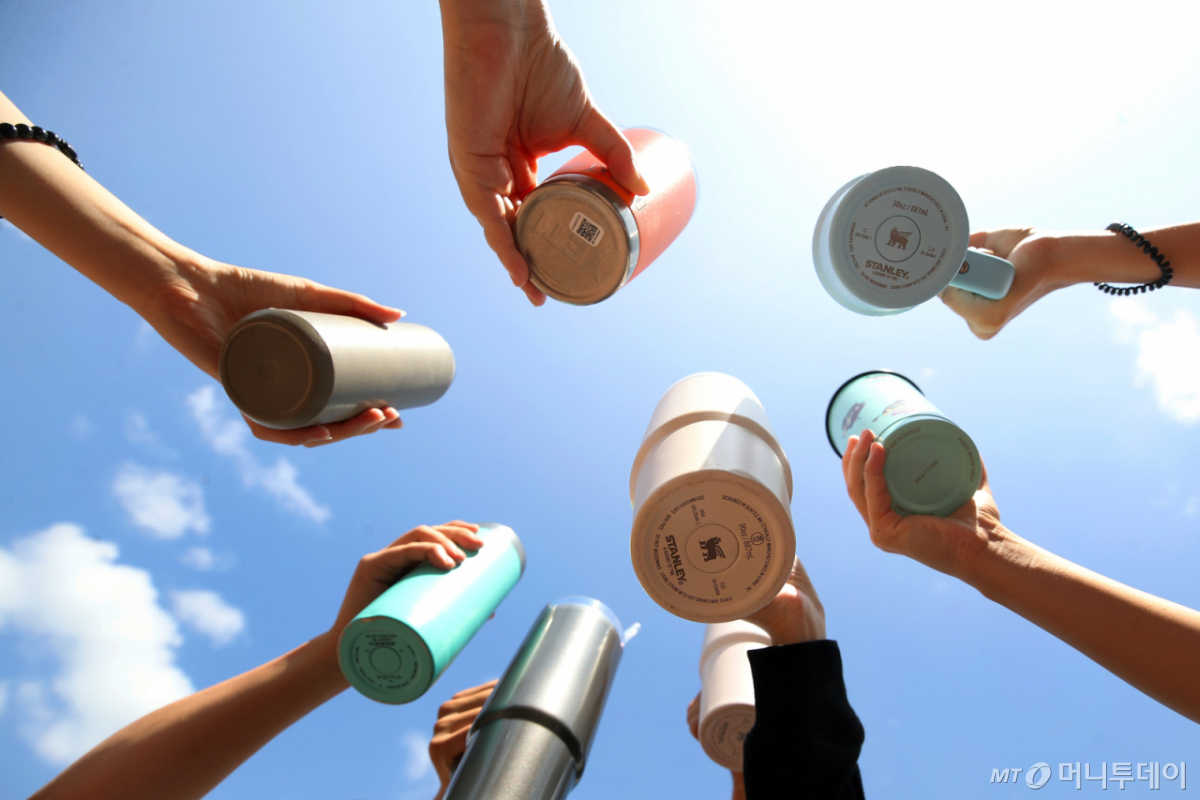
Lately, more people have been using portable tumblers at cafes. This is because it helps protect the environment while also avoiding the risk of microplastic leaching from paper cups. However, even a tumbler chosen for health reasons can become equivalent to drinking a mass of bacteria if carelessly managed.
According to an experiment by Korea Water Resources Corporation, water freshly poured into a tumbler was so clean that almost no bacteria were detected. However, immediately after taking just one sip from the mouth, 900 bacteria were detected. If this tumbler is left at room temperature above 20 degrees for three hours, the number of bacteria increases to 30,000, and after one day (24 hours), it multiplies to more than 40,000.
Additionally, according to an experiment by the U.S. water filter information site WaterFilterGuru.com, 20.8 million CFU (Colony Forming Units) /ml of bacteria were detected in a regular tumbler. This figure is 40,000 times more than on a toilet seat, four times more than on a computer mouse that hands directly touch, and twice as much as on a kitchen sink.
Bacteria thrive in humid and warm environments. For bacteria that have moved into the tumbler through contact with lips and saliva, the sealed and damp environment of the tumbler is nothing short of "heaven." In particular, when nutrient-rich beverages such as soy milk or cow's milk are stored inside, bacteria multiply even faster because they feed on fats, sugars, and proteins in the drink, causing them to grow and proliferate. Therefore, it is safest to drink the beverage in the tumbler as soon as possible.
Washing a tumbler with hot water can easily remove not only grease but also bacteria inside. If there is mineral buildup or a strong odor inside the tumbler, pour boiling water into it and wash it with liquid detergent after 12 hours. Mixing water and vinegar in a ratio of 9 to 1 and leaving it in the tumbler for just 30 minutes allows the acidic vinegar to remove mineral deposits and stubborn grime. It also exerts sterilizing, preservative, and deodorizing effects.
Another good method is to put one spoonful of baking soda into the tumbler, pour in hot water, and let it sit for one hour. This works because baking soda converts fat components stuck to the tumbler into a water-soluble form, removing grease. Salty soups should be handled with caution, as salt can corrode the inner walls of the tumbler.

 in THEBIO
