

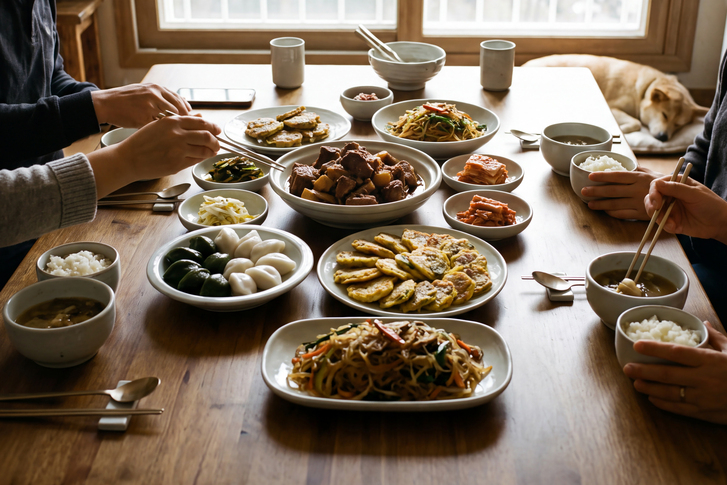
During this four-day Chuseok (Korean Thanksgiving) holiday, it is all too easy to consume more high-calorie food for longer periods than usual. Overeating and late-night meals experienced during the break are often dismissed as just "one meal." However, caution is needed, as overeating, late-night eating, and excessive drinking can trigger new digestive symptoms or worsen existing conditions.
Park In-cheol, director of the Digestive Endoscopy Center at Daedong Hospital (specialist in internal medicine), warned, "When food enters the body, multiple organs of the digestive system, including the esophagus and stomach, as well as the liver, gallbladder, pancreas, small intestine, and large intestine, are involved in the process of digestion and absorption." He added, "During holidays, eating habits change, with people consuming more food than usual, eating later into the night, and drinking alcohol, which can lead to problems in the digestive system."
The first organ that food passes through is the esophagus. If one eats late at night or lies down immediately after overeating, stomach acid and gastric contents may flow back up into the esophagus, causing symptoms such as heartburn, chest pain, and regurgitation. In particular, if experiencing reflux symptoms at night, it is recommended to avoid eating before bedtime and not to lie down for at least three hours after a meal.
Eating large amounts of food at once can cause the stomach to expand, leading to indigestion symptoms such as bloating, abdominal distension, belching, and nausea. Considering one's usual portion size, it is important to avoid eating excessive quantities in one sitting and to eat slowly.
The liver plays a crucial role in digestion and metabolism, including the processing and storage of nutrients and the production of bile. Repeatedly consuming excessive calories over long periods, diets high in fats and sugars, or engaging in heavy drinking can cause fat to accumulate gradually in the liver. Fatty liver disease can develop even if body weight is within the normal range, due to metabolic abnormalities or genetic factors. Director Park emphasized, "To maintain liver health, it is important to avoid overeating and excessive drinking, and to maintain appropriate portion sizes and a balanced diet."
If pain recurs after eating greasy food, it may be necessary to get an examination of the gallbladder. If there are gallstones in the gallbladder, consuming greasy foods can cause the gallbladder to contract, potentially blocking the cystic duct or common bile duct with stones, which may result in pain in the upper right abdomen or chest area. If the pain persists or is accompanied by nausea, vomiting, fever, or jaundice, it is recommended to seek medical attention to check for gallbladder or biliary diseases caused by gallstones.
Excessive drinking and gallstones also have adverse effects on the pancreas. In particular, acute pancreatitis is difficult to attribute solely to simple overeating; gallstones and excessive alcohol consumption are known as representative causes. Very high triglyceride levels can also trigger pancreatitis. If a person who repeatedly drinks excessively or has gallstones experiences sudden severe upper abdominal pain that radiates to the back, accompanied by nausea and vomiting, it is necessary to check for the possibility of pancreatitis.
The small intestine and large intestine are affected by irregular eating patterns and dietary habits. Digestion of food and absorption of nutrients primarily occur in the small intestine. In the large intestine, water is absorbed, forming stool. During holidays, changes in food and fluid intake or irregular meal times can lead to changes in bowel movements, such as bloating, gas, constipation, or diarrhea. This is why it is beneficial to maintain regular meals and a balanced diet during the holiday period and to stay sufficiently hydrated.
Director Park emphasized, "Although it is easy for routines to fall apart during the holiday period, avoiding overeating, late-night meals, and excessive drinking while maintaining regular meals and a balanced diet is the shortcut to preserving digestive health." He added, "If symptoms such as heartburn, abdominal pain, vomiting, or abnormal bowel movements recur after eating holiday foods, or if severe pain different from usual occurs, one should not dismiss it as a simple temporary symptom."
He further advised, "While managing lifestyle habits by consuming appropriate amounts and drinking plenty of water as usual, if digestive symptoms persist or recur during this holiday, please seek medical attention to identify the cause."

 in THEBIO
