

Recently, the number of hospitalized patients with RSV (Respiratory Syncytial Virus) infection has been showing an increasing trend, particularly among infants and young children. While RSV symptoms are similar to those of the common cold, it can cause severe infections such as pneumonia in infants under 6 to 12 months of age, making prevention a critical aspect of this respiratory infectious disease.
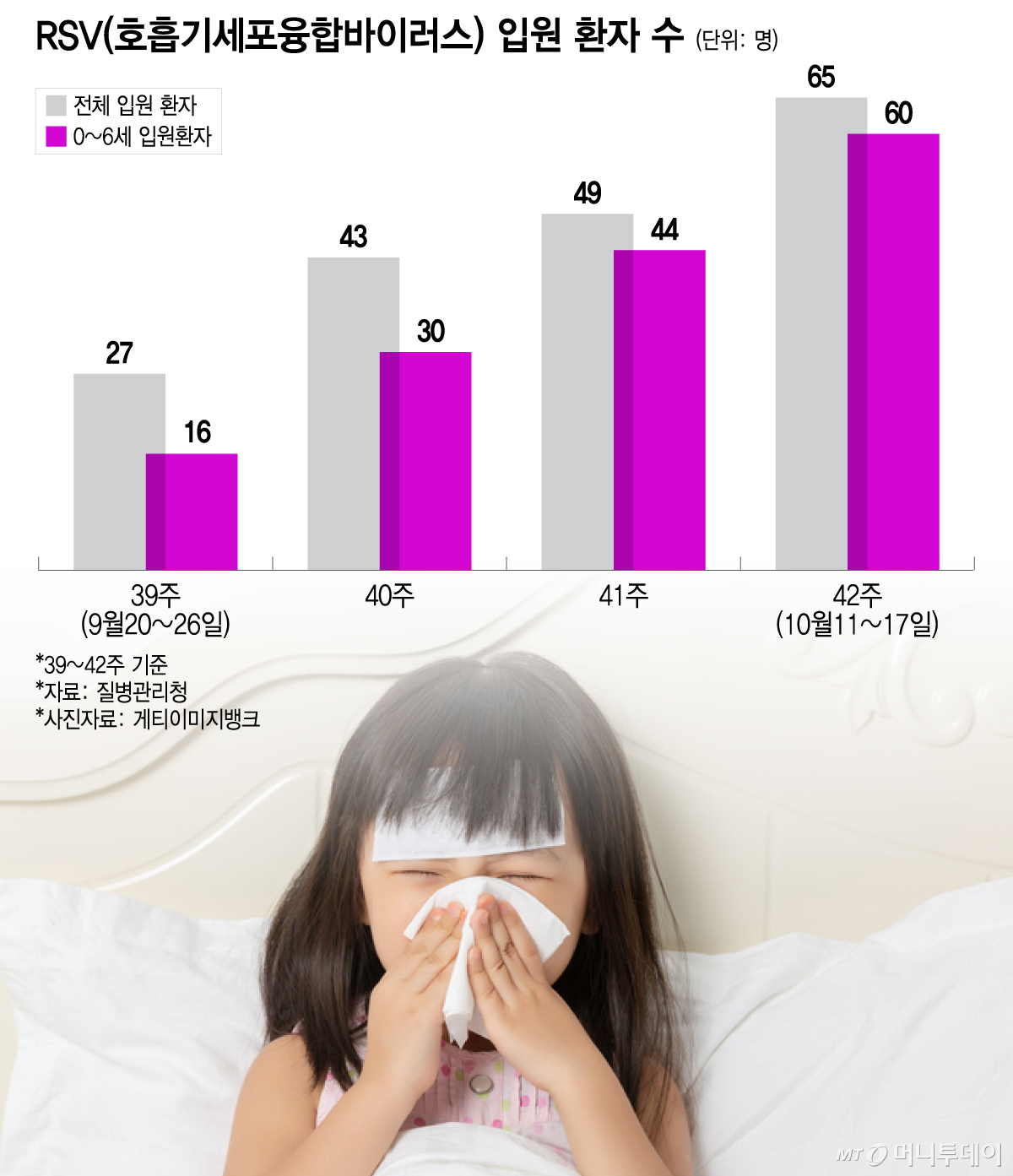
According to KDCA sentinel surveillance statistics released on the 23rd, the number of domestic RSV hospitalizations stood at 65 as of Week 42 (the 11th–17), with patients aged 0 to 6 (60 cases) accounting for the largest share. The number of hospitalizations due to RSV infection has been steadily increasing since Week 39 (the 20th–26).
RSV is a common respiratory virus in infants and young children, typically circulating from autumn through the following spring. In South Korea, the epidemic usually begins in October, with patient numbers rising until March of the following year. Although symptoms resemble those of a general cold, infants under 12 months of age with weak immune systems may experience worsening conditions, such as bronchiolitis or pneumonia, which are lower respiratory tract infections. In severe cases, respiratory distress may necessitate hospitalization for treatment.
In babies infected with RSV, distinct rattling sounds from phlegm and wheezing breathing typically become apparent within 3 to 4 days after the onset of coughing. Symptoms can worsen, leading to frequent nighttime coughing that prevents proper sleep or causing vomiting. Adults, including pregnant women, may experience no symptoms or only mild cold-like symptoms even when infected with RSV; however, caution is required as they may unknowingly transmit the infection to vulnerable infants.
Hong Ju-hee, a pediatric specialist at H+ Yangji Hospital, emphasized, “Infants have difficulty expelling phlegm, so their conditions can deteriorate rapidly.” She added, “Caregivers should monitor for signs such as retractions (inward pulling of the skin below the ribs), dehydration (no urine output for more than 6 hours), and cyanosis (bluish discoloration of the lips and extremities).”
RSV can be transmitted not only through droplets released during coughing or sneezing but also via contact with multiple pathways, such as hands or toys contaminated with the virus. In particular, postpartum care facilities where mothers and newborns live together face a risk of cluster infections if even one infected individual is present. Recently, there was a case at a postpartum care facility in Jeju where 20 people, including newborns and facility staff, were infected with RSV.
To reduce the risk of hospitalization, preventive antibody injections can be considered. RSV antibody injections work by directly administering pre-formed antibodies to enhance defense against the virus. Research results are emerging indicating that lower respiratory tract infection-related hospitalizations have decreased in South Korea following the introduction of RSV preventive antibodies. Long-acting RSV preventive antibodies are known to provide approximately 5 months of protective effect with a single dose. At home, it is advisable to maintain indoor humidity at 50–60% and avoid cold air as much as possible.
RSV reinfection is common, and infants with underlying conditions, such as preterm birth or chronic heart and lung diseases, are at high risk of developing severe illness. Older adults aged 65 and above may also progress to pneumonia upon RSV infection, necessitating caution regarding transmission within families.
Lee Jin-cheol, Lee Deul-byeong-won (Prof.) of Seongbuk Ouria, stated, “RSV infection is highly transmissible, with most children being infected at least once before their second birthday.” He added, “Since treatment focuses on symptomatic relief of respiratory symptoms rather than specific therapy to eliminate the virus itself, preventing severe disease is paramount.”

 in THEBIO
